


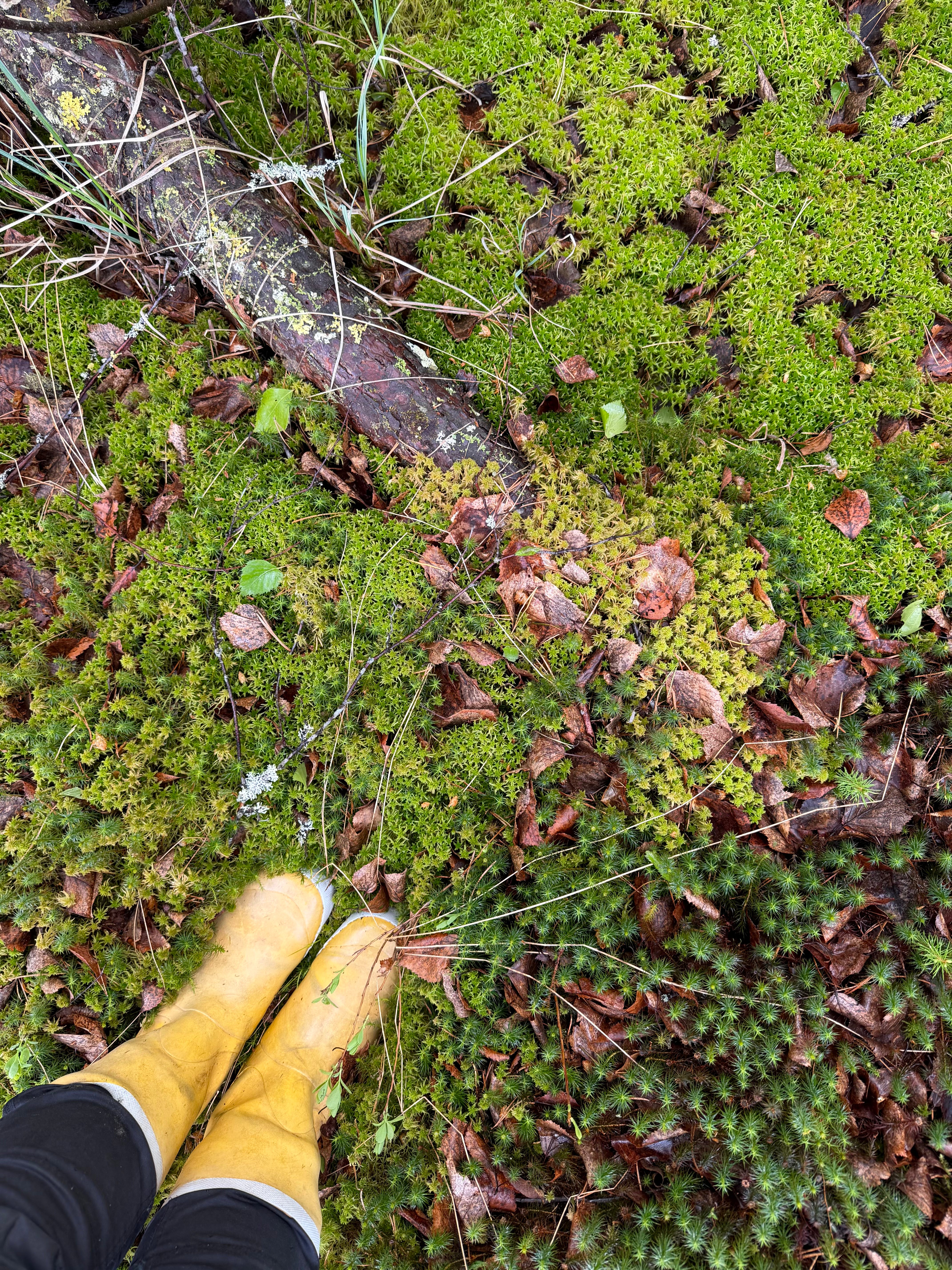
At the edge of the bog, where the forest begins, the ground is soft and covered in thick, rounded cushions of haircap moss. The rain has just stopped, and sunlight breaks through, making every shade of green shine with a wet glow.
Distant thunder rumbles somewhere far away, but the lightning never reaches the bog. It feels intimate and cozy here.
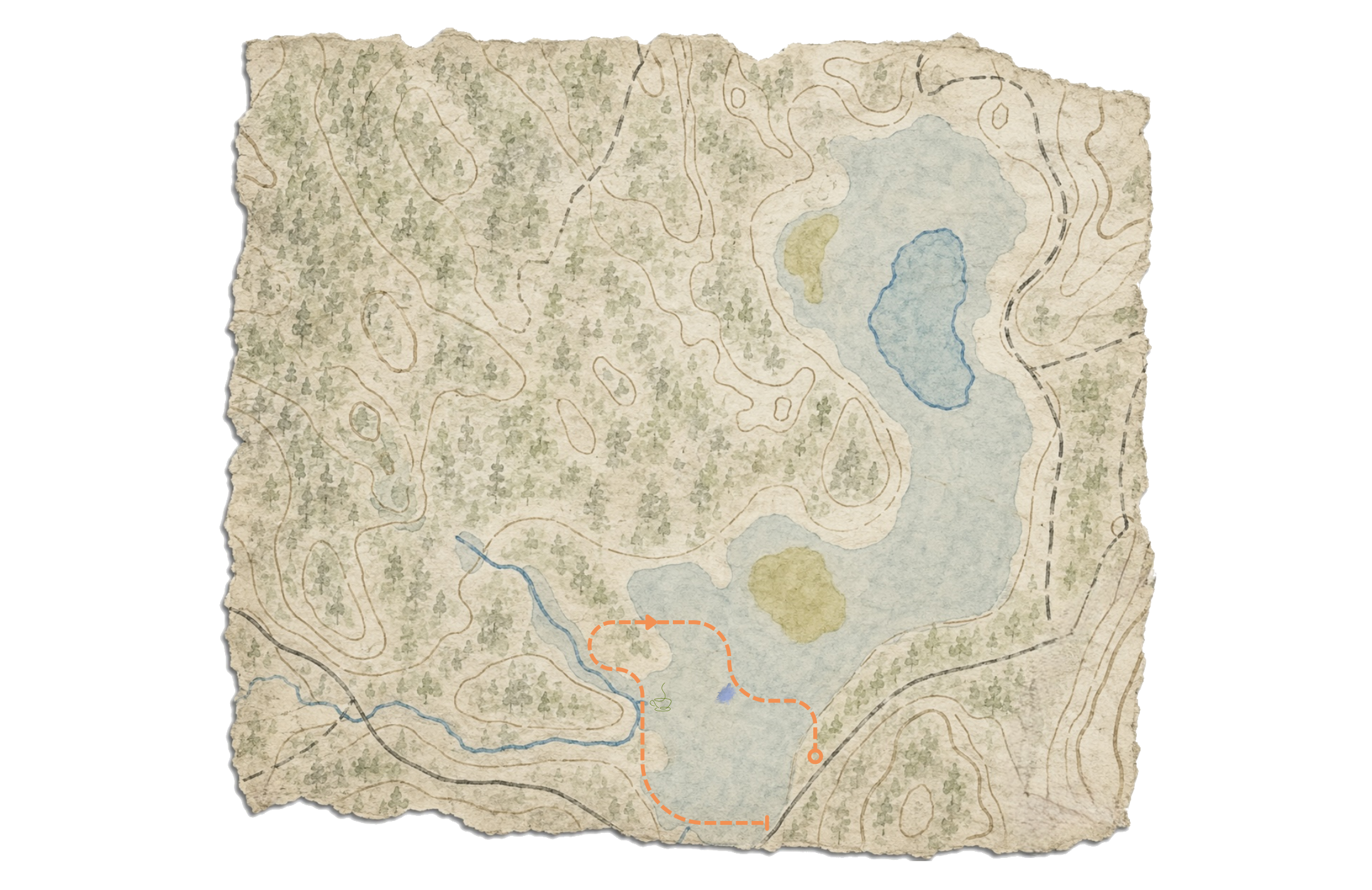
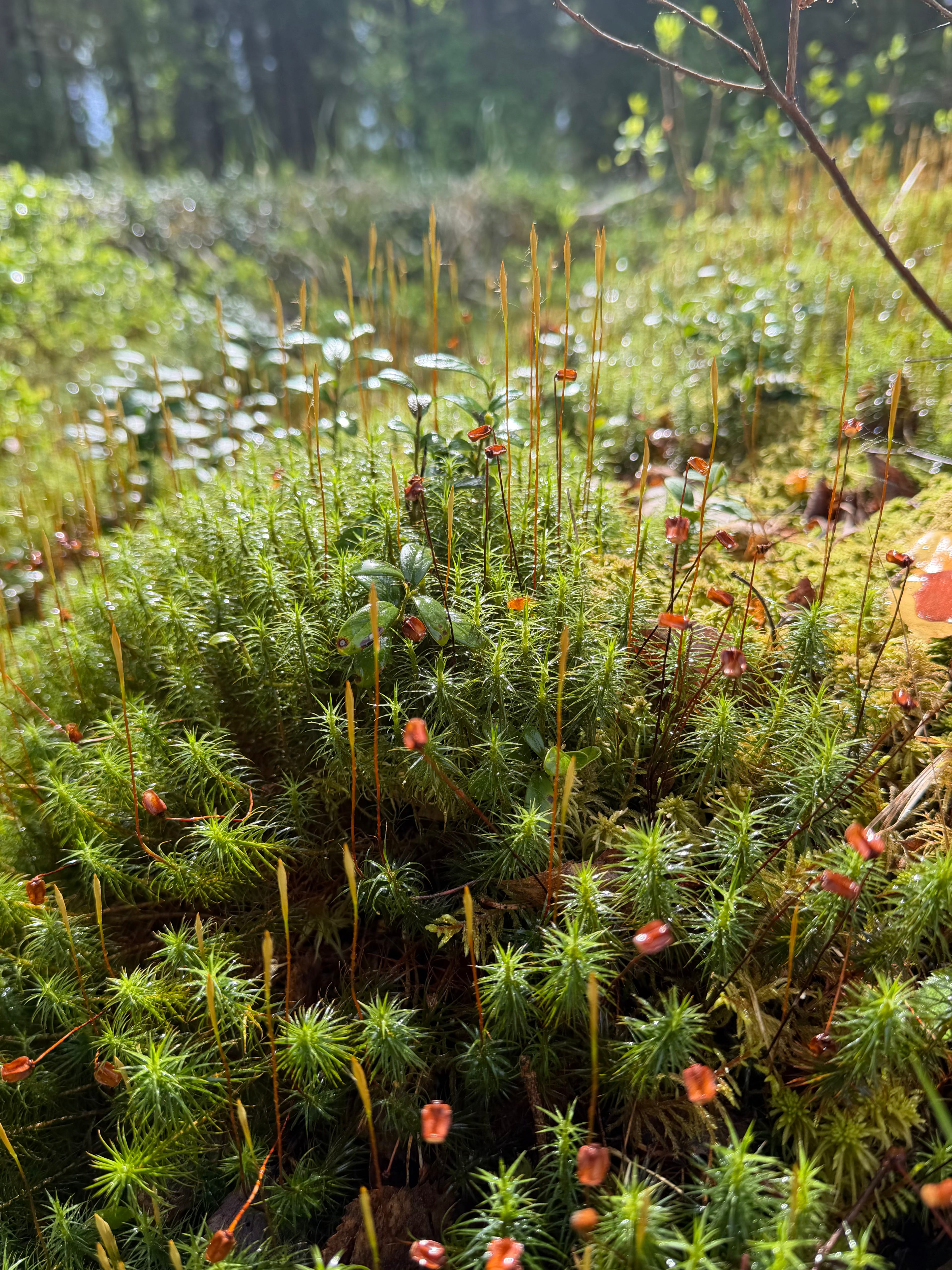
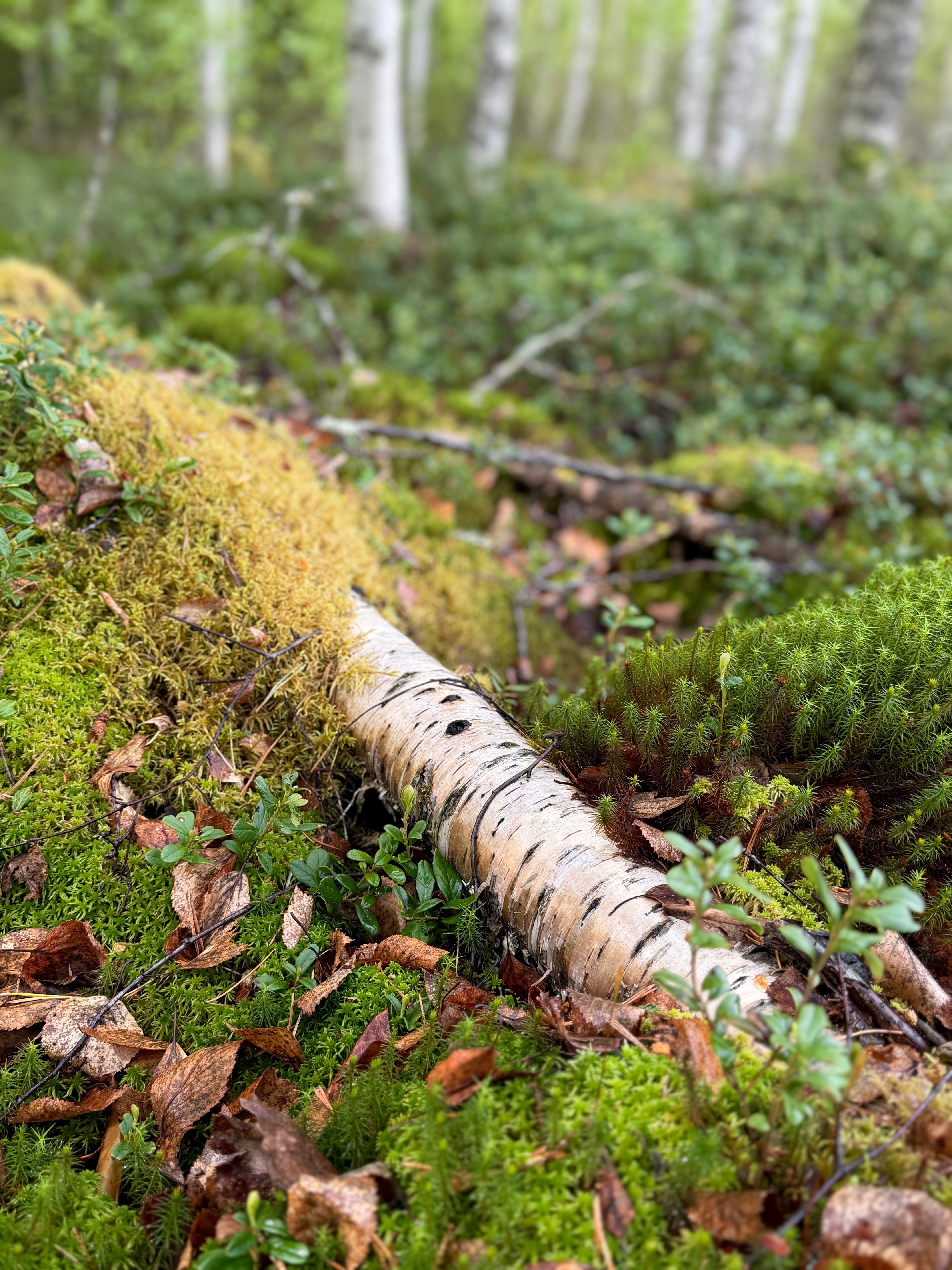
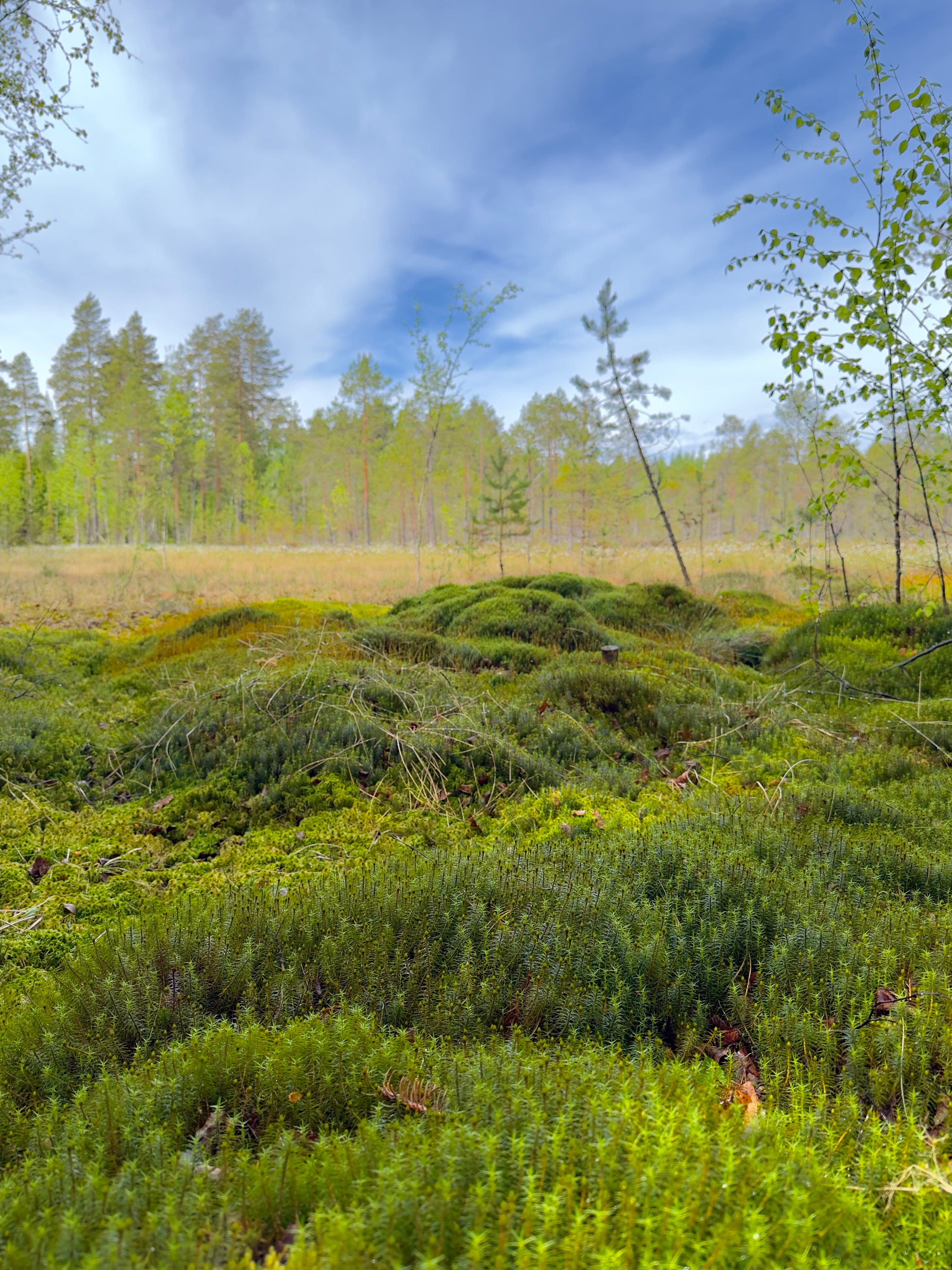
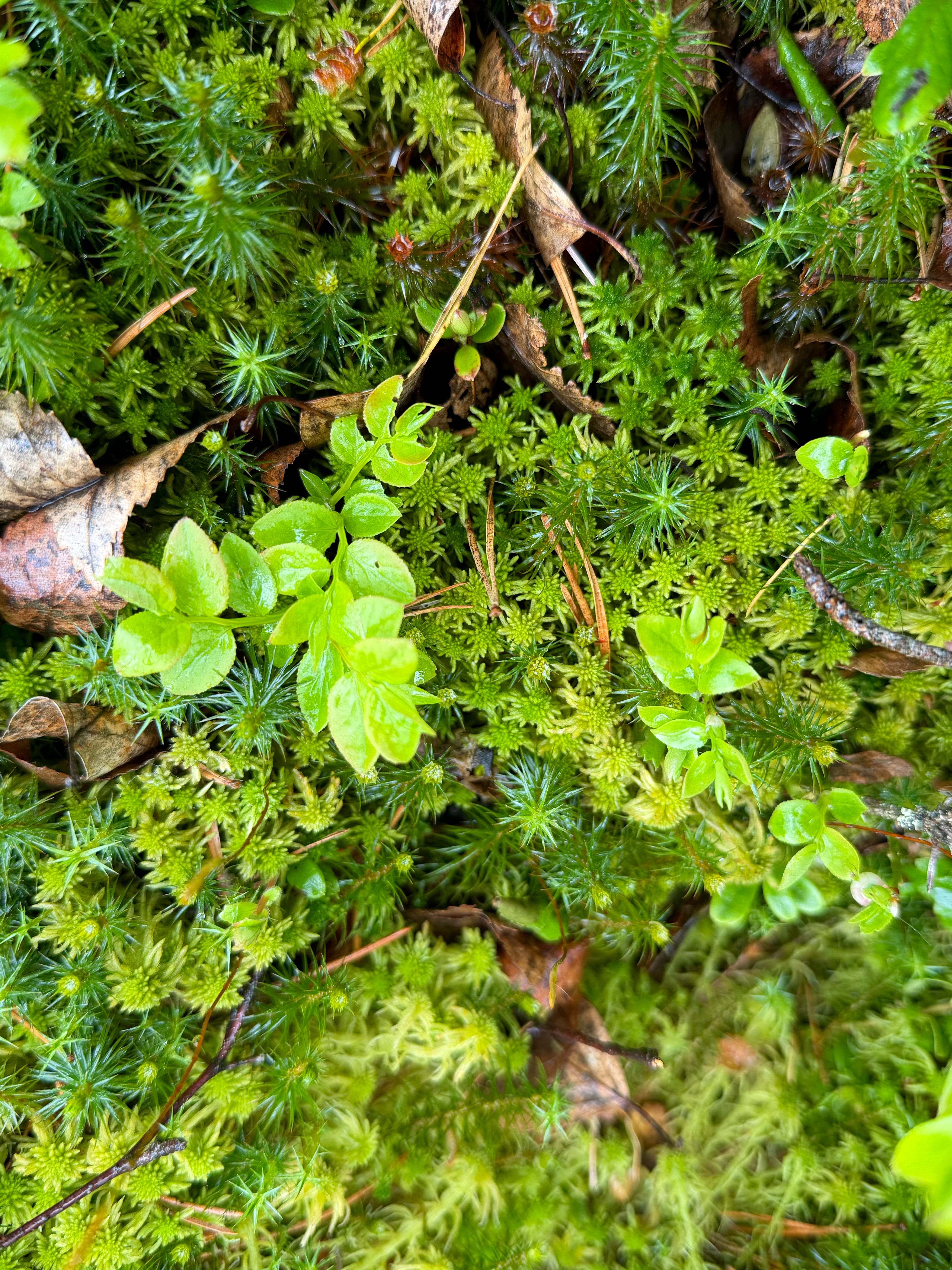
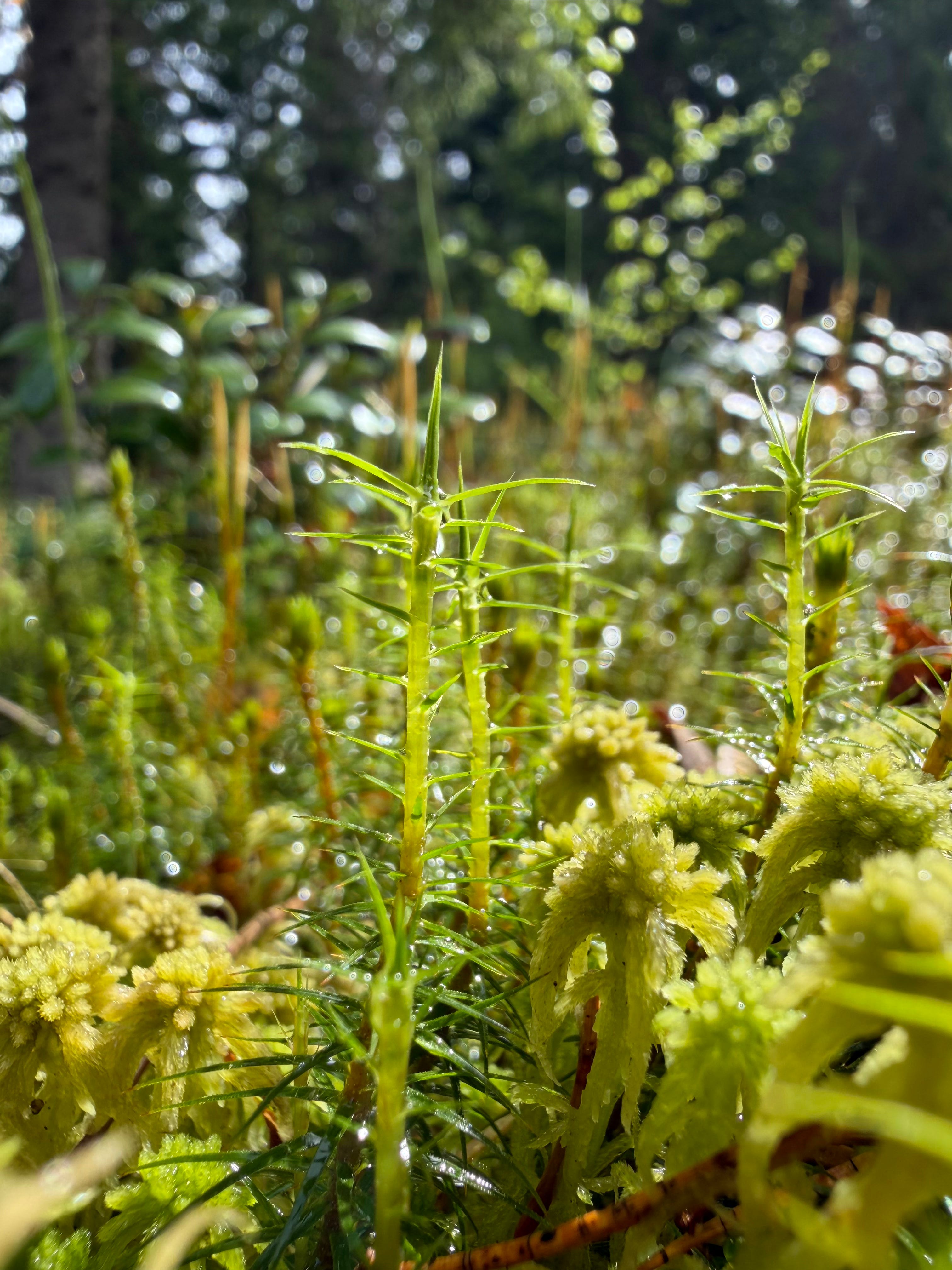
The edge of the bog is a green zone. There the sphagnum is vibrantly lush, and the dwarf shrubs grow tall and healthy. This side of the bog is the one that receives water from narrow, naturally formed channels. This bog hasn’t been ruined by drainage. Here, humans are visitors, not gods. Everything has remained natural.
I walk on the bog carefully. I wouldn’t want to step on the moss at all. It feels like I’m disturbing something, as if the impressions from my steps ruin the whole landscape. I keep glancing back, only to notice that the marks are already beginning to fade. The moss slowly rises back up where I just stepped. So I continue my journey a little more boldly.
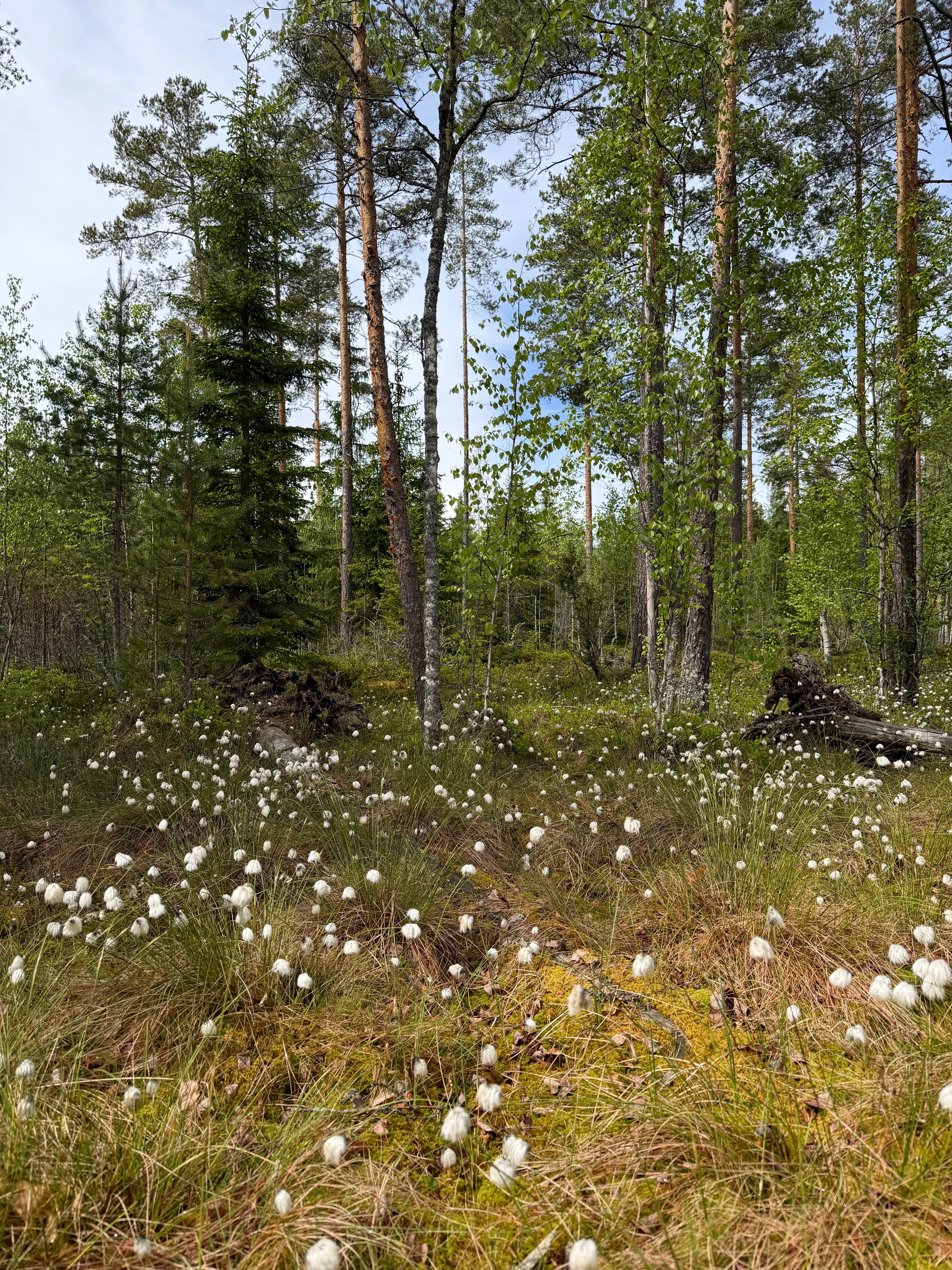
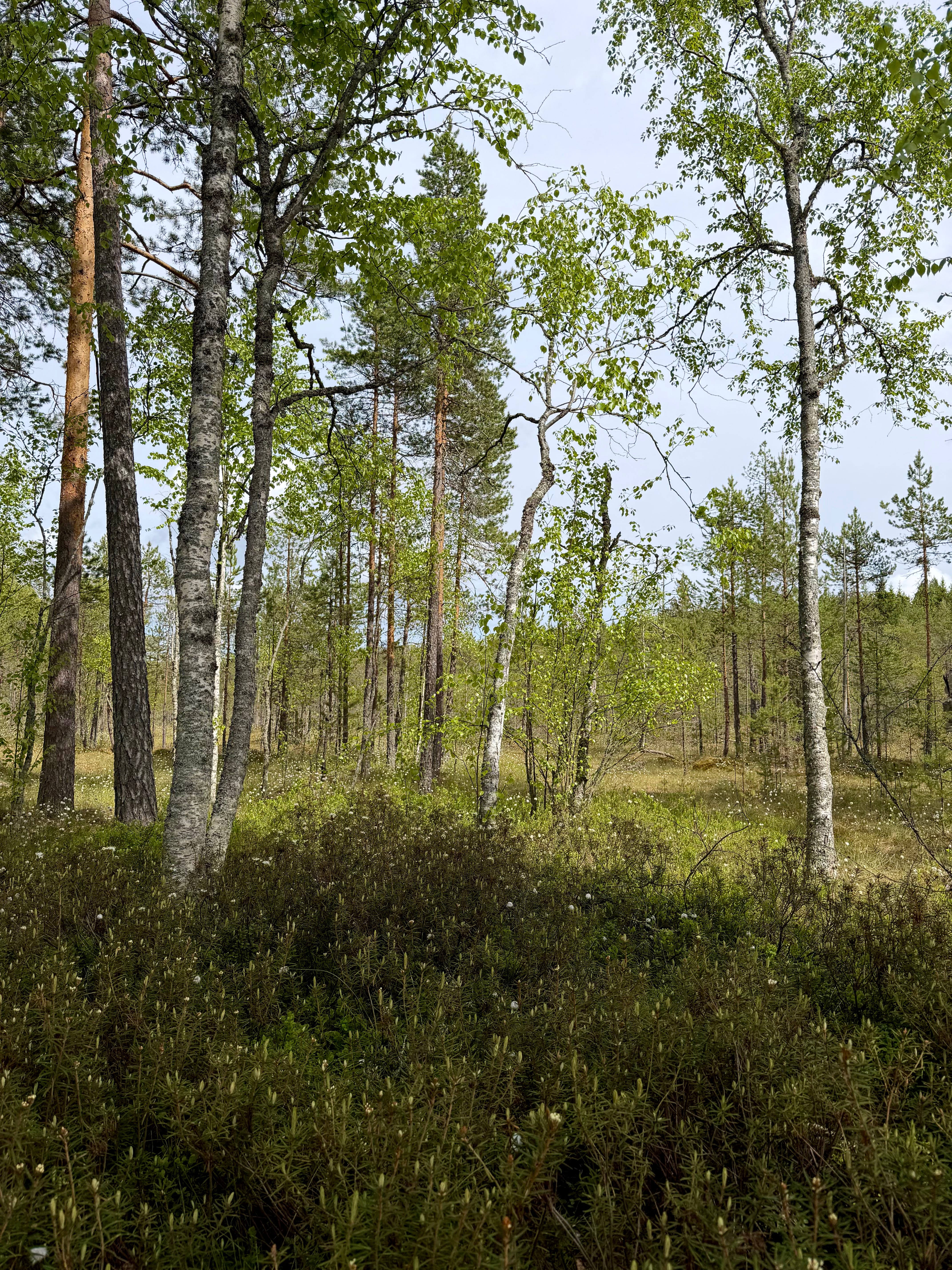
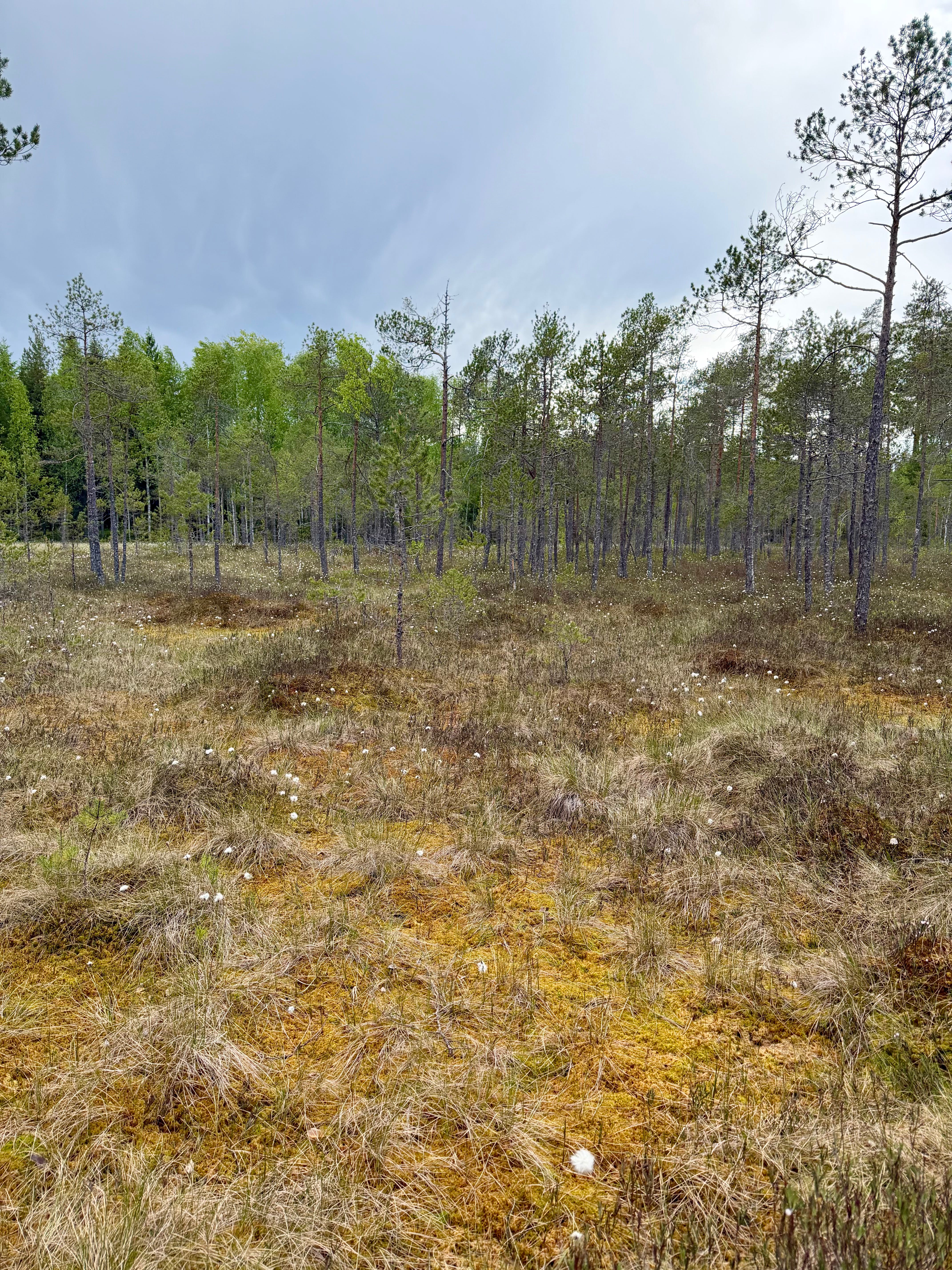
I reach an area that’s more forested and filled with cotton grass. The trees here are older than elsewhere on the bog, where they rarely grow thicker than a wrist before falling or rotting upright from the moisture.
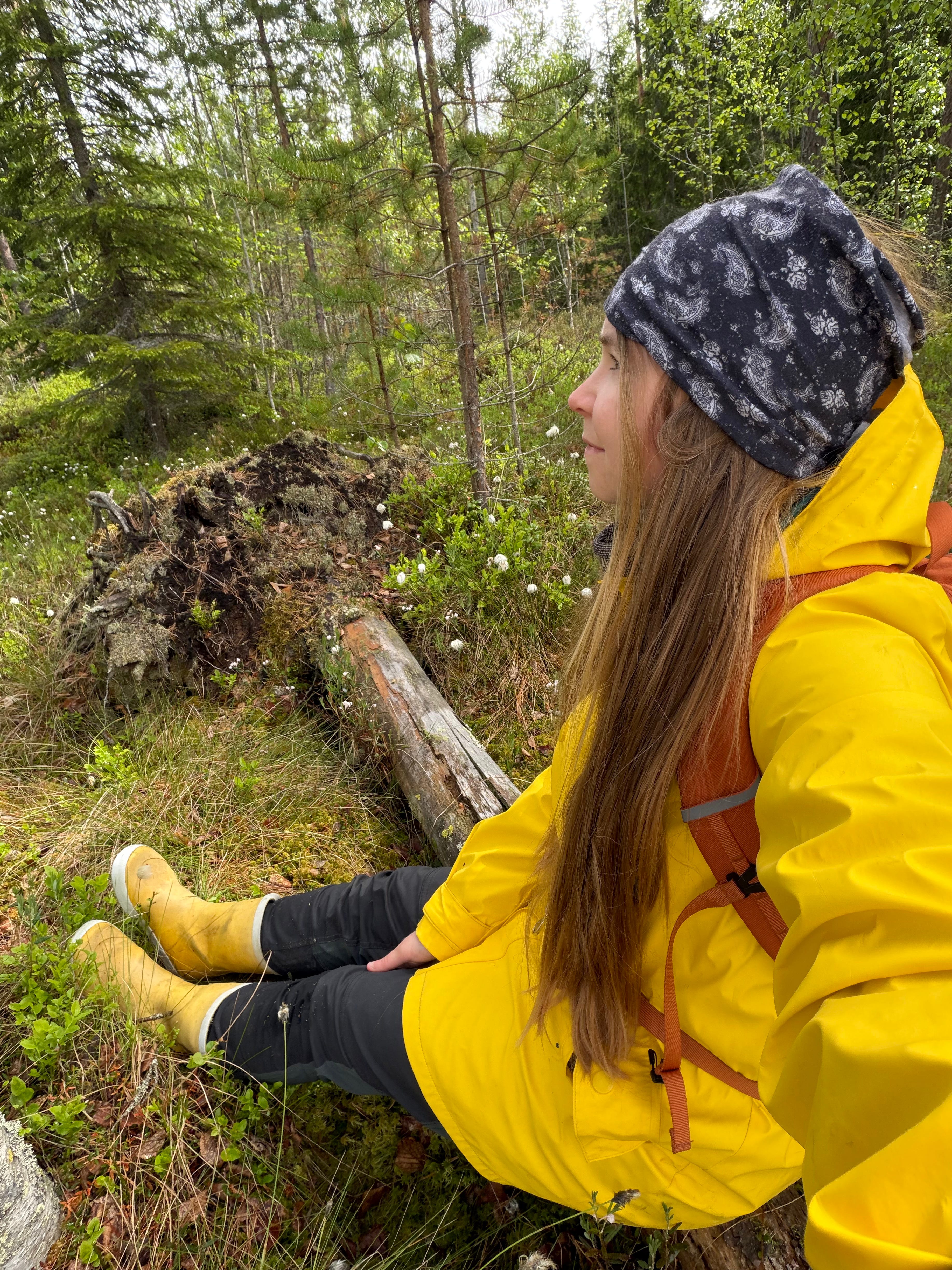
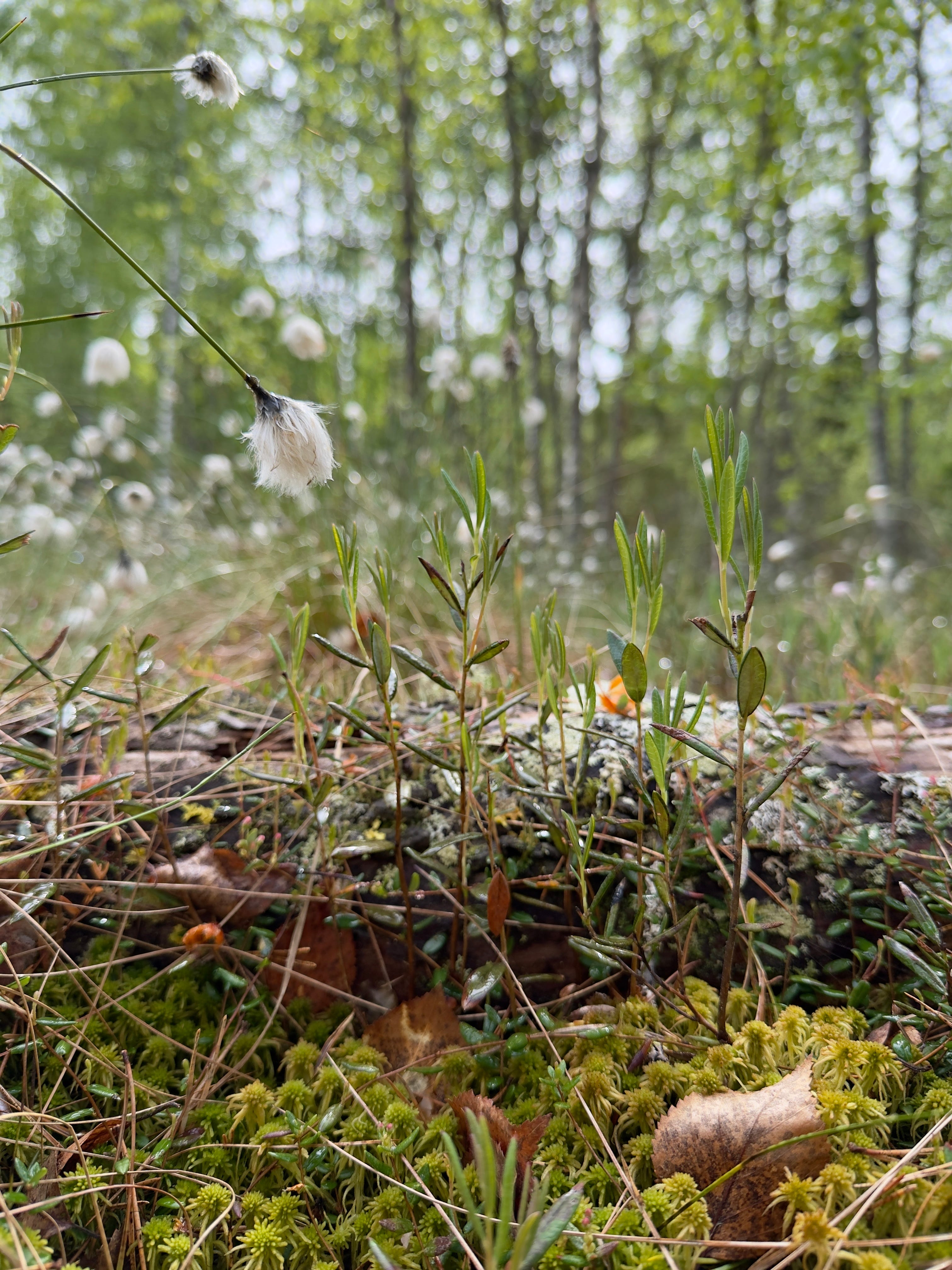
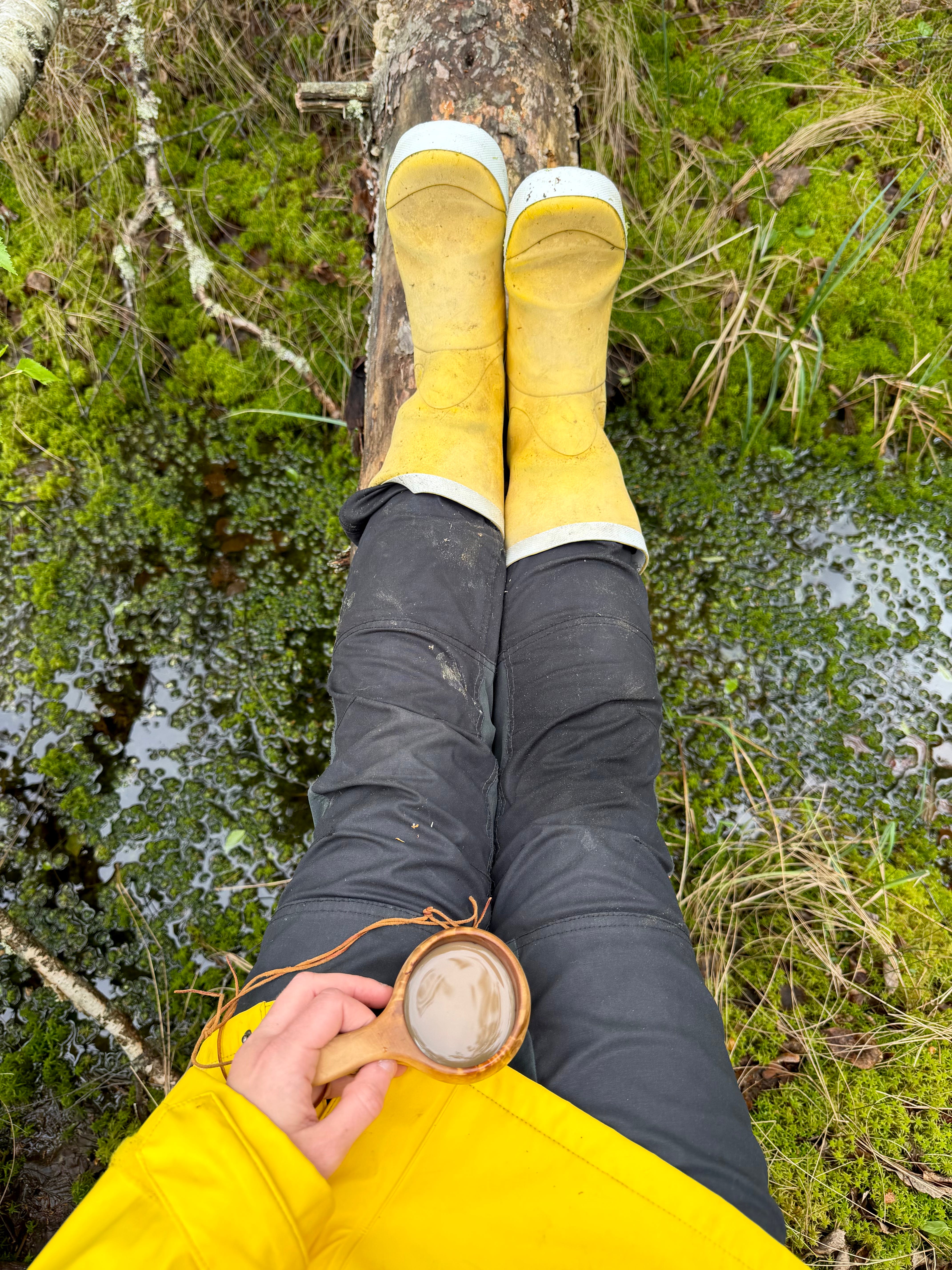
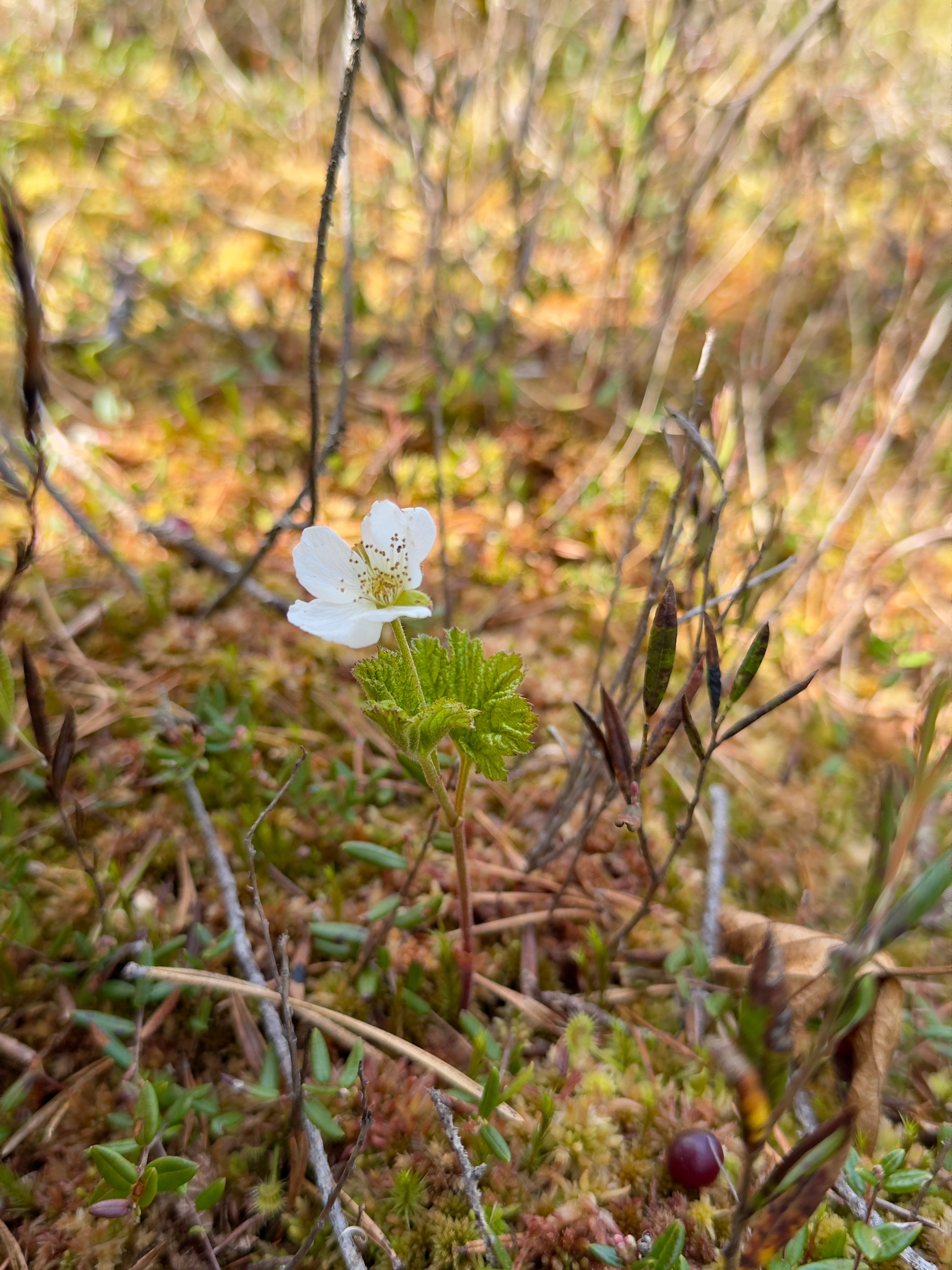
And the cotton grasses are at their best. The spent flower stalks look like tender little tufts, swaying out of sync in the wind. I’m sitting on a fallen tree trunk that’s still fresh enough not to crumble under my step, yet old enough that it has already partly sunk into the bog. Moss has grown partly over it, though the thickest part of the trunk is still above the surface, held up by the raised root base. Across the silvery wood surface trail cranberry runners, already carrying pink buds.
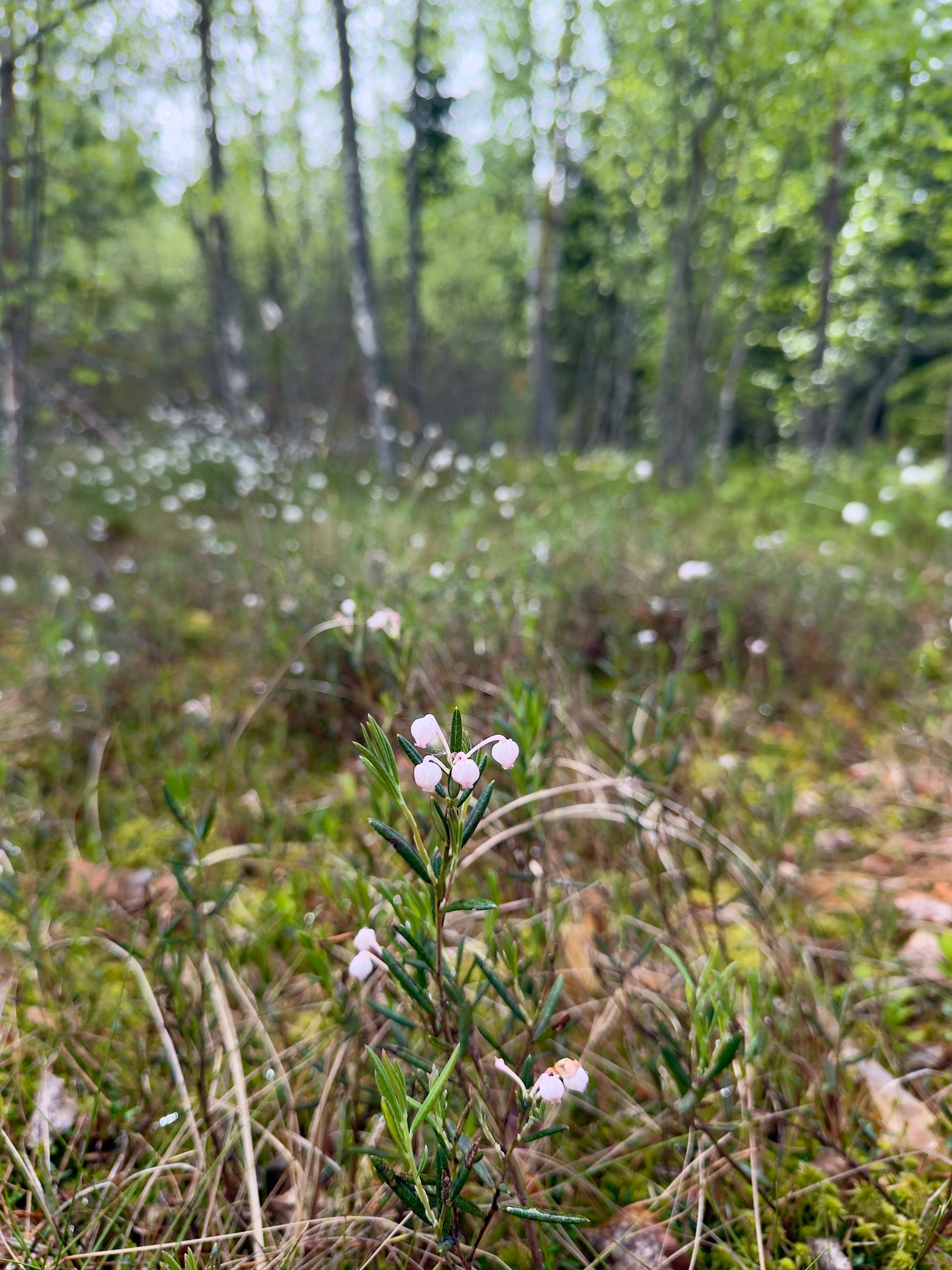
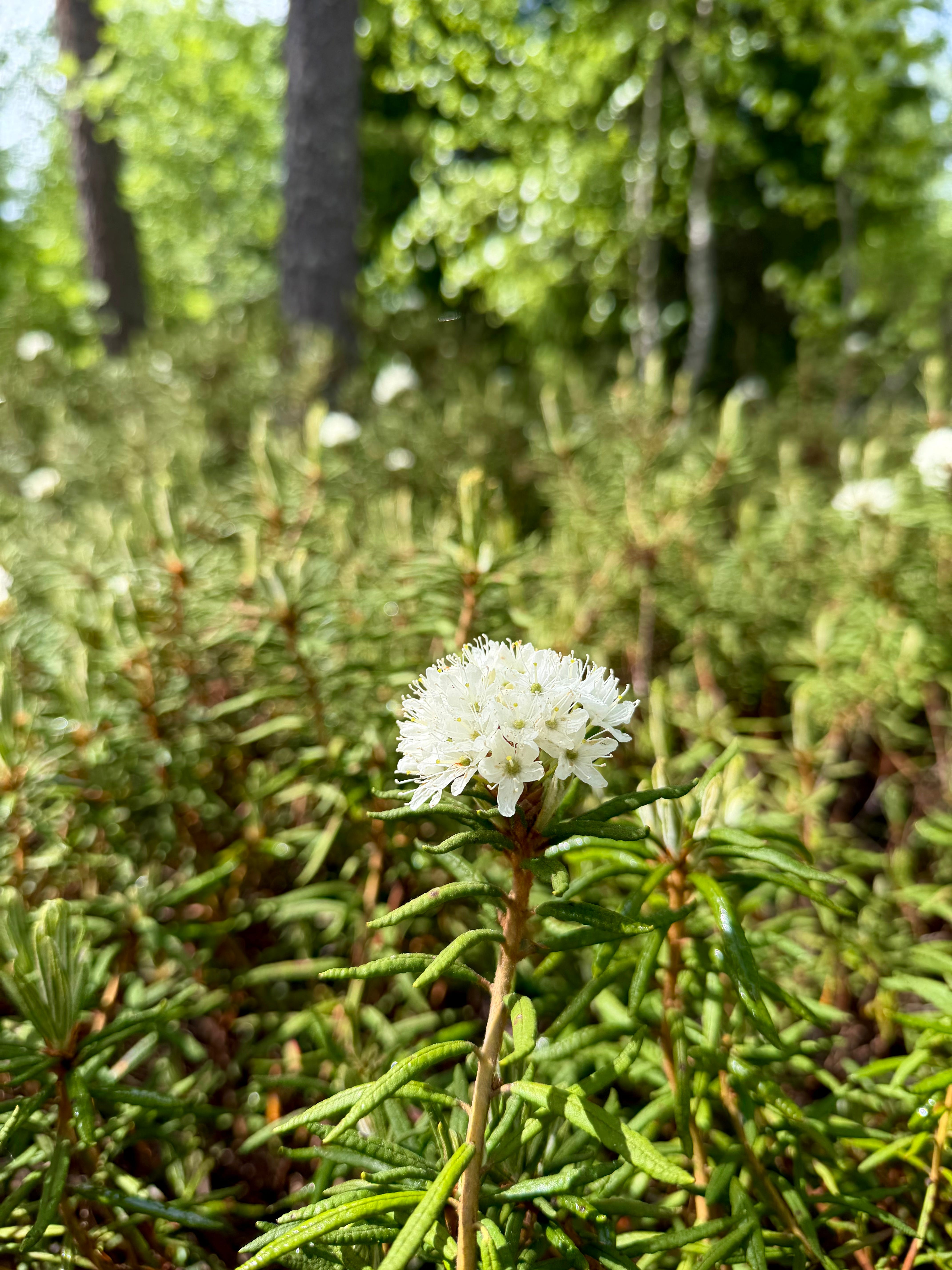
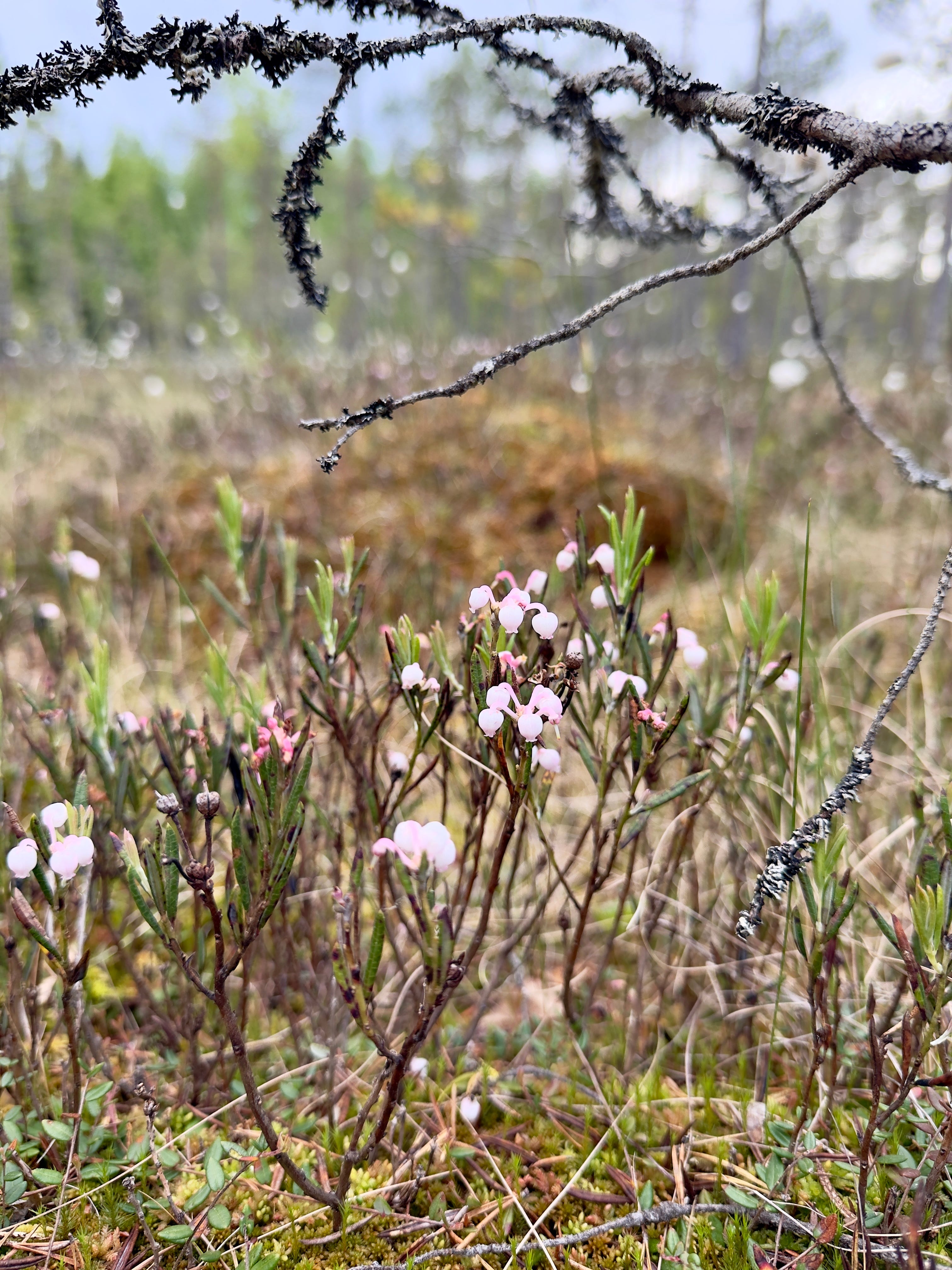
My favourite of all bog plants is bog rosemary. There are many reasons for that, but the biggest one is probably the small element of surprise it always carries. Like many other dwarf shrubs, bog rosemary has its own fungal gall — a fungal plant pathogen.
That causes this otherwise inconspicuous green plant to turn into something completely different: all the leaves expand, round out, and turn bright pink. The species responsible is Exobasidium karstenii. Bog rosemary also has another pathogen, Exobasidium sundstroemii, which causes some of the leaves to become pale pink and enlarged.
But right now I don’t see any signs of them yet — only healthy, normal stems putting out fresh growth, and some plants already in bloom.


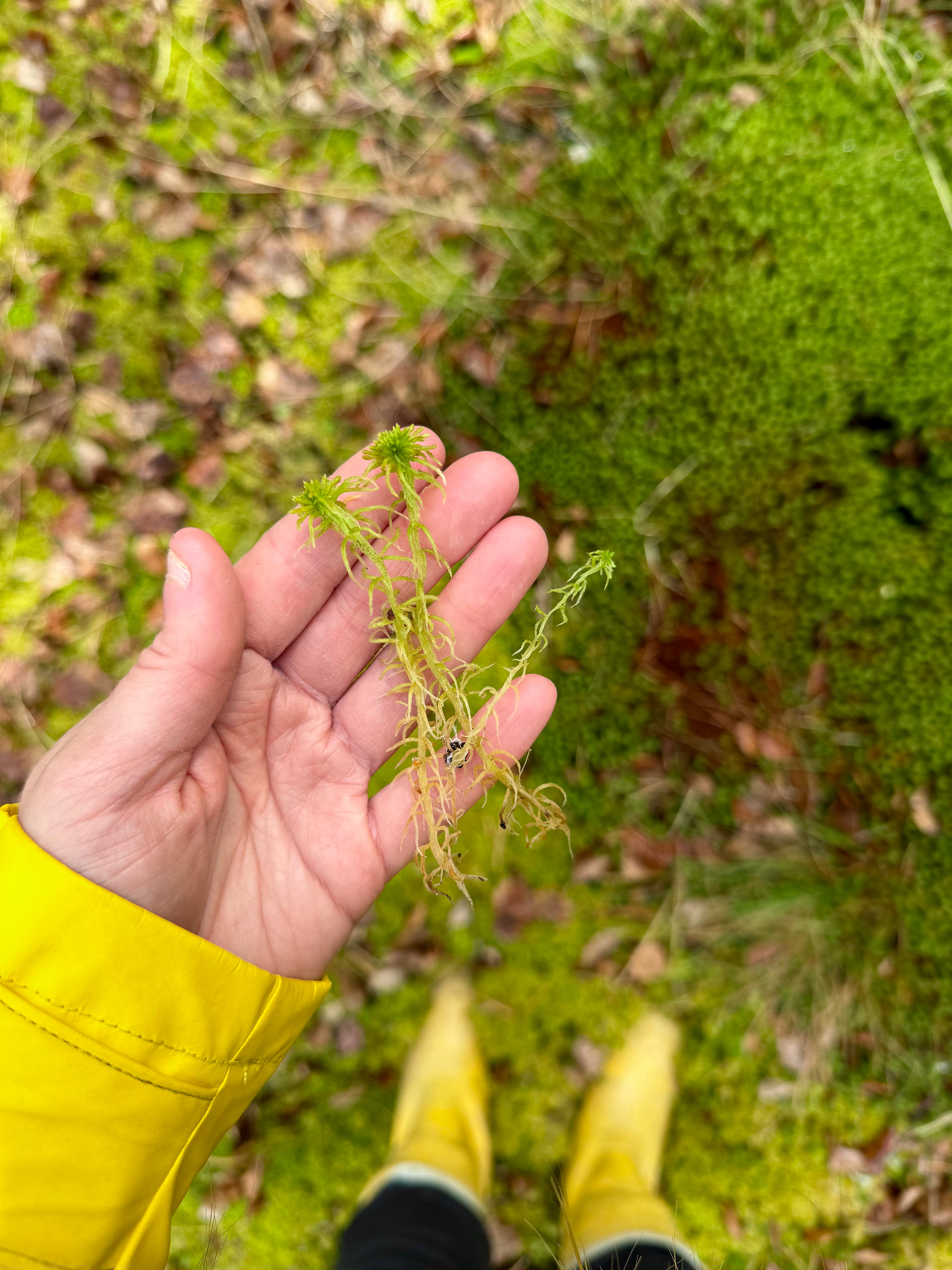
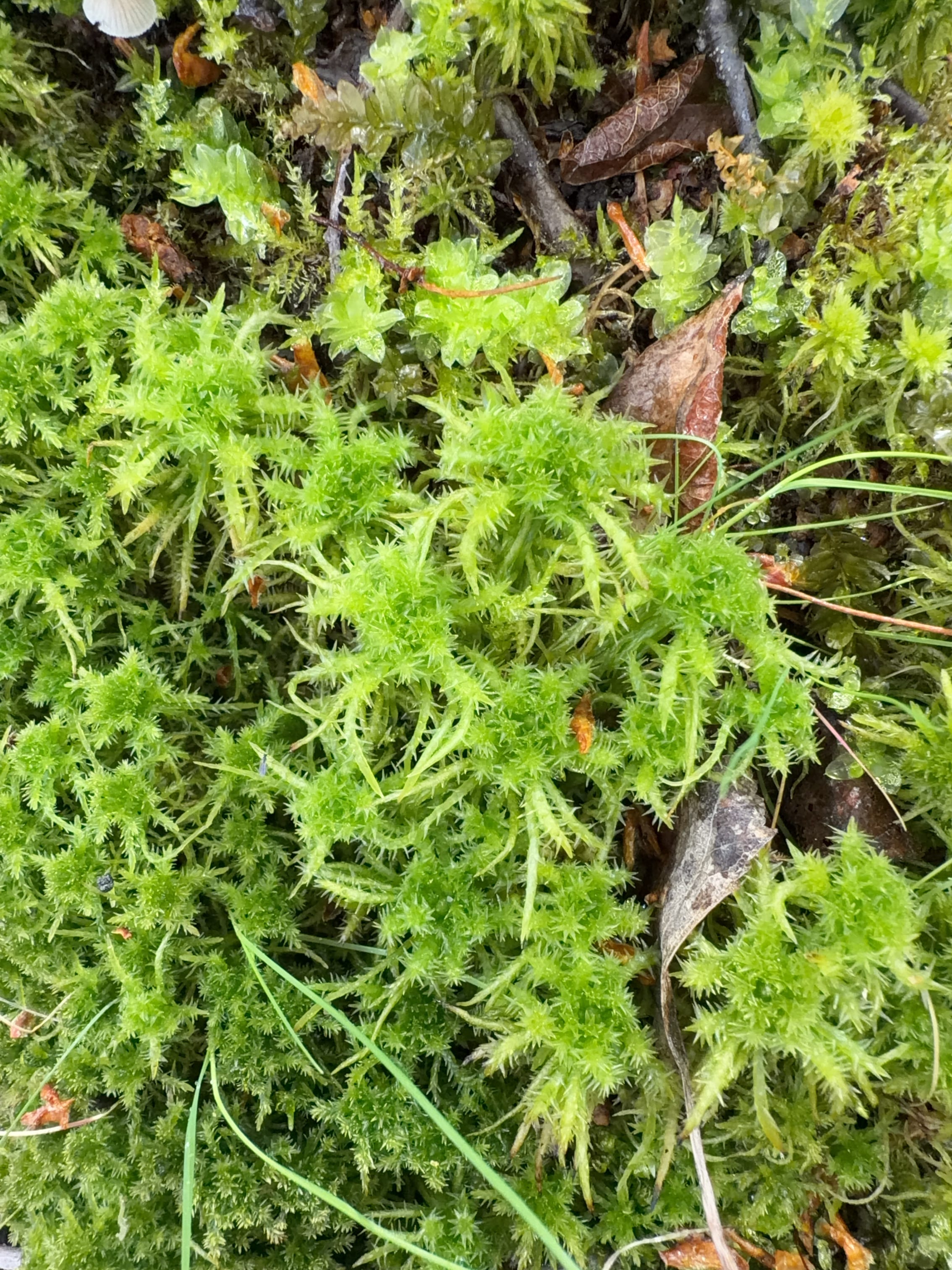
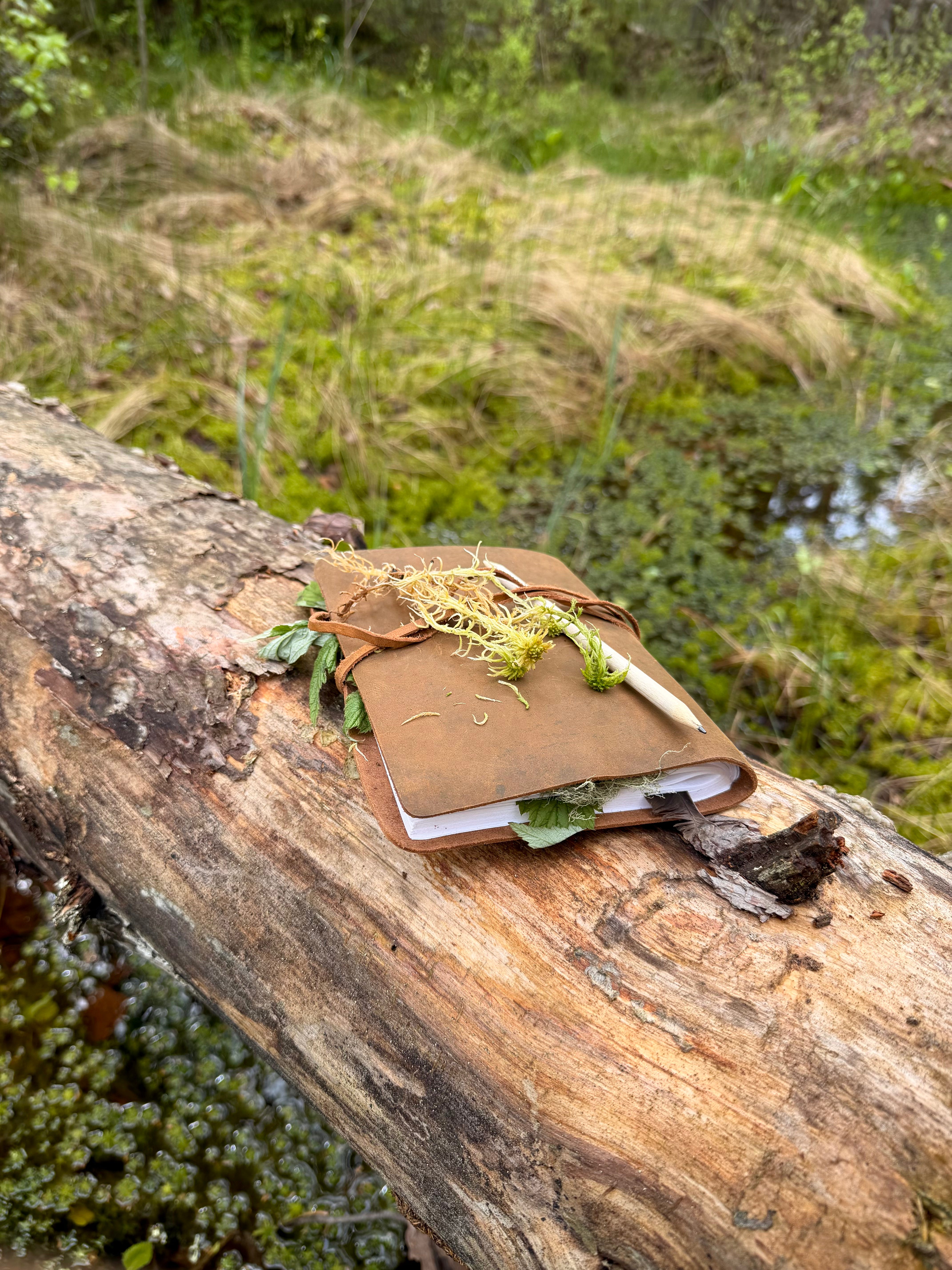
I’m noticing different kinds of sphagnum mosses. I also came across spiky bog moss (Sphagnum squarrosum). It was growing half‑hidden at the edge of the bog, in the dim light. It has a spiky look to it, almost as if it were covered in frost at a quick glance.
I can hear a cuckoo calling somewhere farther away. I start walking toward the sound, hoping I might see the bird. I’m literally wading through waist‑high Labrador tea. They’re in bloom, and the scent is wonderful.
The vegetation thins out and the sphagnum turns greener and wetter. In a hollow left by an uprooted tree, dark water stands still. I reach a narrow hollow.
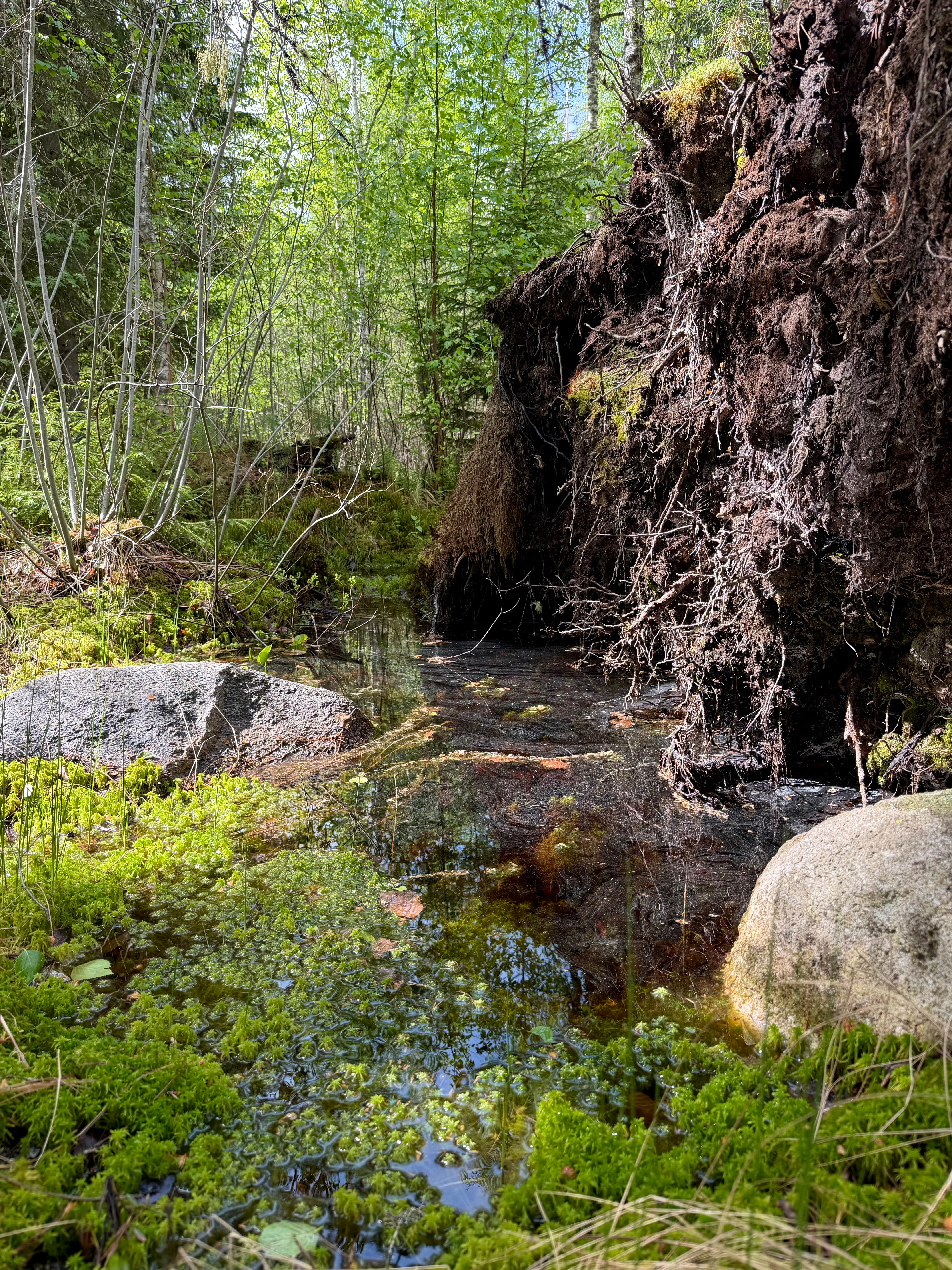
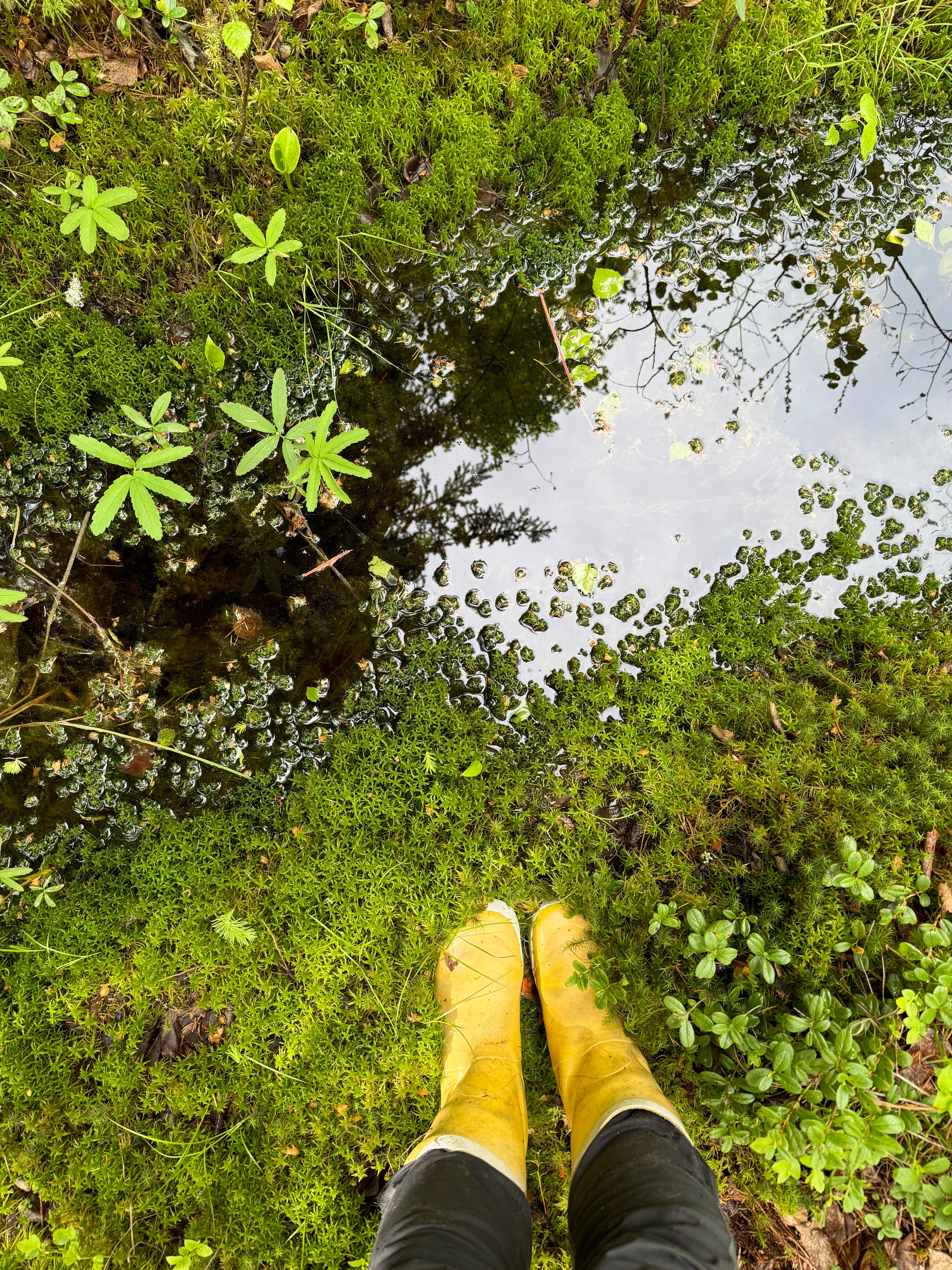
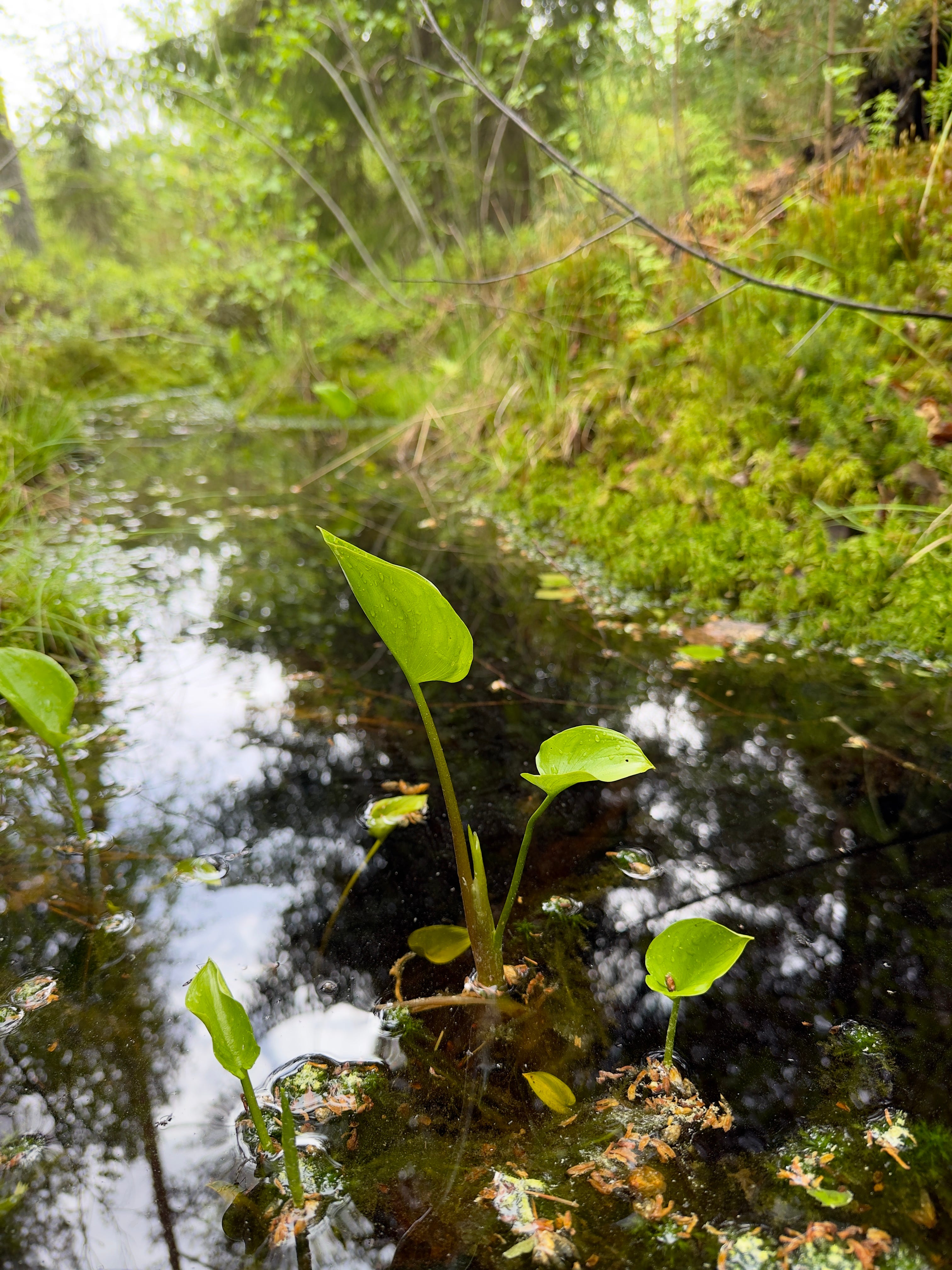
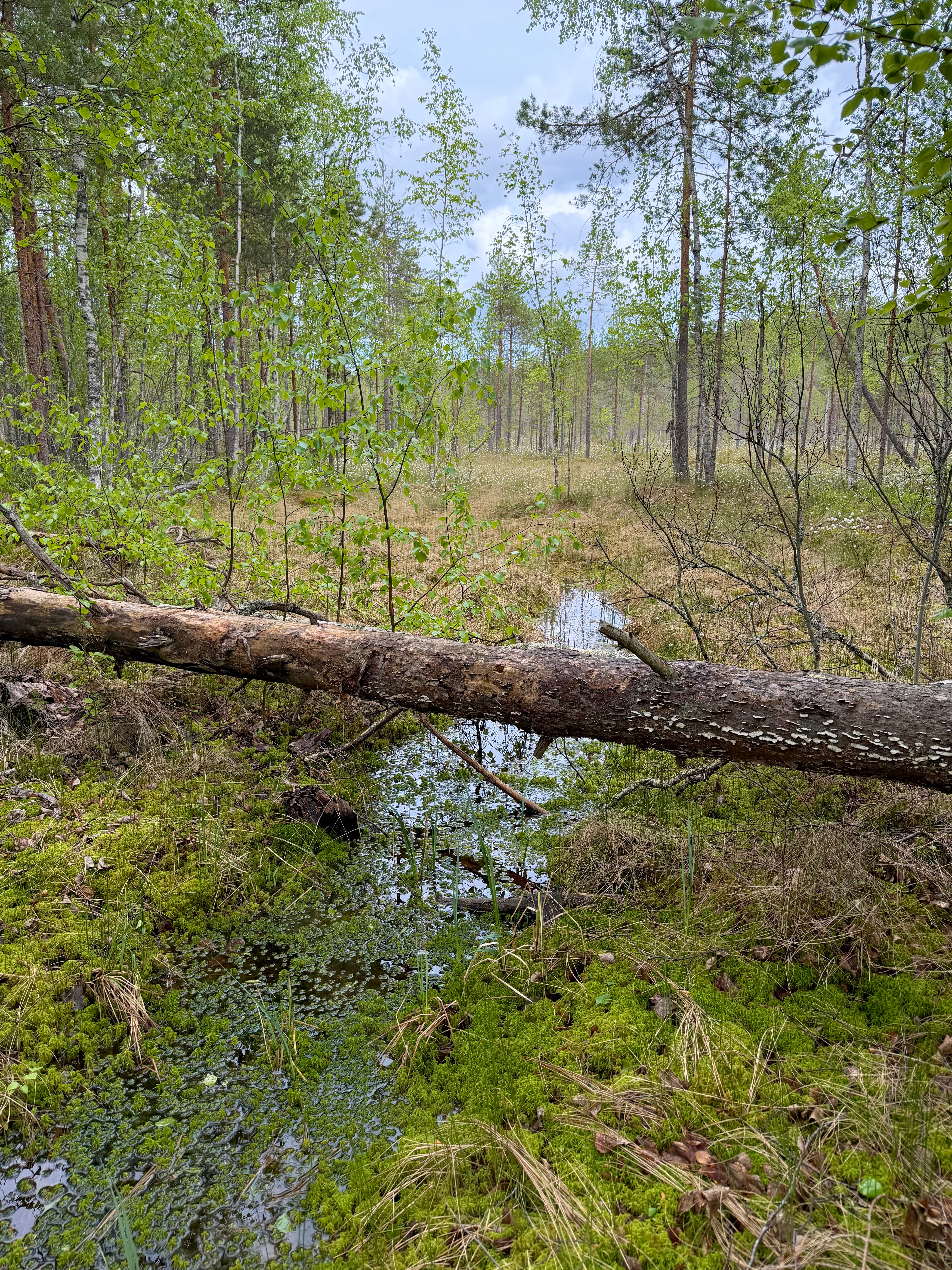
From here, the water enters the bog. It doesn’t rush in; it hardly moves at all. The water stands still, and beneath the surface there is only slow absorption. The peat works like a sponge, taking in what it needs in order to stay alive as a bog.
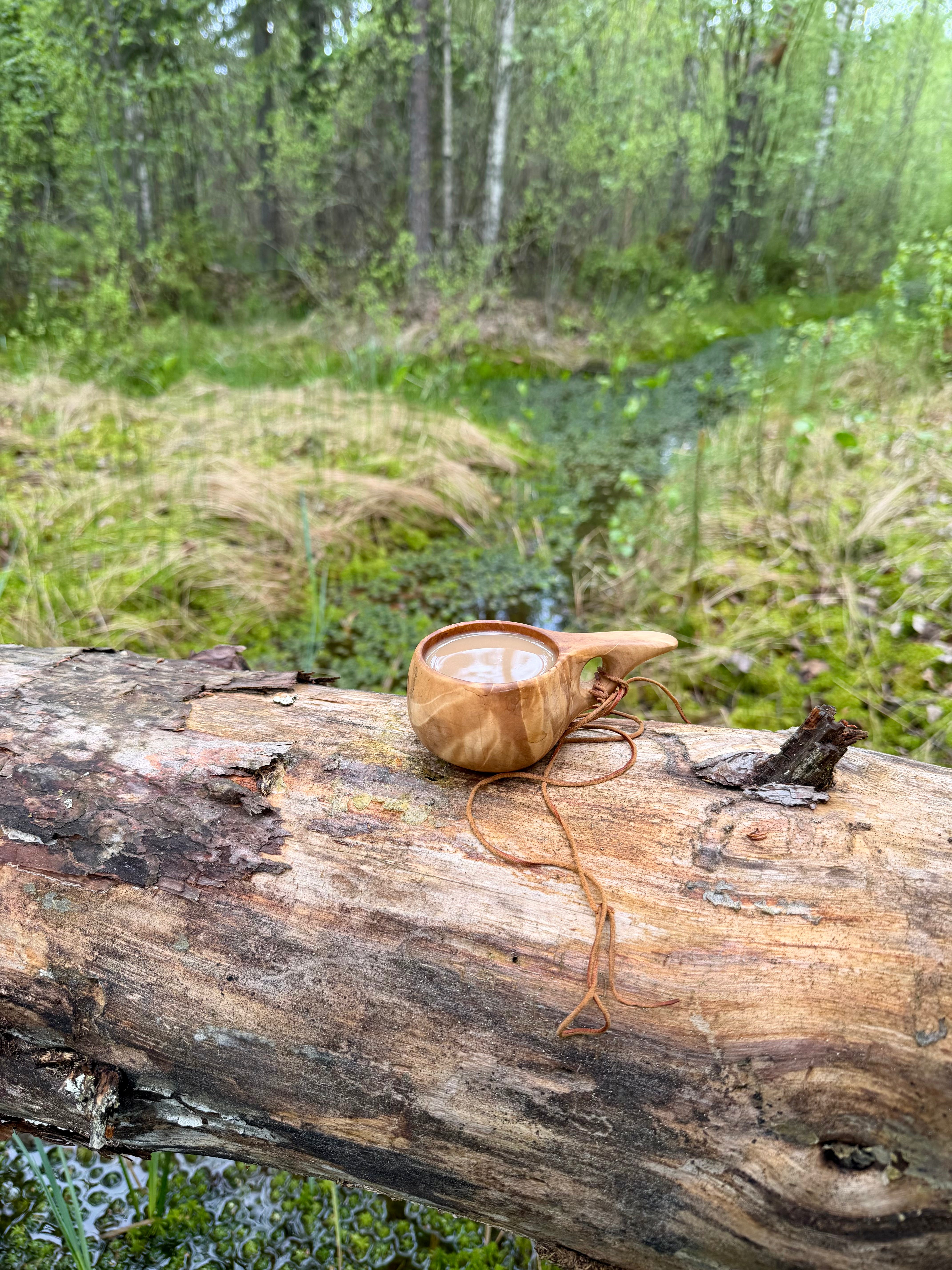
I’d like to follow the hollow and see where it leads, but this isn’t the moment for that. I sit down on a fallen trunk above the still water and take the coffee thermos from my pack. I no longer remember the cuckoo.

I’ve packed sandwiches too, and this would be a good time to eat them. But I’m too caught up in the spell of the bog. As I sip coffee, I slip the sphagnum samples from my pocket between the pages of my field journal so I can later figure out which species they are.
After finishing my coffee, I continue toward the middle of the bog. Out here it’s stark: dry hummocks with wet hollows between them. In Finnish there’s an enormous number of words for all of this. Bogs have been such a deep part of everyday life and language here.
I walk past the bog eye we found a year ago. I still recognize it, even though there are no real landmarks. But the way the hummock curves around the hollow in that particular shape has stayed in my mind. On the surface it looks only slightly wetter than the surrounding moss, but in reality there’s at least a metre and a half of depth beneath it. It’s not a place I want to step. Moving through a bog means being careful and knowing where to put your feet.
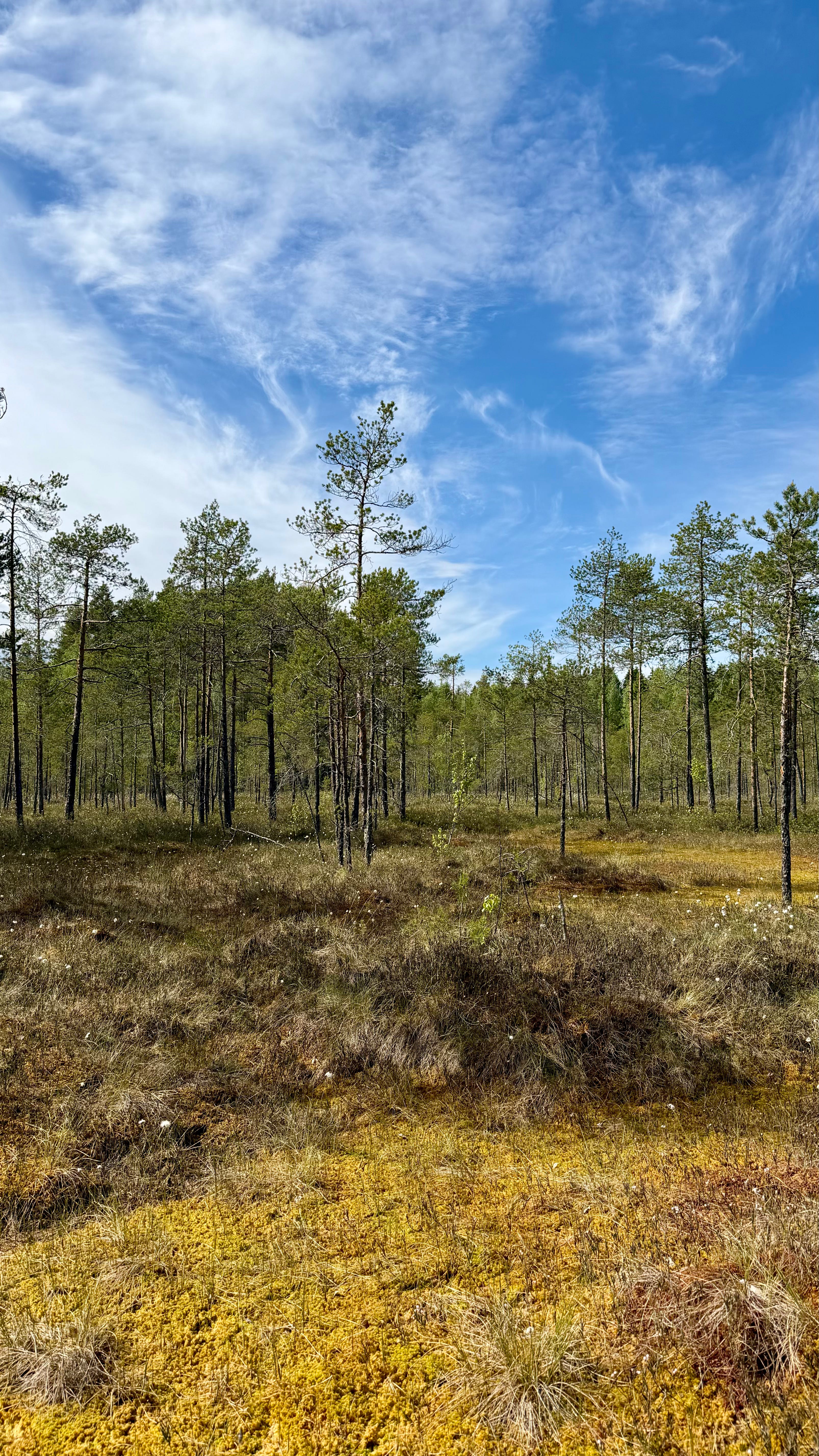
Somewhere in the distance, thunder rumbles again. Here on the bog it stays calm, as it always does. The sun is out now, and the layer of clouds begins to break, revealing patches of blue sky. It’s time to head back to the cottage. I remember the sandwiches and sit for a moment in the forested spruce mire at the edge of the bog to eat.

The bog remains unchanged, as if I had never been there at all. The peat is already swallowing the traces I left behind, while time drifts onward in its slow, almost suspended way. Tomorrow, everything will be just the same as today.

♡ If you’d like to support my work, you can buy me a coffee.
Bigs and swamps were really large landscape features where I grew up and this really brought me back (alas they are uncommon in the mountains here, a pity), and shout out to labrador tea! They were always a favorite, thank you for such spellbinding words!
Wow. A tour de forest. Thank you.