


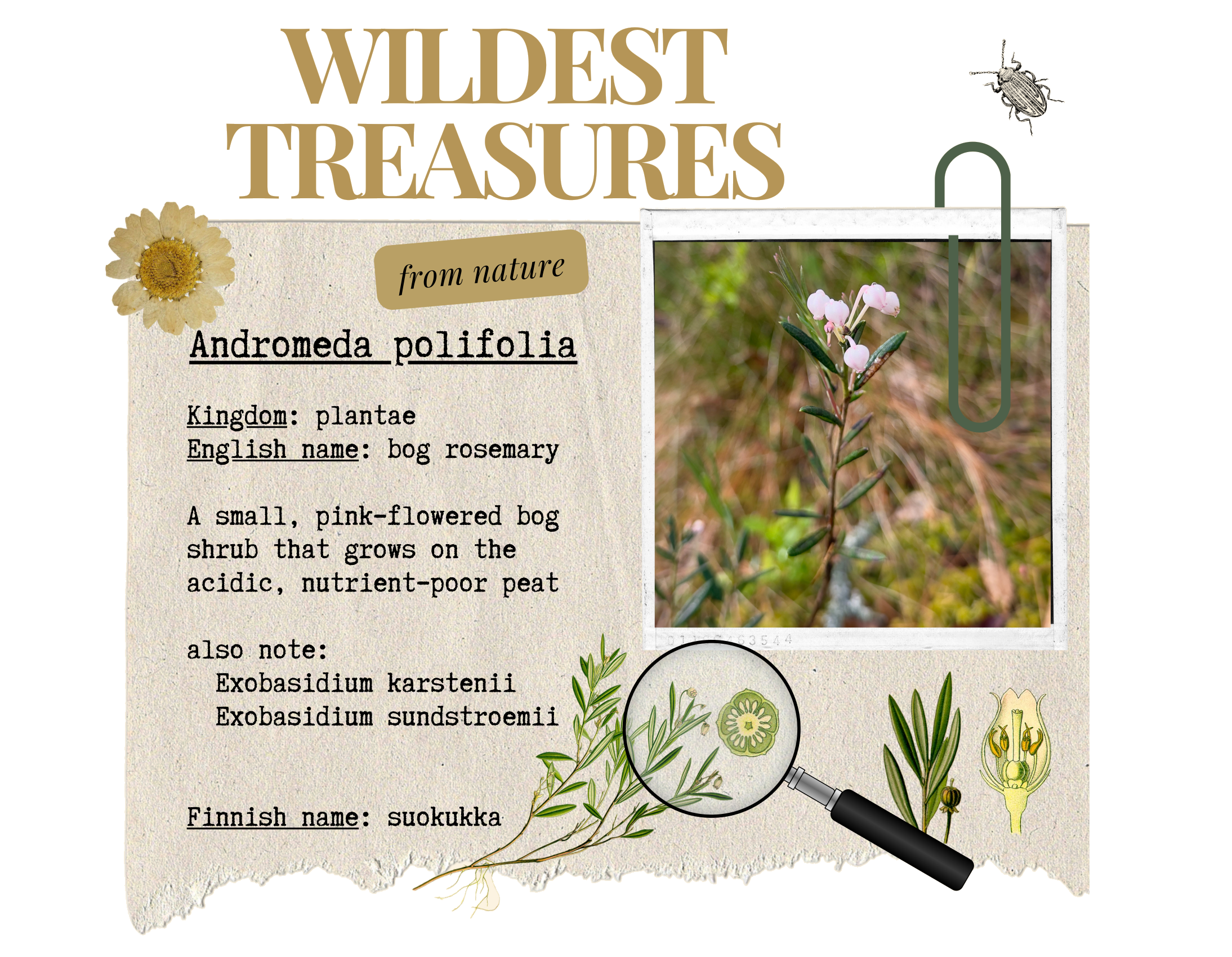
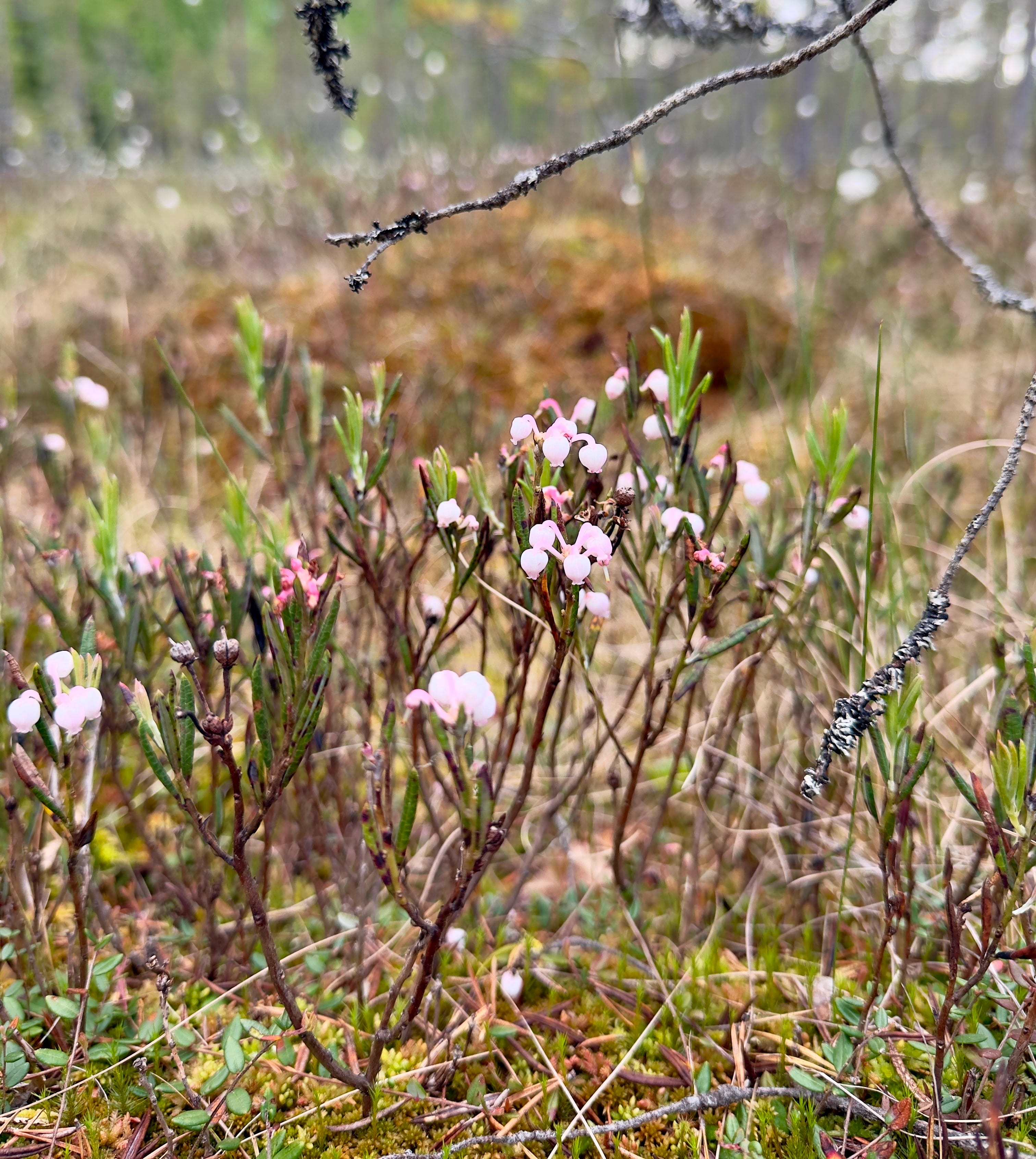
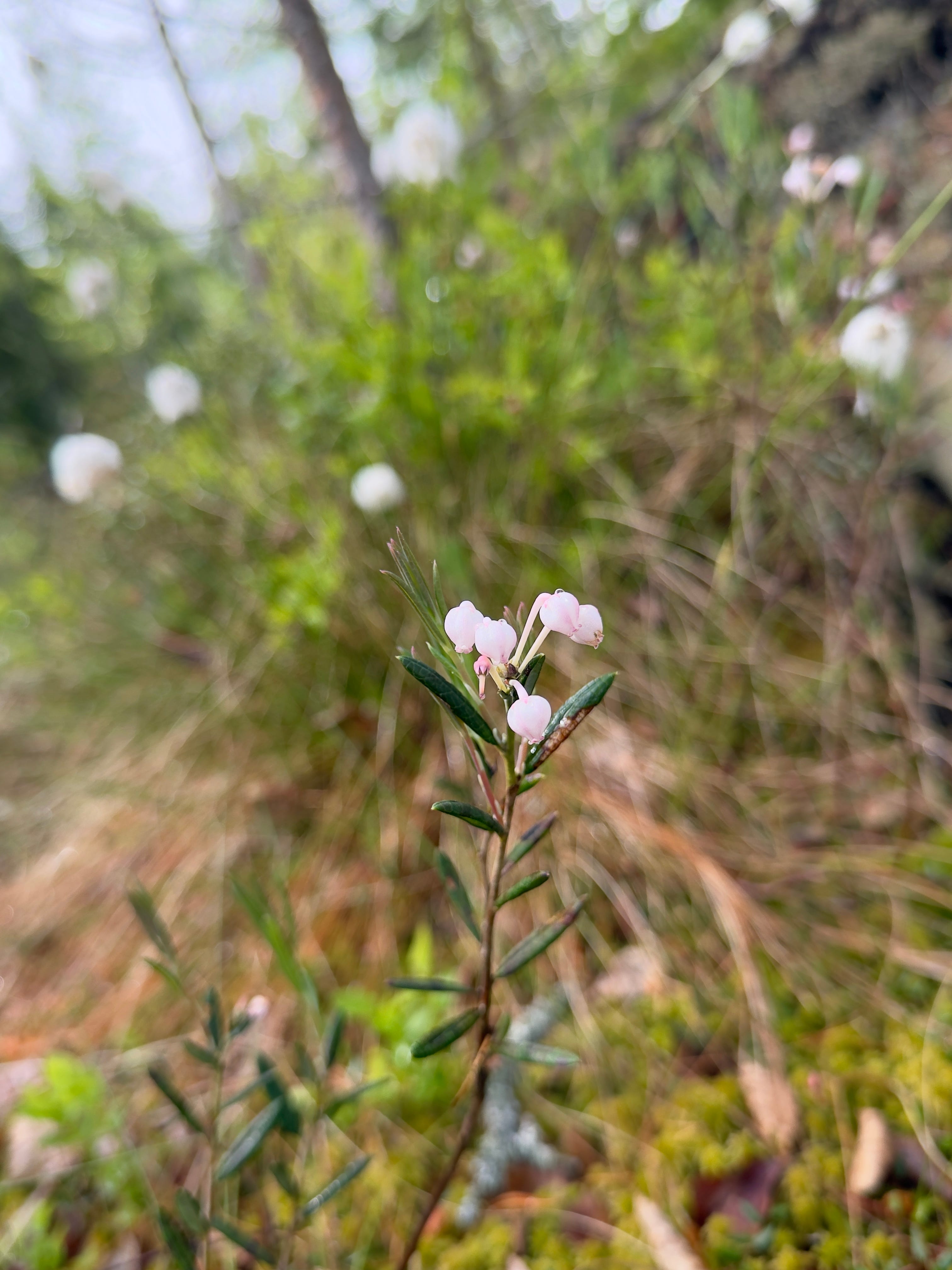
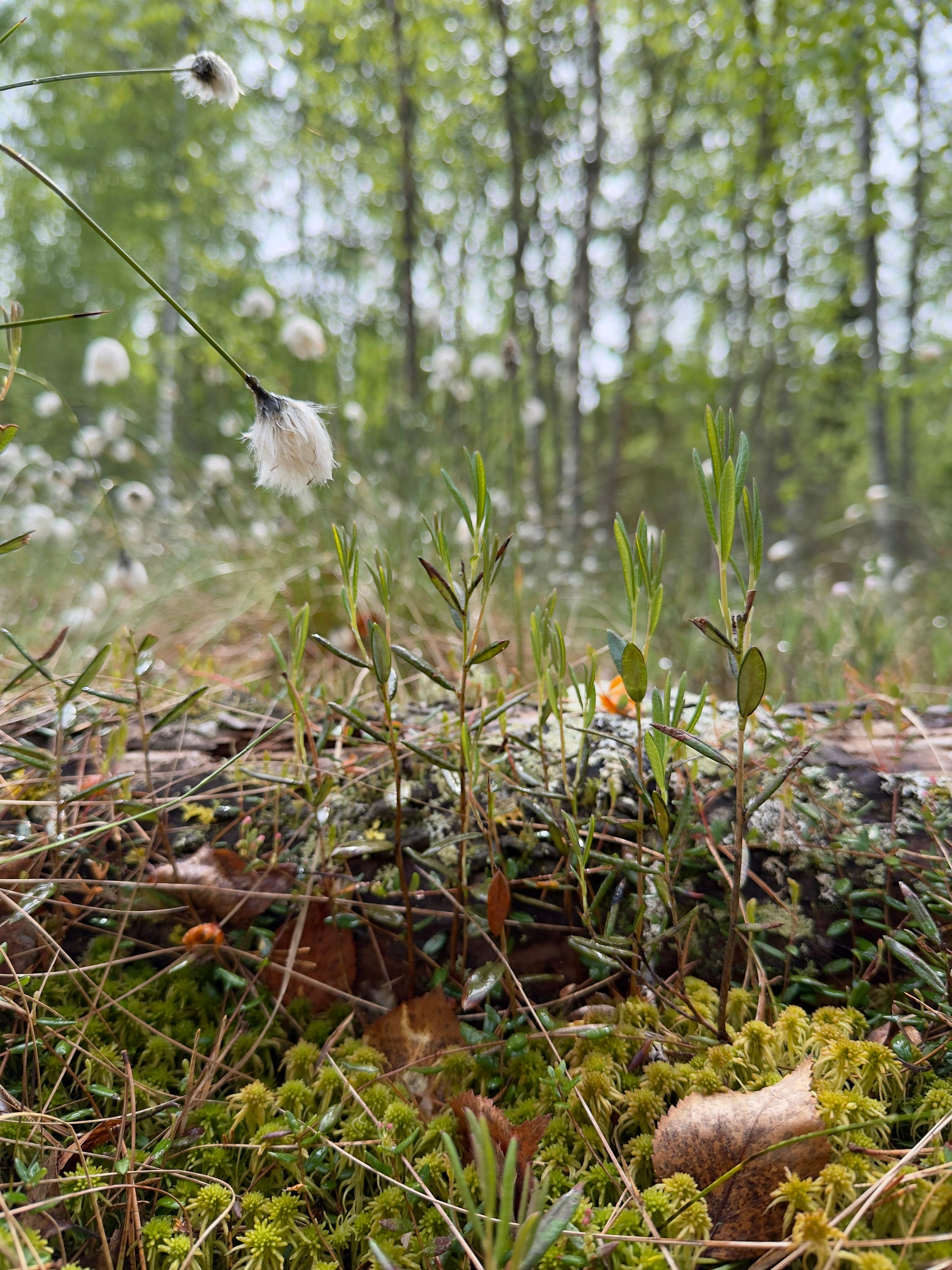
This is one of my favourite bog plants. Its Finnish name is very simple — suokukka, literally “bog flower”. It grows commonly on acidic bogs and blooms in early summer with pale pink, bell‑shaped flowers.
In English its name is bog rosemary, although it is not related to rosemary. It has been used as a medicinal plant in the past, among other things for arthritis. Bog rosemary is poisonous throughout the plant.
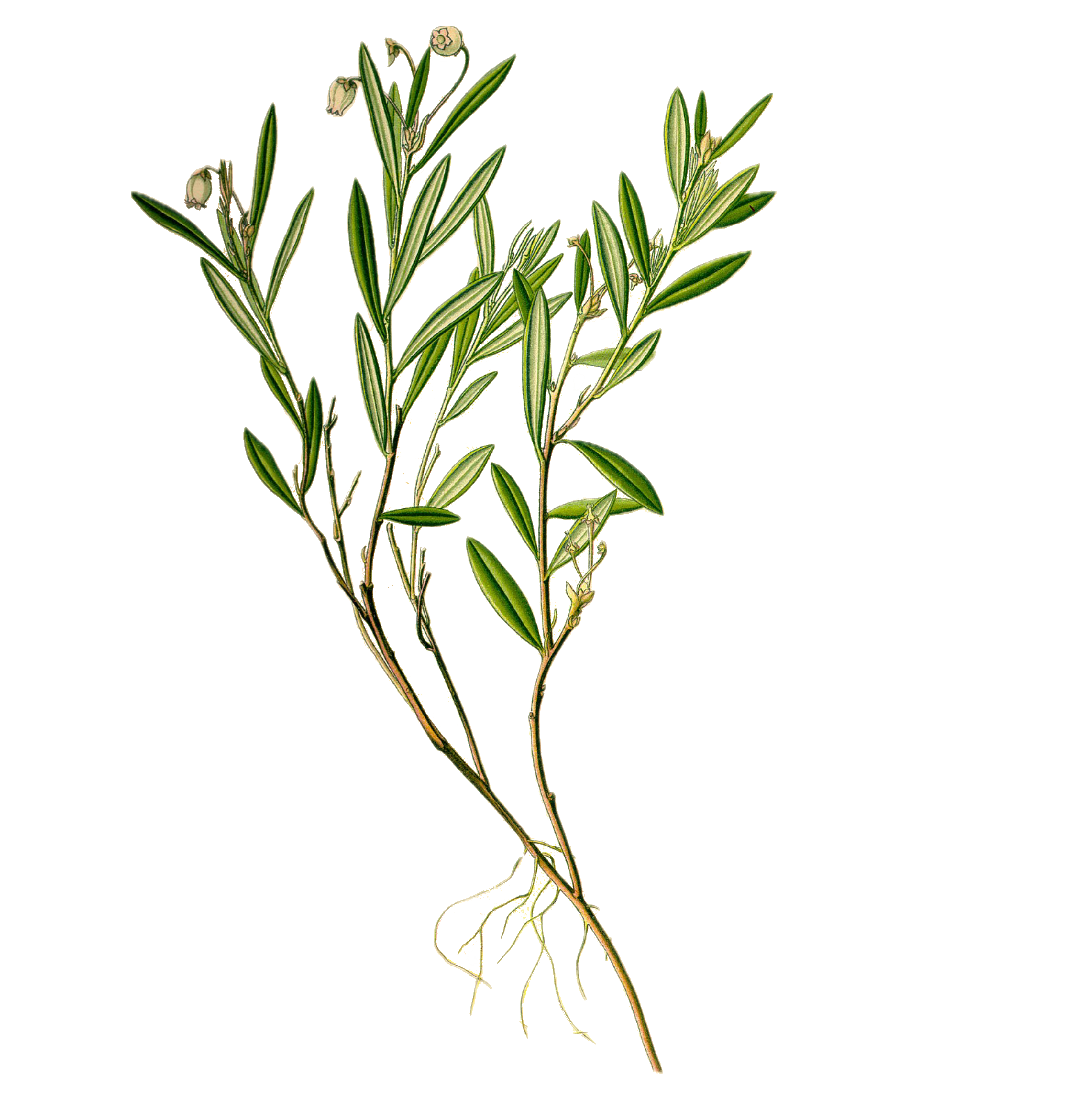
The leaves are leathery, elongated, and greyish on the underside. The leaves overwinter. The root system is extensive, up to two meters long and extending to half a meter deep. The flowers are nodding and bell‑shaped, with colours ranging from almost white to soft pink.
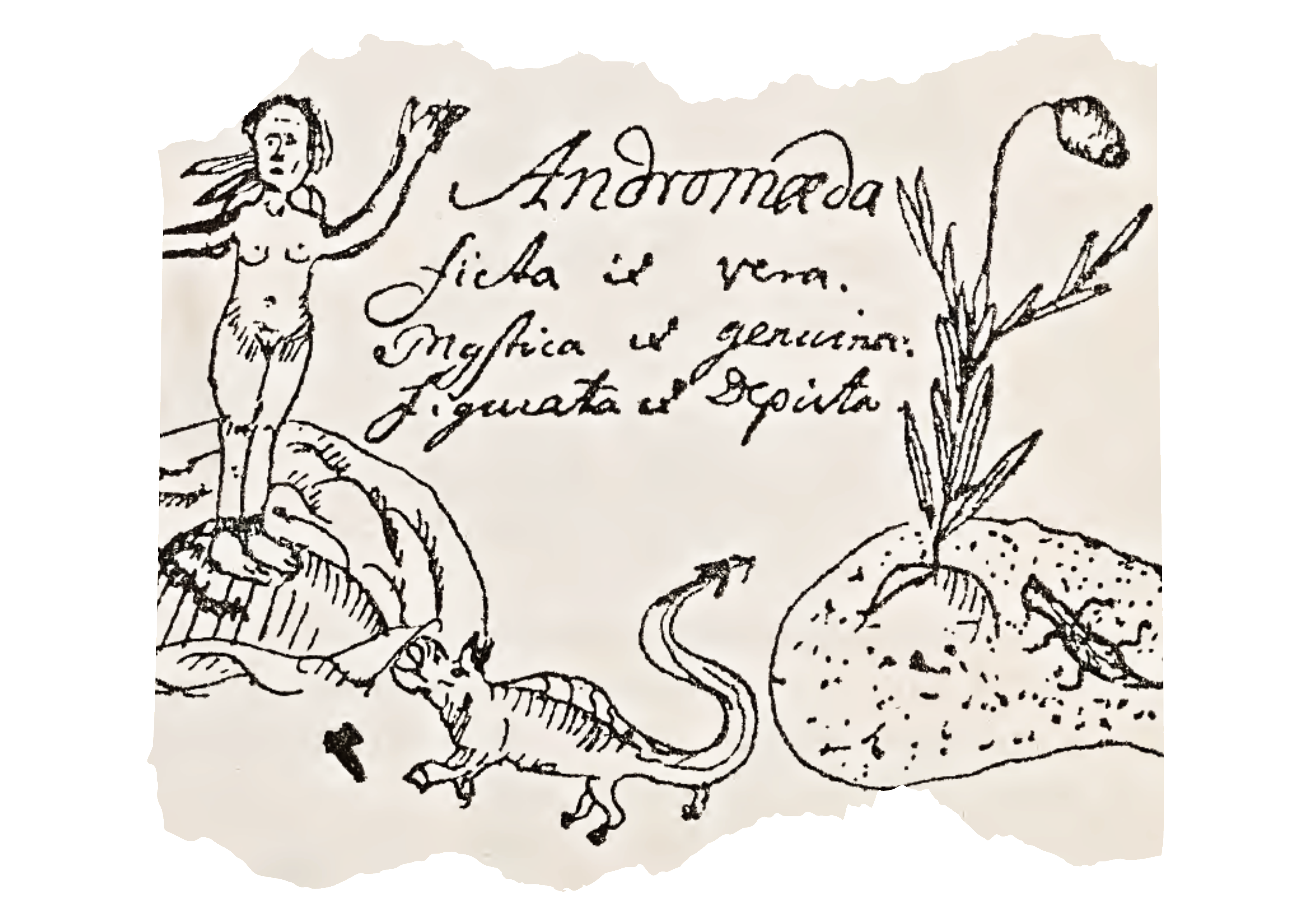
The developer of modern biological classification, Carl von Linné also regarded this plant as something exceptional. When he found it on a bog in Sweden, he named it after the Greek mythological princess Andromeda — chained to a rock by the sea and surrounded by monsters.
He saw the plant as delicate yet tied to the dangers of the bog with its toxins, and even drew an illustration of bog rosemary and the princess merging into one figure. It was one of the few plants he described in such openly emotional terms.
Fungal pathogens
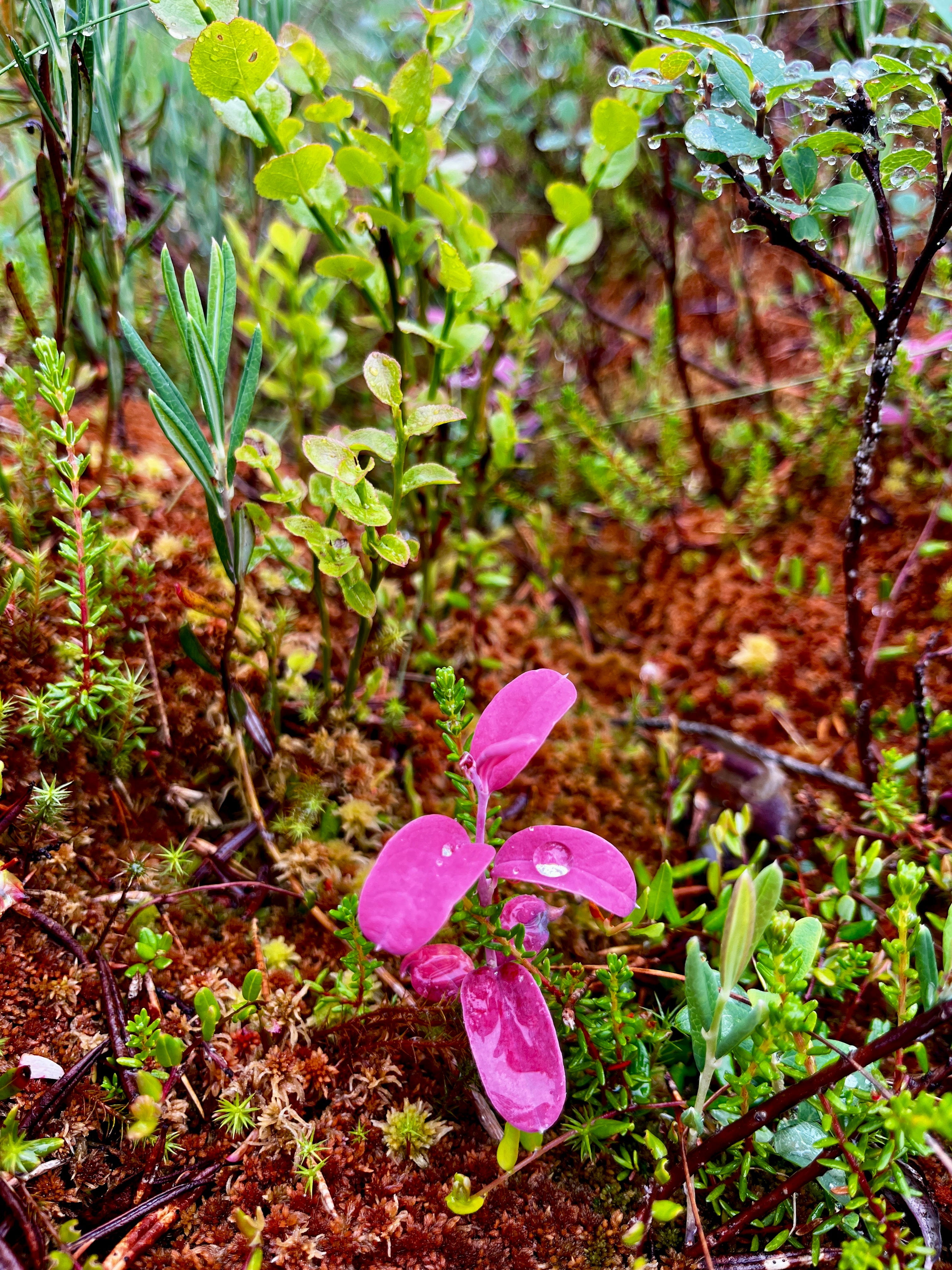
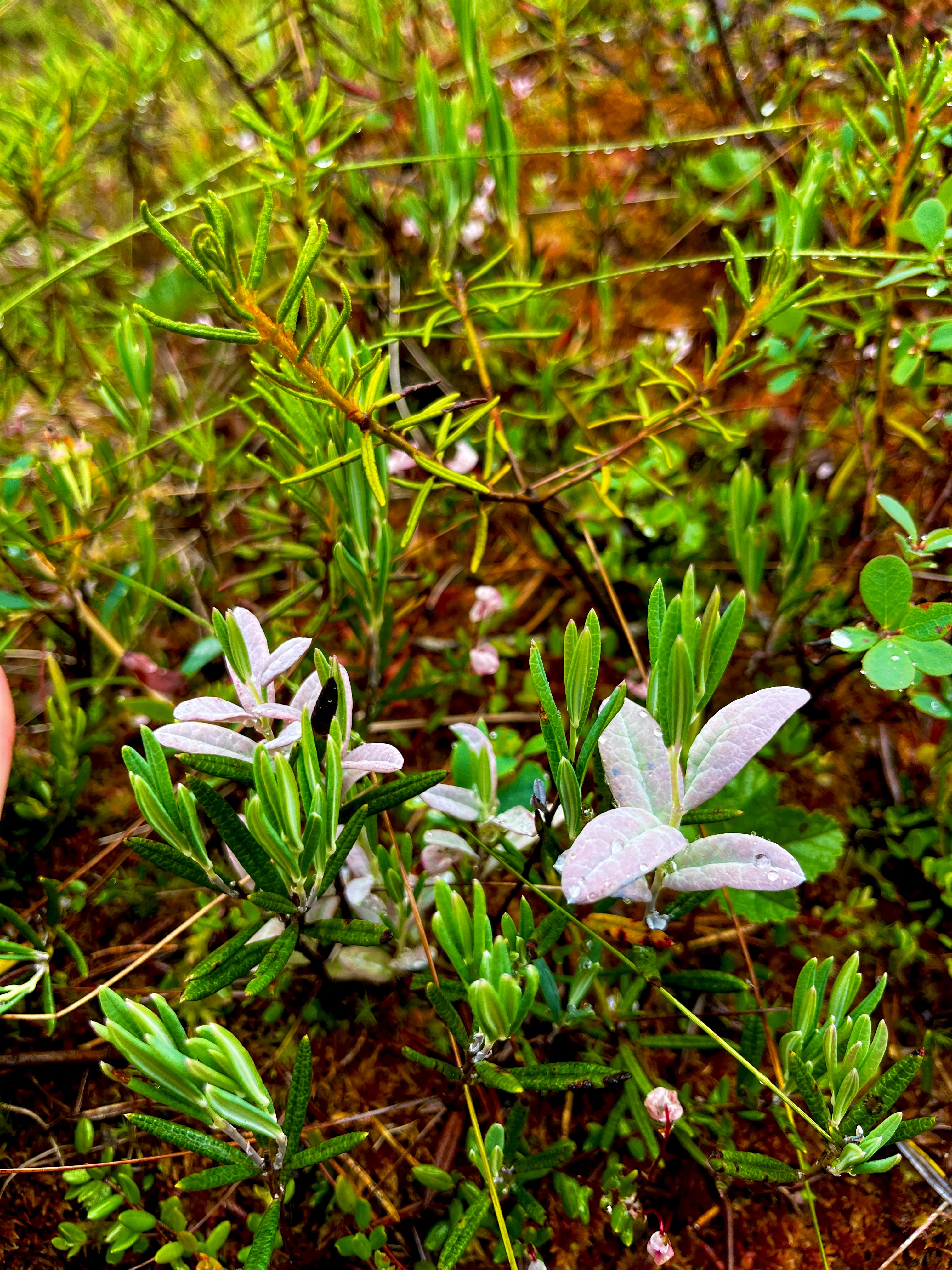
Like many dwarf shrubs, bog rosemary can host its own fungal gall. Exobasidium karstenii can transform the plant completely, turning its normally narrow green leaves into rounded, bright pink ones, while Exobasidium sundstroemii affects only part of the foliage, making some leaves pale pink and enlarged.
You are reading the Wildest Treasures section — a quiet corner of the Grow Wild in Forest Soil.
