


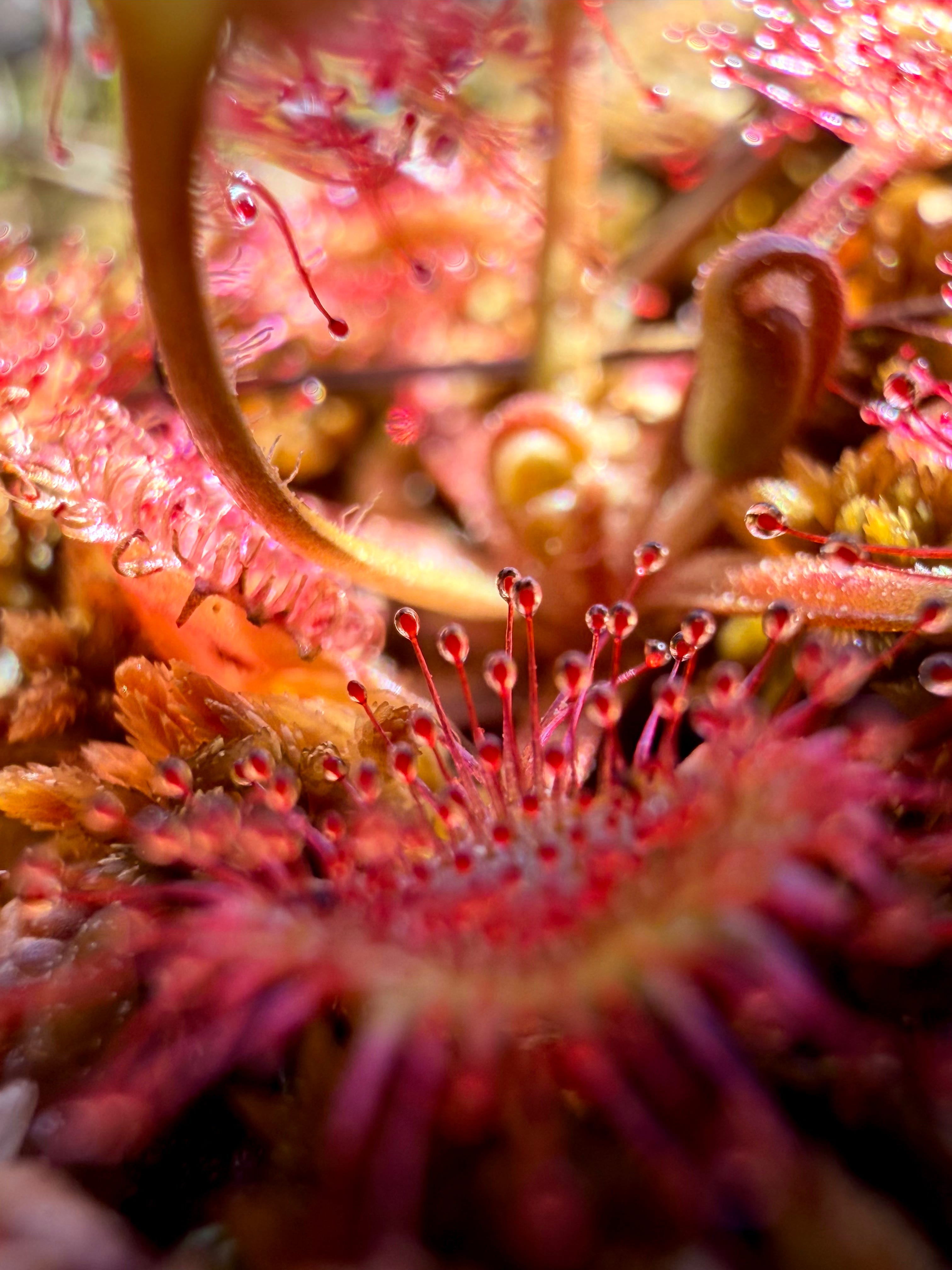
This may not look dangerous, but if you’re a small insect, you’d better keep your distance. With its glistening droplets and that almost erotic shade of red, it’s stunning — like a piece of art.
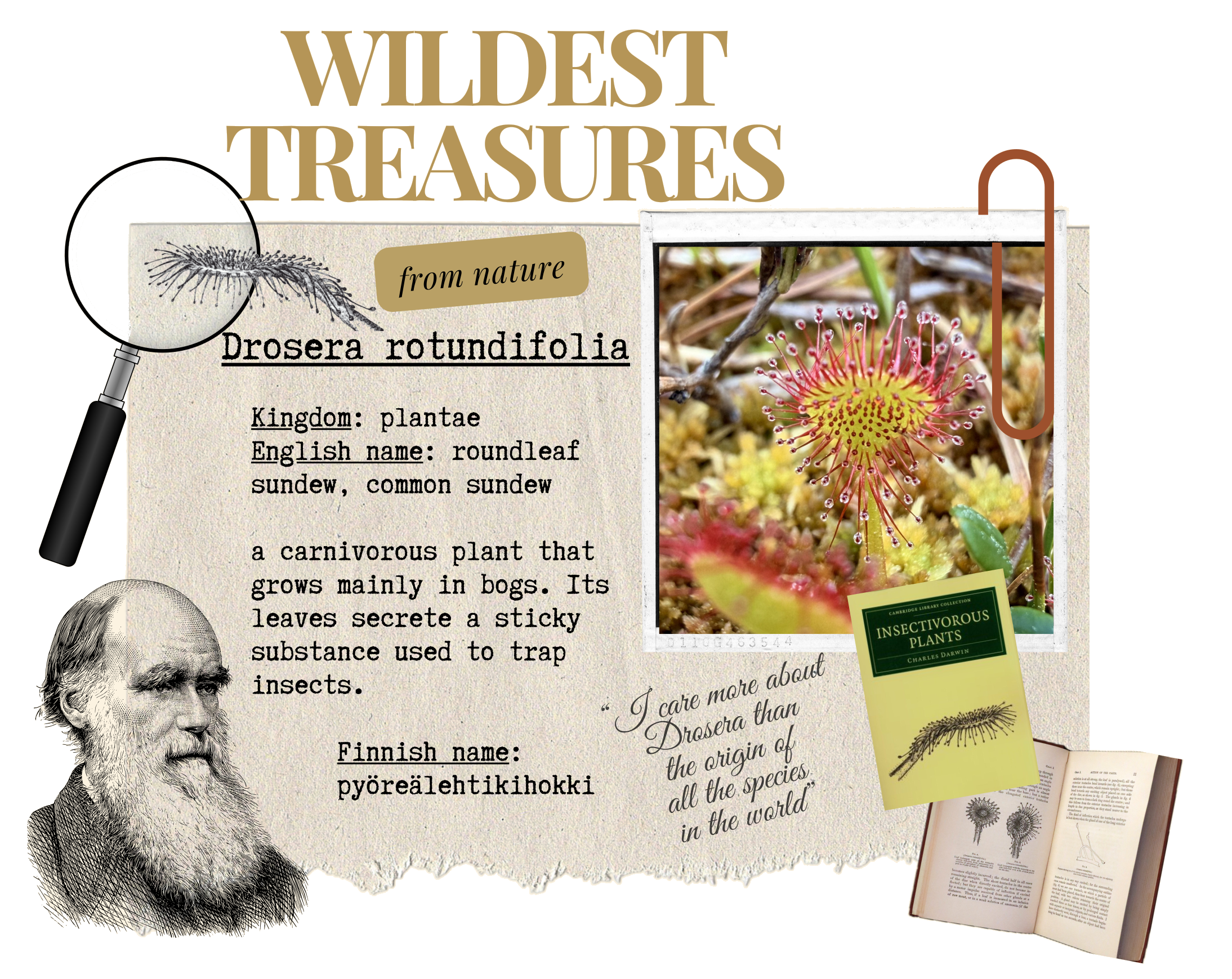
Charles Darwin, who had just published On the Origin of Species and brought the theory of evolution into public awareness, became fascinated by a small carnivorous plant growing silently in the bogs: Drosera, the sundew.
He was visiting Sussex in 1860, and noticed insect remains on the sundew’s leaves. He started to perform passionate examinations with sundews, placing insects, ash, and bits of meat on the leaves and watching them curl around their prey. His wife Emma Darwin wrote to a friend: “At present he is treating Drosera just like a living creature, and I suppose he hopes to end in proving it to be an animal.”
From these experiments, Darwin concluded that the sundew is not just a passive plant, but actively gains nutrition from insects — in other words, it functions as a carnivorous plant.
“I care more about Drosera than the origin of all the species in the world.” — Charles Darwin

He wrote the book Insectivorous Plants based on his extensive experiments. When the long project was finally completed, Darwin’s neighbour Ellen Lubbock celebrated the occasion by writing a poem from the insects’ point of view.
We saw that you were watching us,
We felt you were our friend,
And as we, in a general way,
Come to a fearful end,
It suddenly occurred to us
That we would have a look
At what you said about us,
So we crawled upon your book.
We now have buzzed all over it,
And find that, as we feared,
Voracious Plants could tell us
How our friends have disappeared.
Ellen Lubbock, 1875
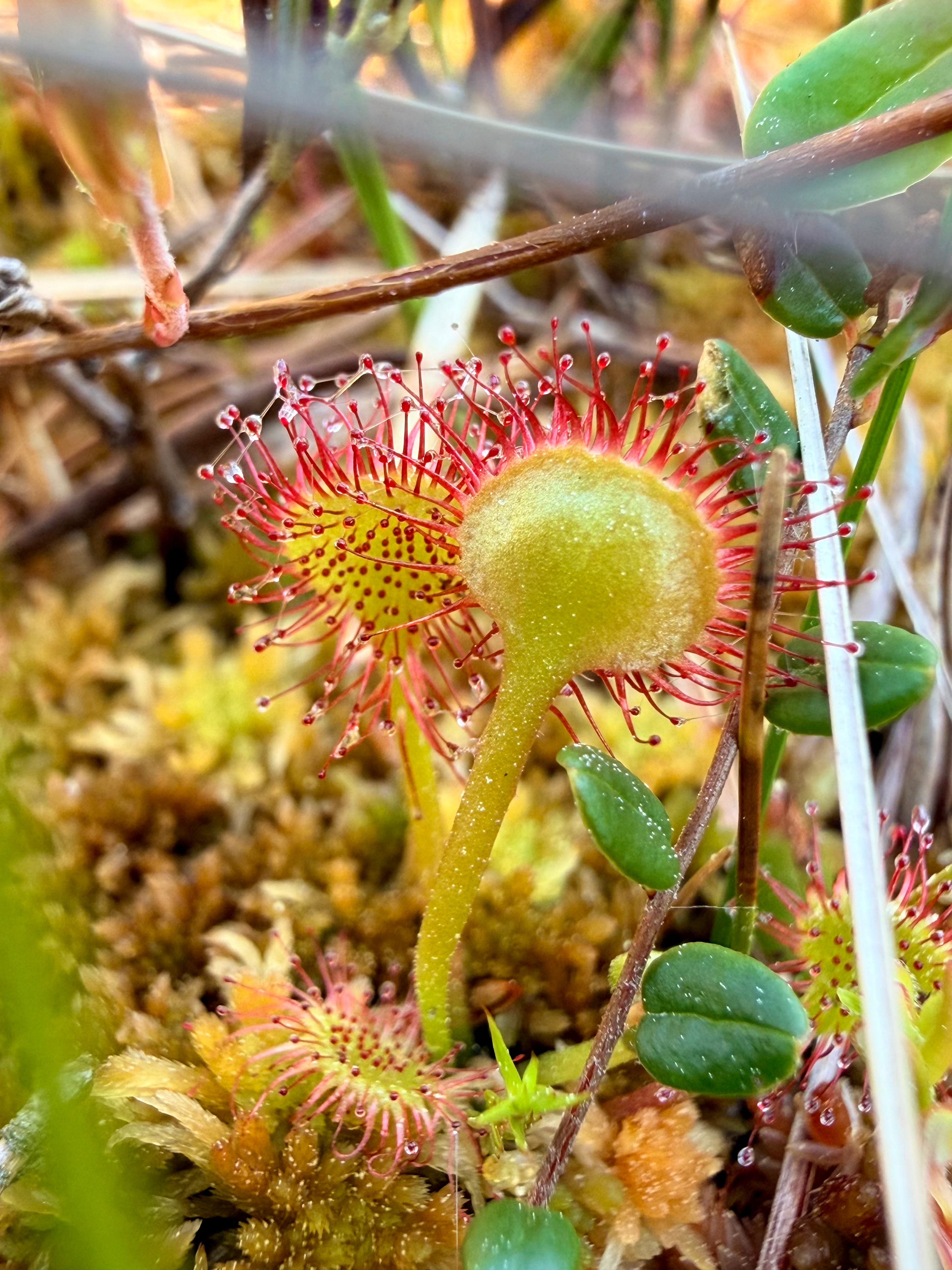
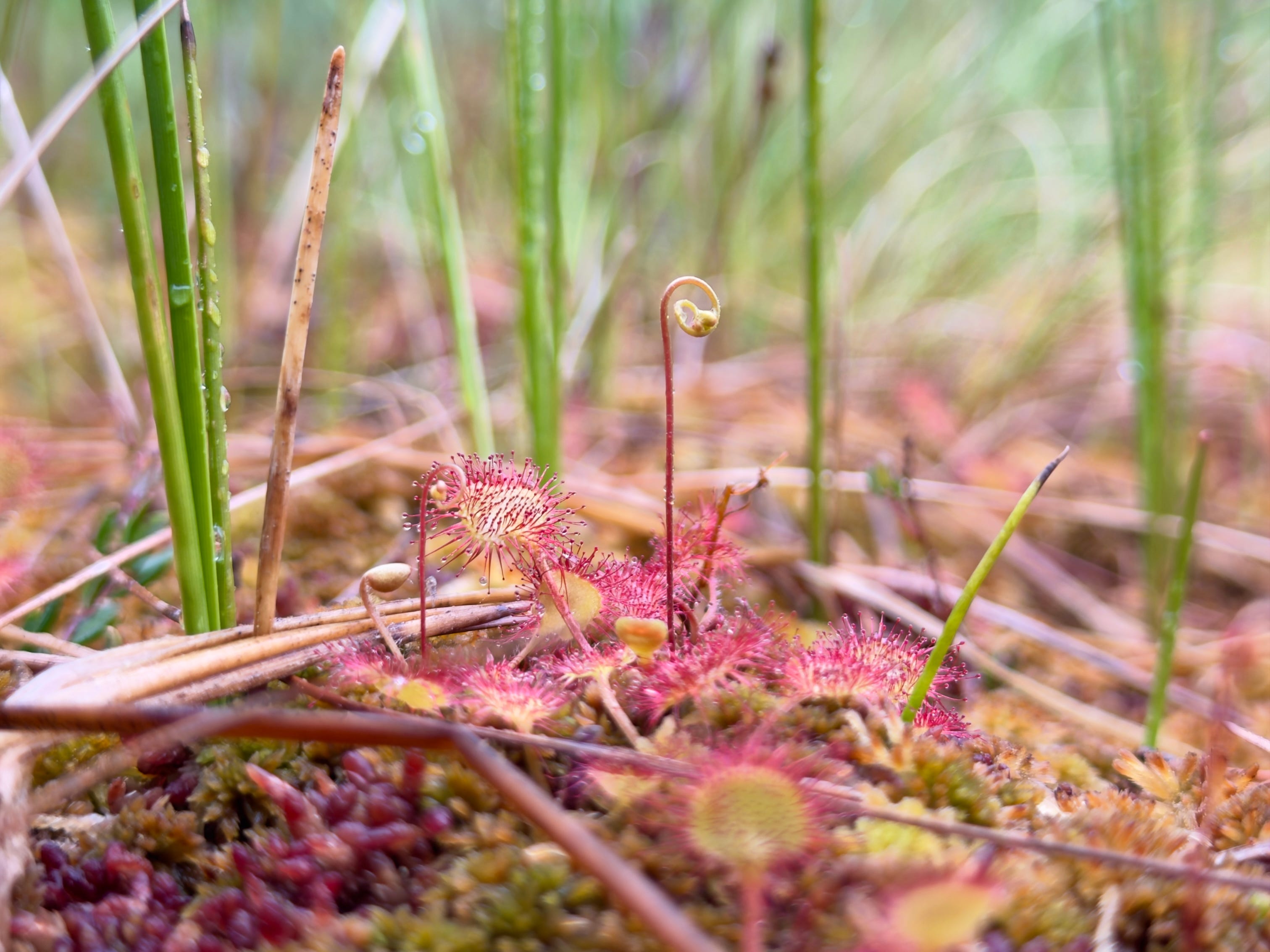
Three species of sundew grow in Finland, and this round-leaved sundew is the most common. It grows in bogs, fens and marshes throughout the country. It forms a small rosette in the moss. The leaves are pale green, covered in red pin‑like glandular hairs. At the tip of each hair, the plant secretes a clear, sticky substance that works like glue.
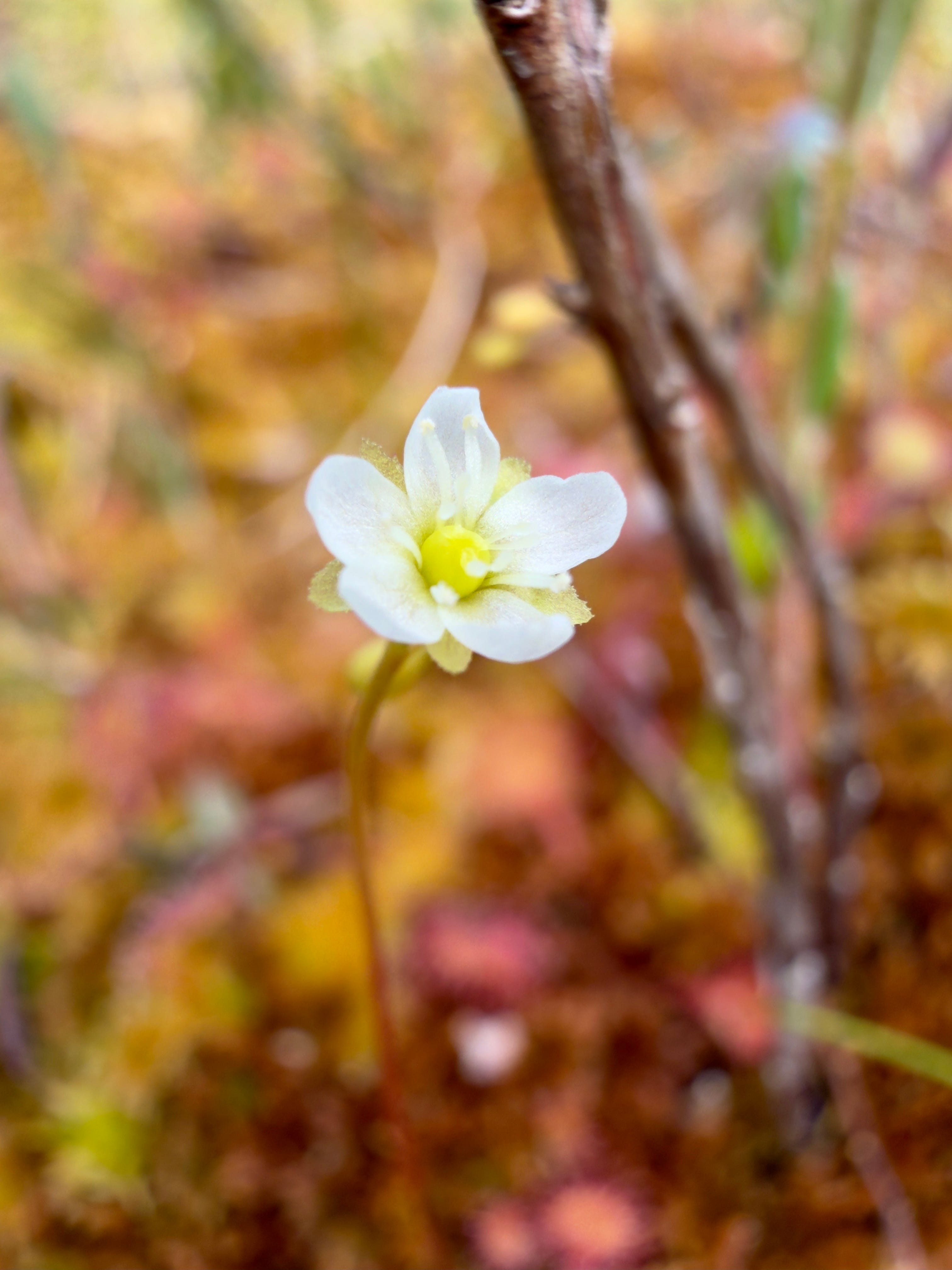
It flowers in June–July with modest white blossoms. The flowers open only in the late morning when the sun shines for a brief moment. After flowering, they develop into seed capsules filled with many light seeds, ready to be carried away by wind or by the movement of bog water.
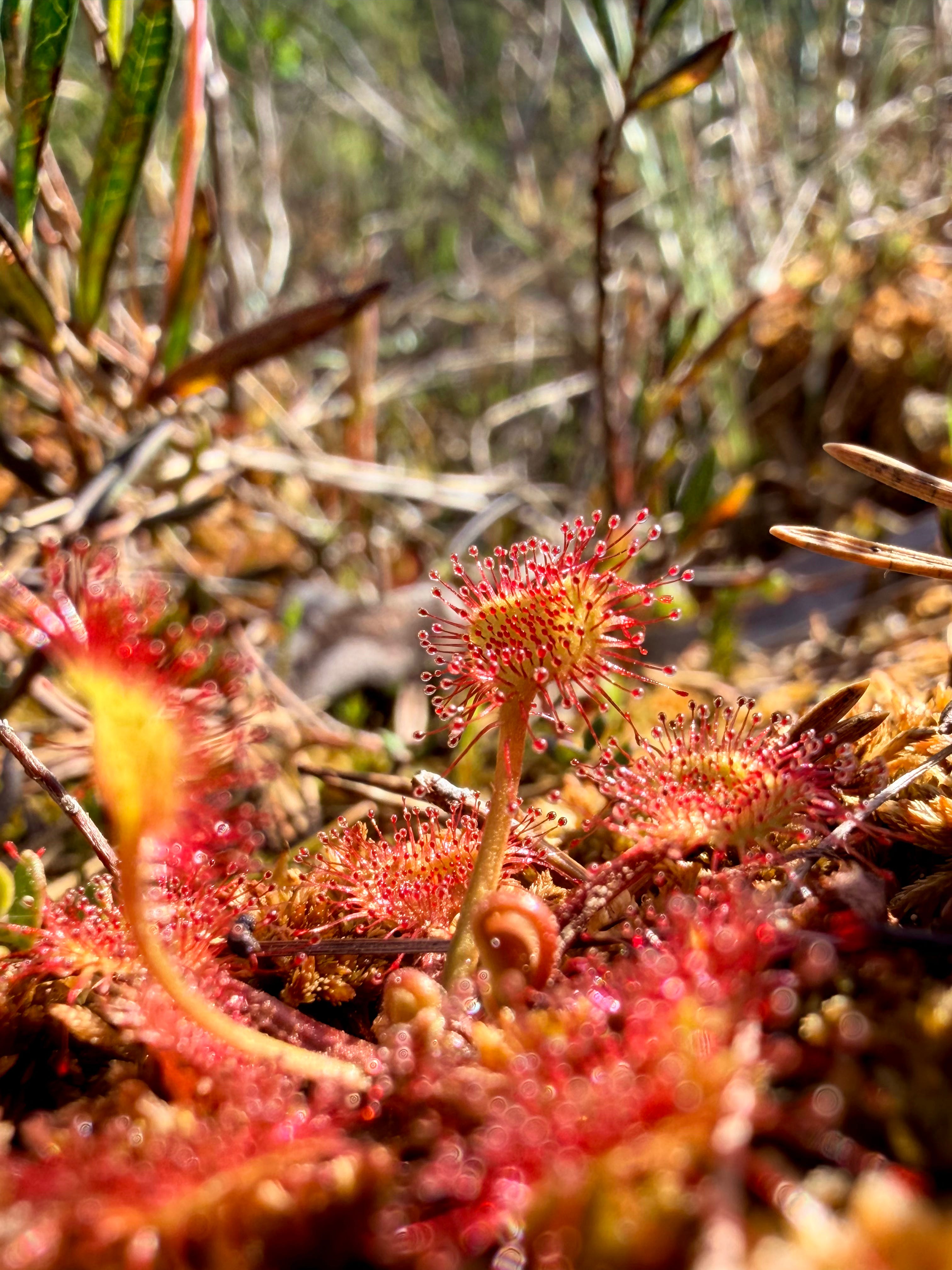
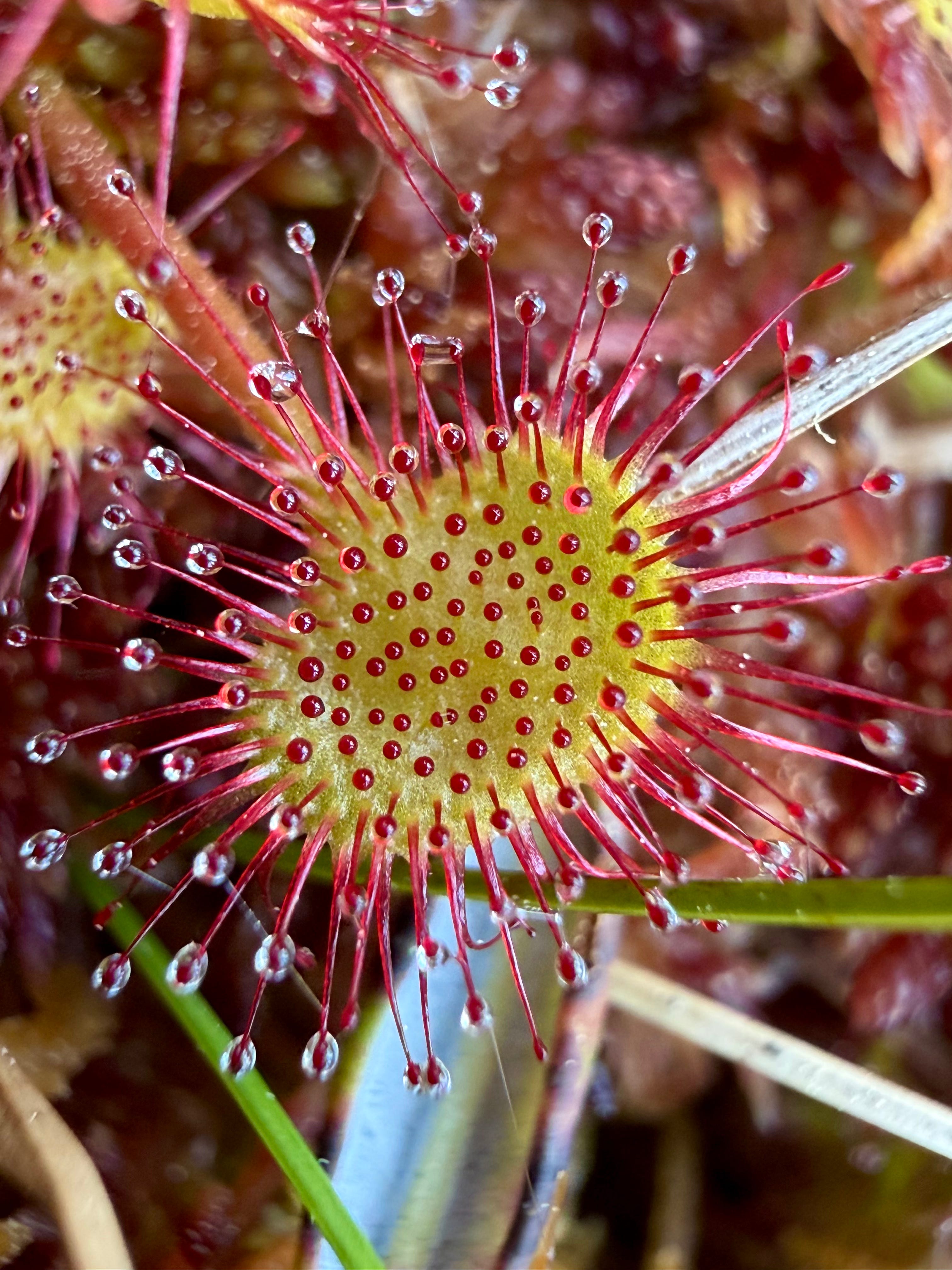
When an insect lands on a sundew, it gets caught in the sticky secretion as if it were glue. The hairs bend toward it, and the whole leaf slowly curls in, enclosing the insect. The insect slowly suffocates as it is held in place, while the plant begins to digest it with its enzymes. Digestion takes a few days, and after a week or two the leaf uncurls again, and the remaining parts of the insect (mostly the chitin) are left for rain and wind to carry away. It can also survive without catching prey, though it grows weaker.
In traditional use, sundew was applied for cough, asthma, and whooping cough, most commonly as a herbal infusion for drinking. It has also been applied externally to treat corns, warts, scabies, and calluses. The plant contains plumbagin, which has anti‑inflammatory and antimicrobial effects.
Sundew has also been associated with increasing sexual desire, which is why it has been given various Finnish names linked to passion. It was also used in attempts to stimulate heat in cattle. In some traditions, its leaves were used to produce a fermented, yogurt-like dairy product. The plant can also be used to produce a red dye for colouring yarn.
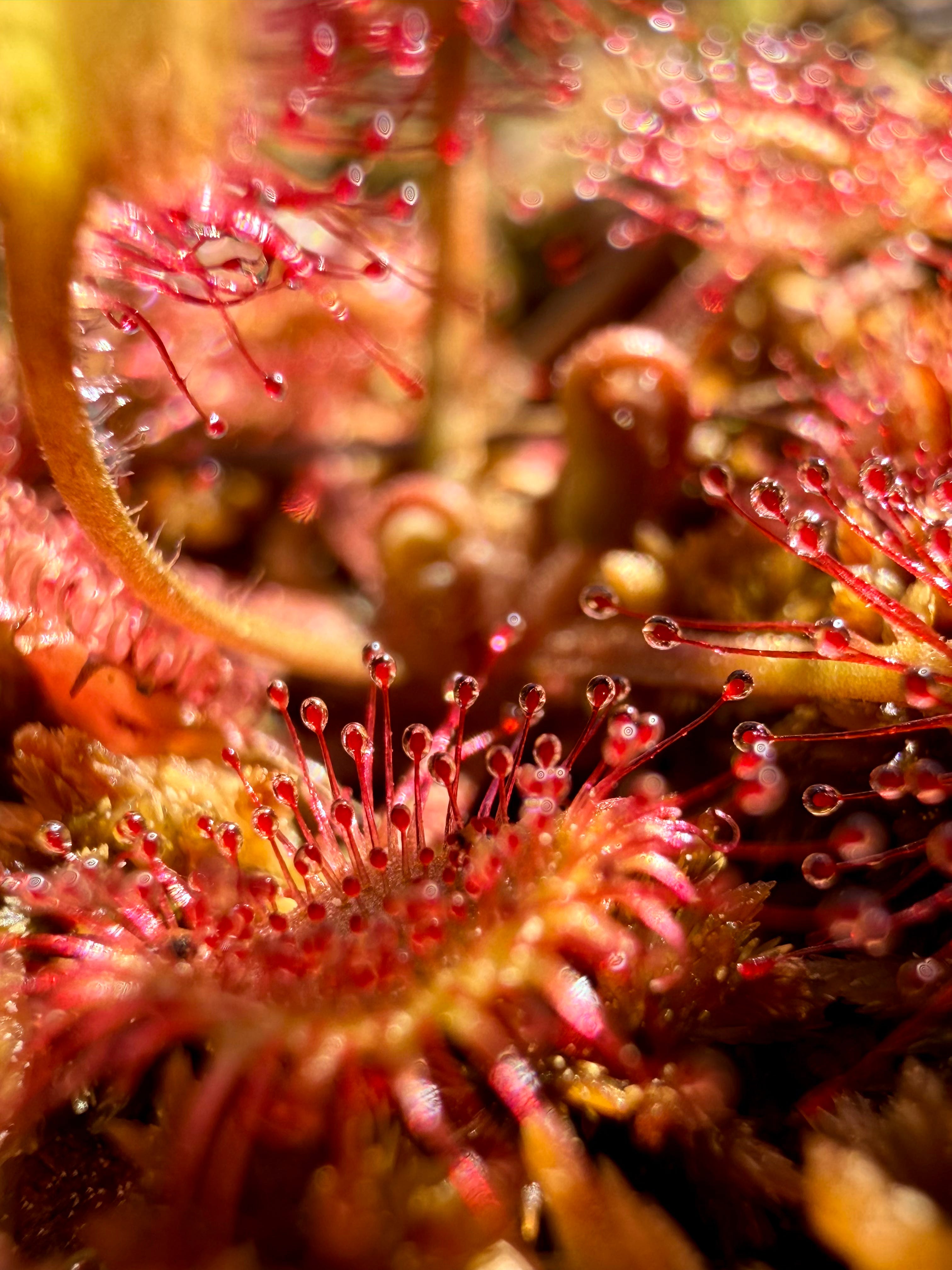
In the secretive world of the bog, the sundew is easy to overlook: small, low, almost hidden in the moss. But once you notice it for the first time, you’ll want to seek it out again. It glistens, waits, and works with slow patience shaped by the bog. A plant, almost an animal — a tiny carnivore shining in the wet light.

You are reading the Wildest Treasures section — a species-focused corner of Grow Wild in Forest Soil.

♡ If you’d like to support my work, you can buy me a coffee.
We also have sundew in Denmark. In danish: soldug. But I don’t remember having seen it!
Thanks for this post Anna, iyhad no idea it was here in Finland. No bog here but perhaps it might be found at the lake's edge - I'll keep my eye out from now on!