


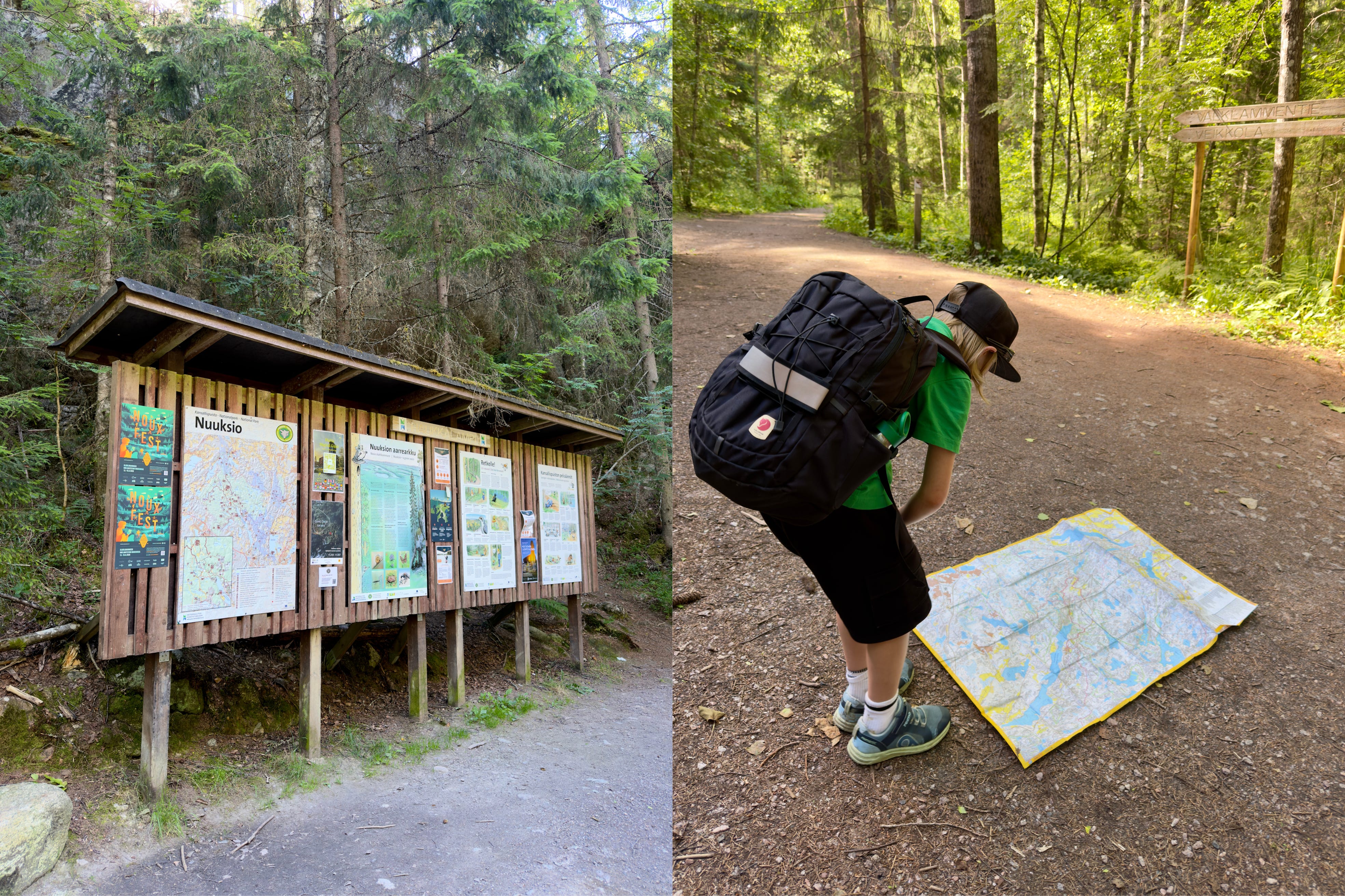
This trip was my son’s idea. He specifically wanted to go with me, just the two of us, for an overnight stay in Nuuksio National Park. This national park stands out because it is a sizeable protected area located unusually close to the nation’s capital. Its 55‑square‑kilometre expanse also hosts one of Finland’s densest Siberian flying squirrel populations.
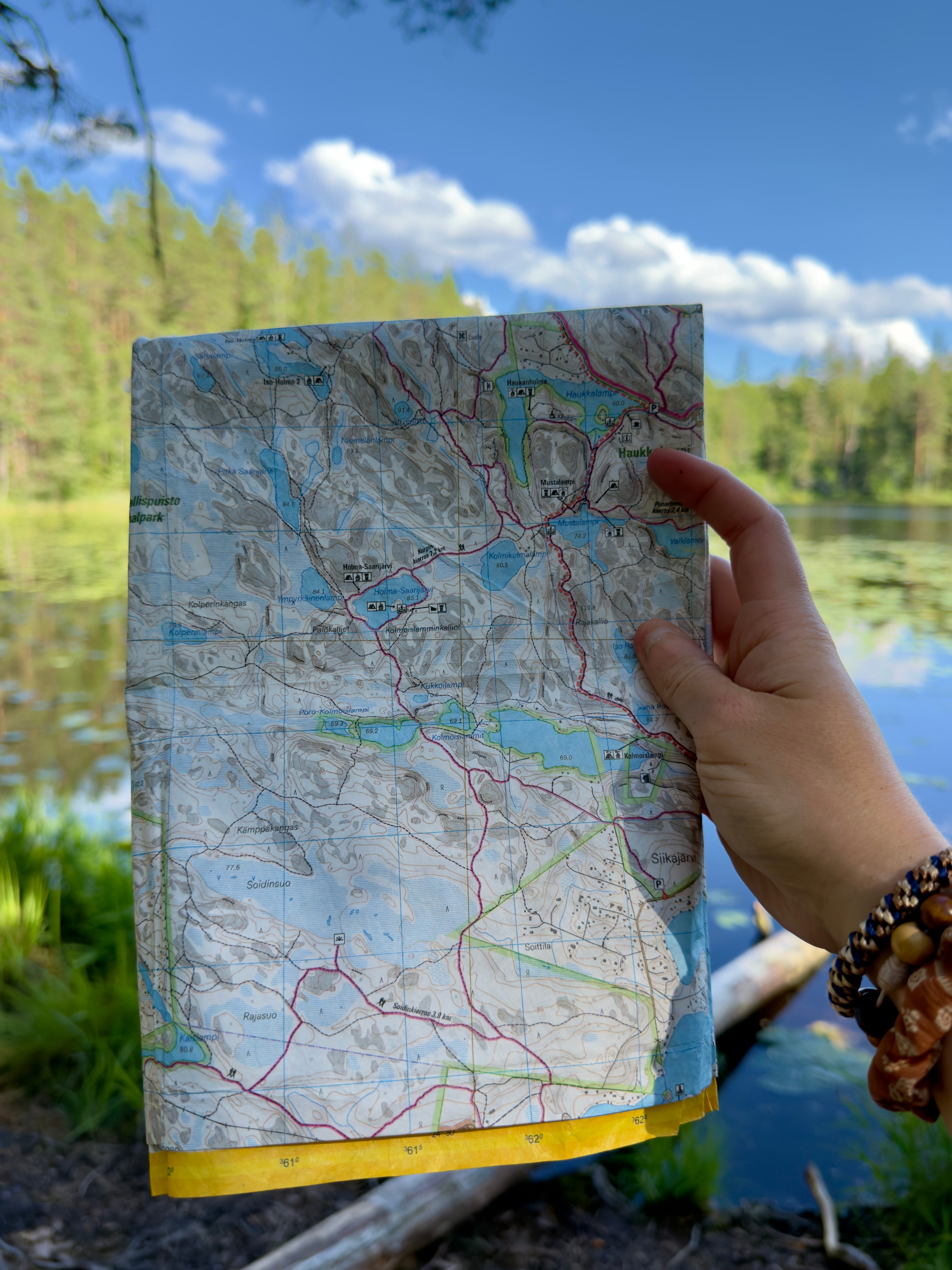
My son also wanted us to use a paper map. Packing was a bit tricky because most of our camping gear is at the cottage, so for example we had to manage without sleeping bags.
But I never say no to an outing!
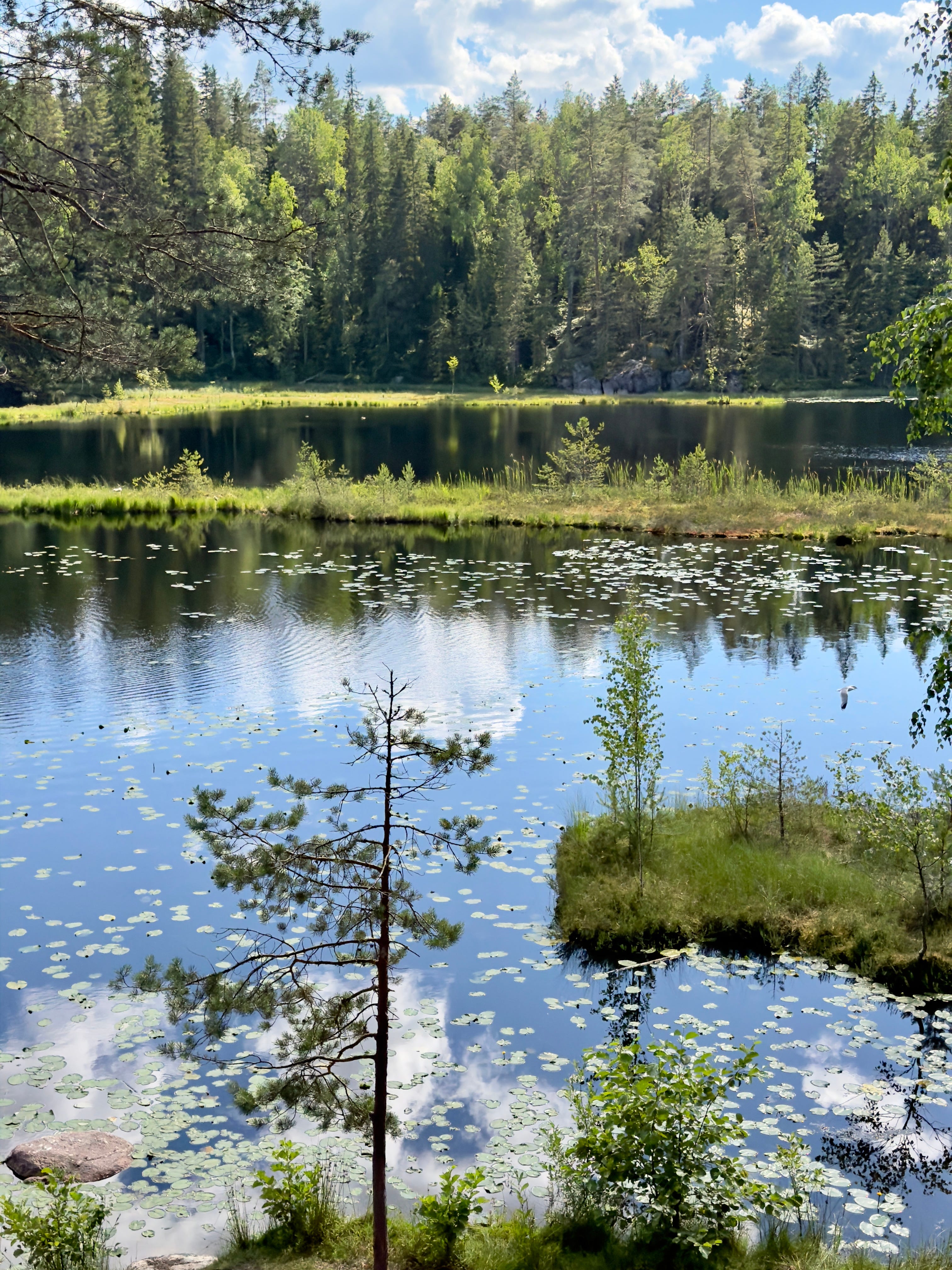
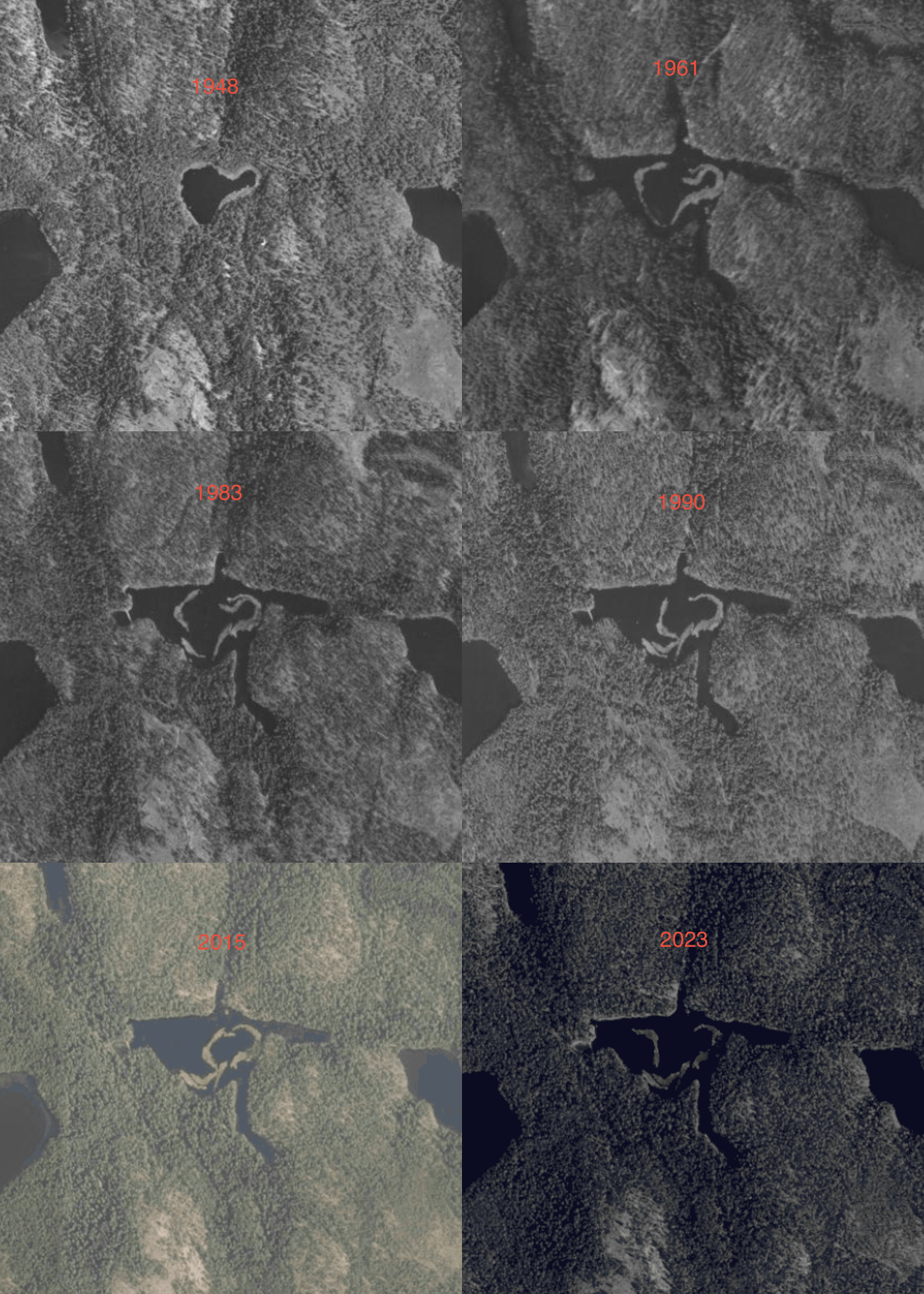
We arrived at the first water, called Mustalampi (Black Pond). Its history is fascinating: in the 1950s the landowner wanted to raise the water level so that cottages could be built along the shore, and he built a dam. Peat mats rose to the surface and still drift across the water today. No cottages were ever built on its shores. Gulls nest on the floating peat islands.
Personally, this is one of my favourite ponds. Its history is also fun to follow through old aerial photos. Here you can see how a small pond becomes a large one, and how the peat mats have moved over the years. I put together a small gif for you to show how the pond has changed.
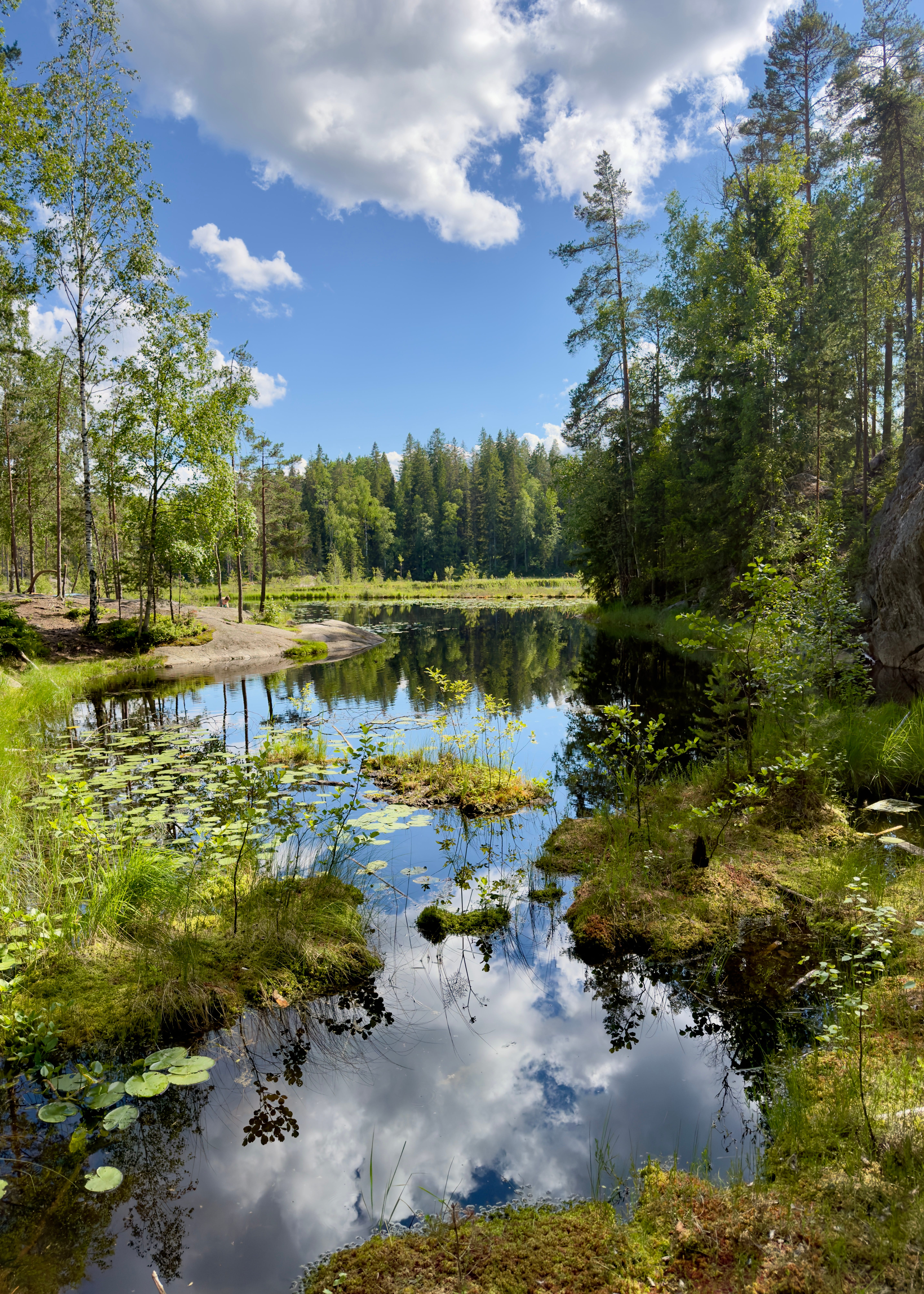
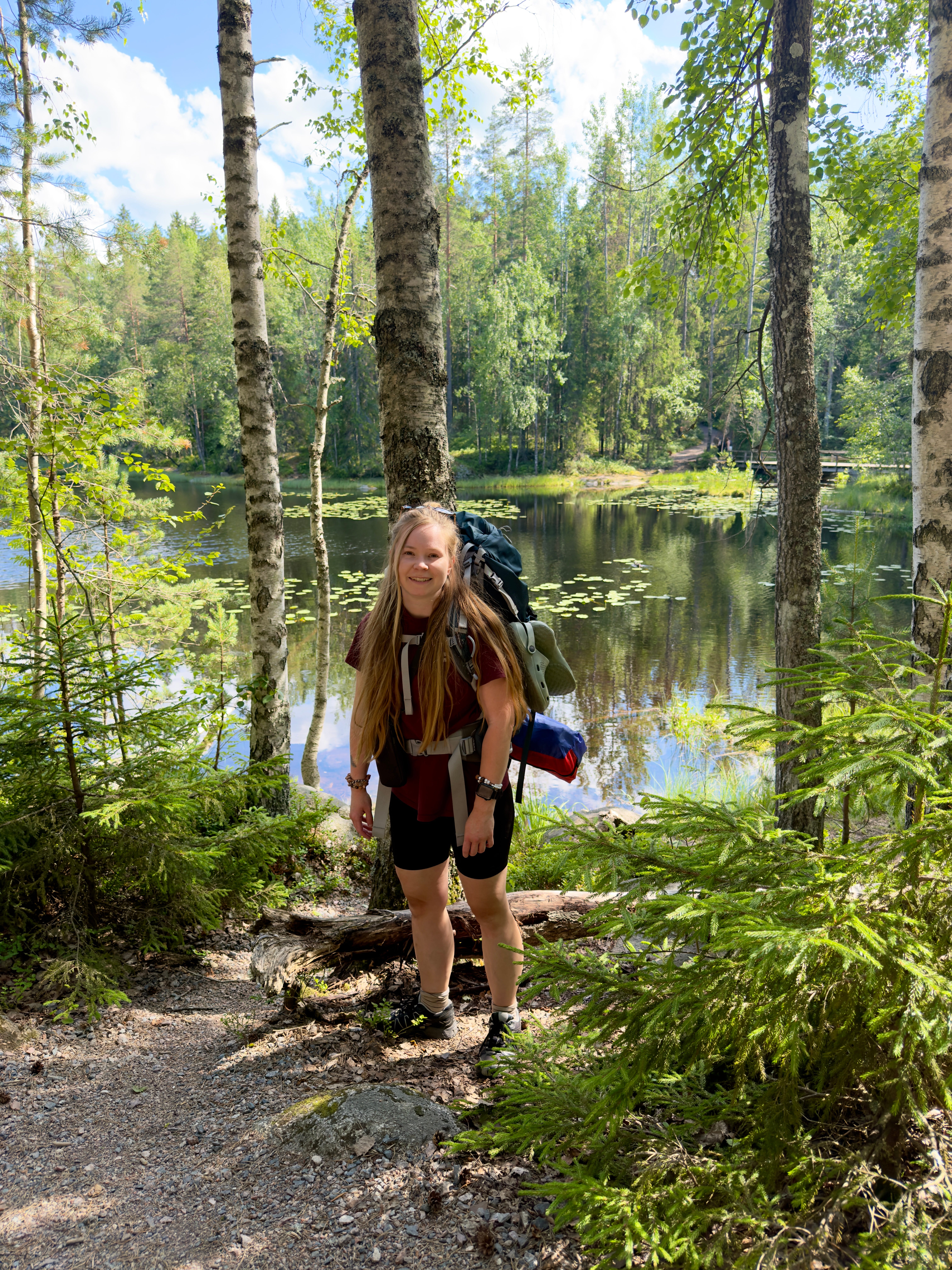
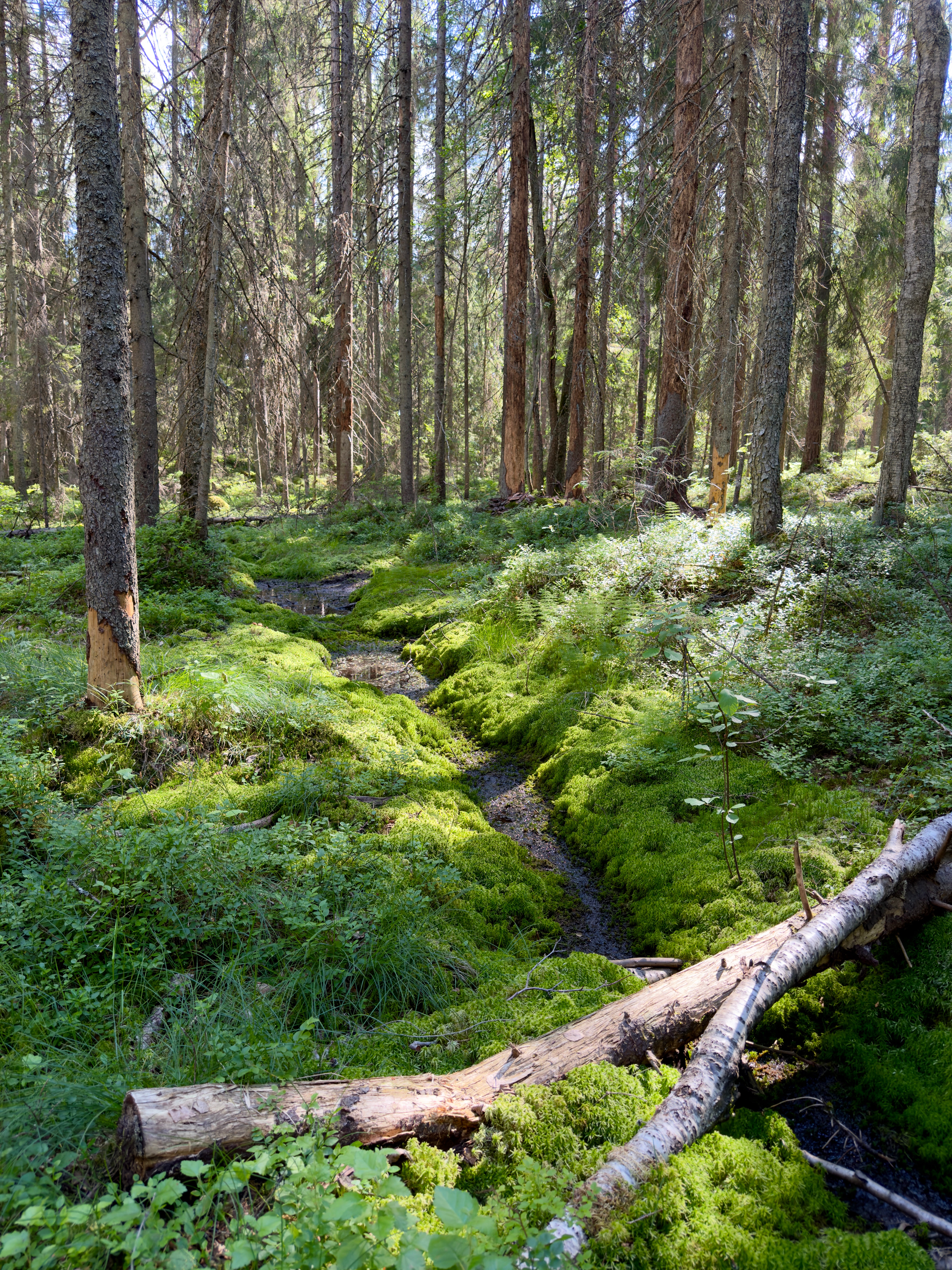
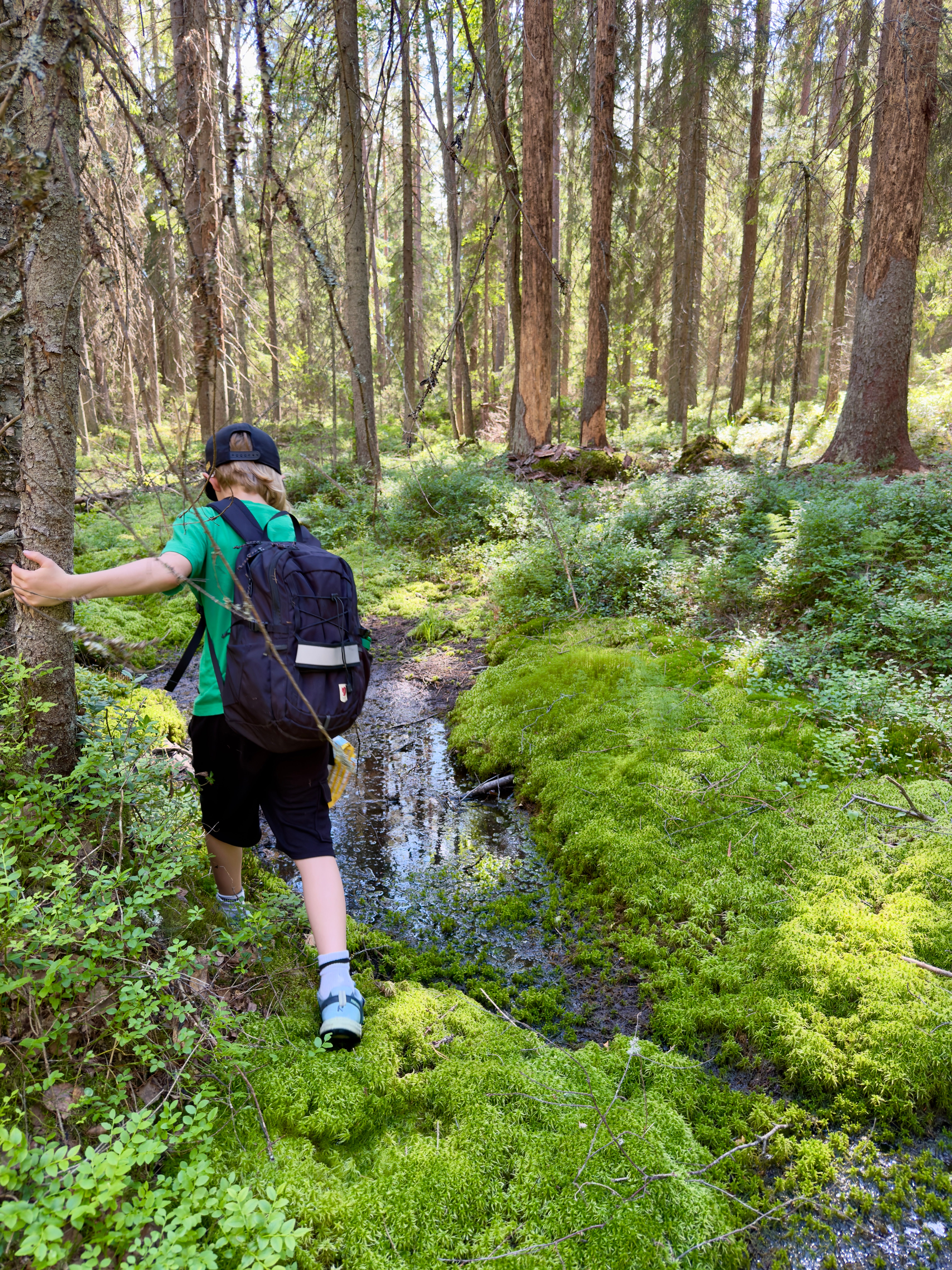
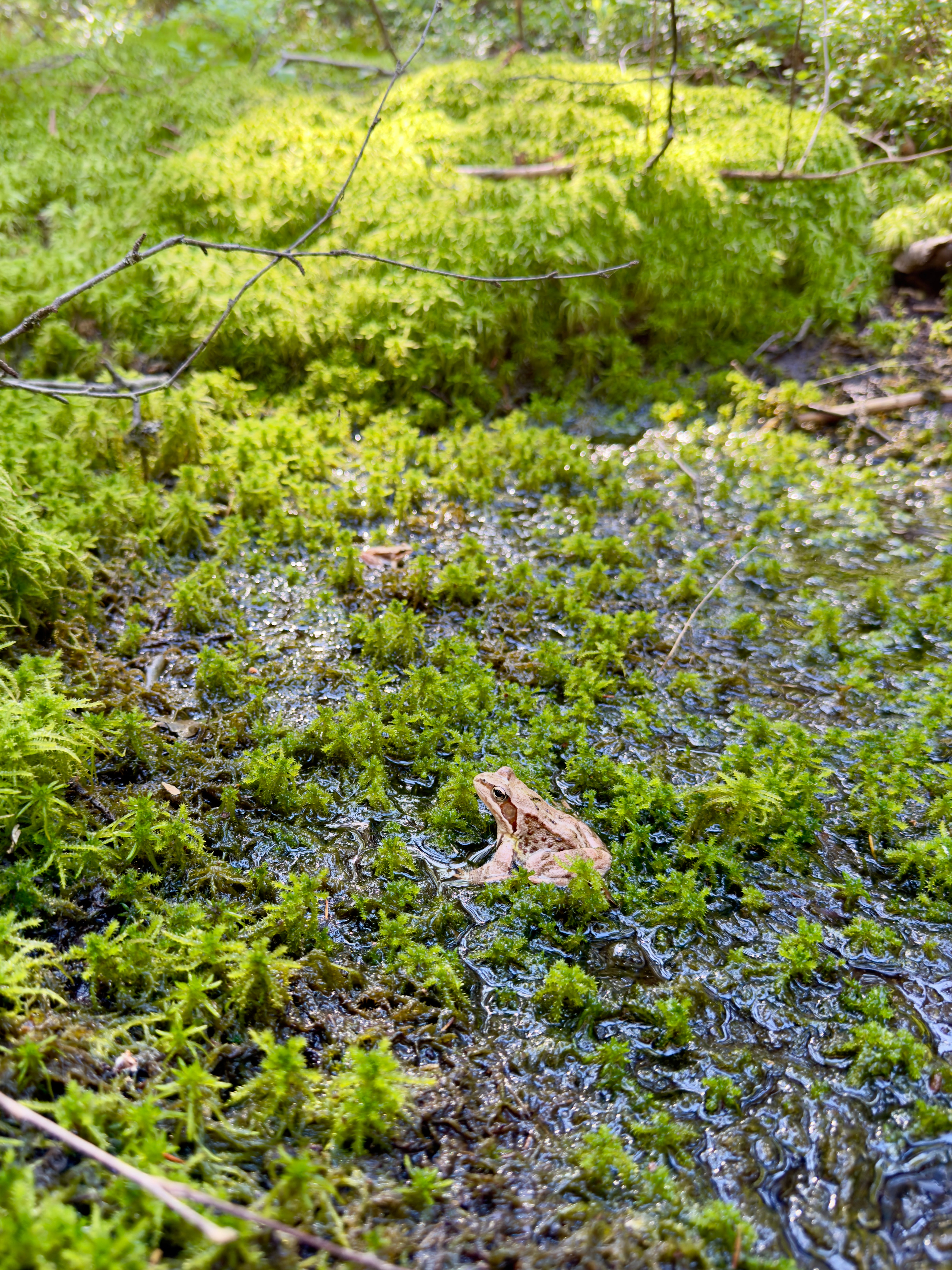
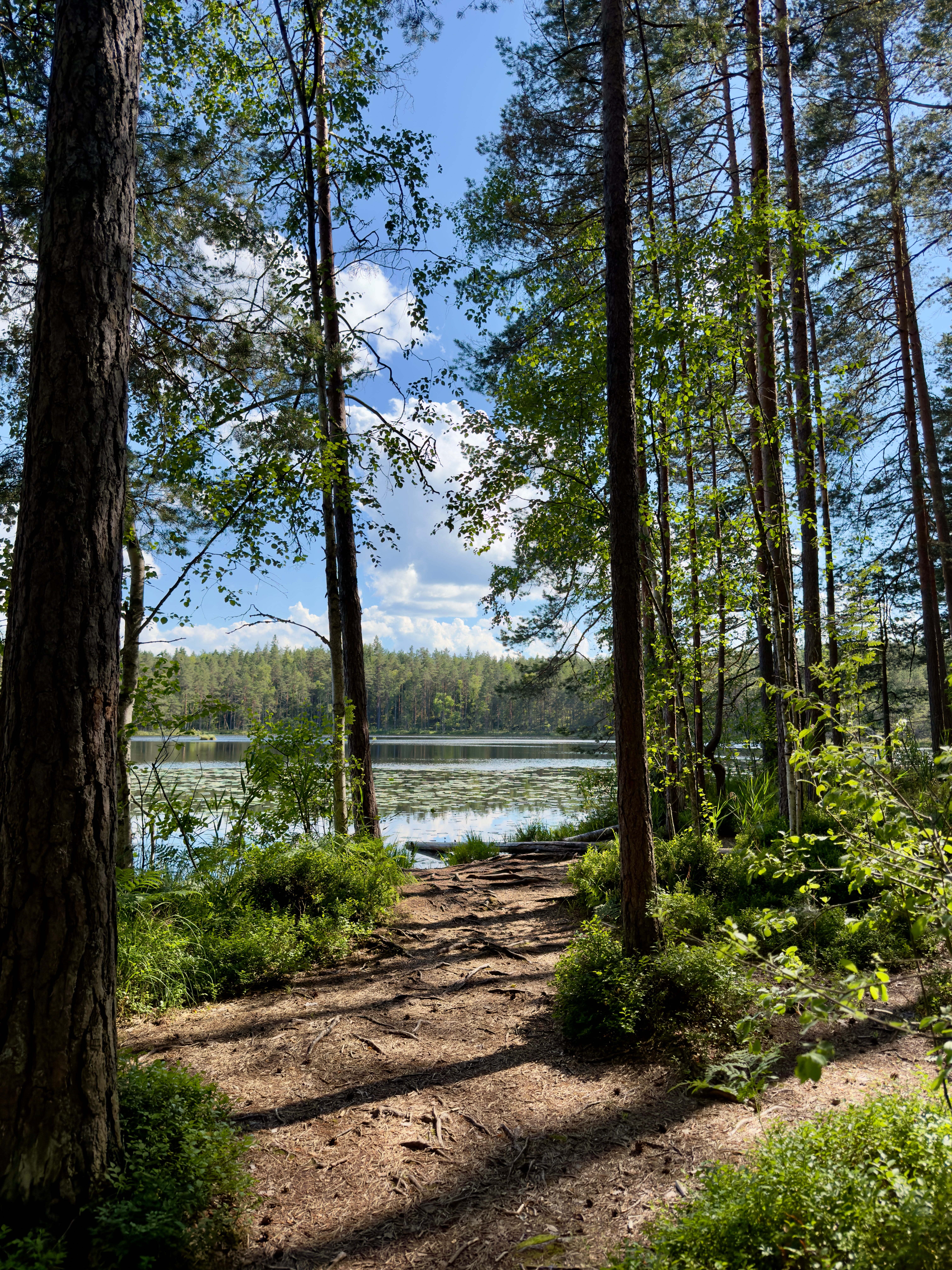
Our trip continued along a forest path, through patches of bog and thick sphagnum moss. We noticed a frog and a spotted beauty moth (Arichanna melanaria), whose caterpillar feeds on bog bilberry and labrador tea.
We soon saw the next pond ahead and decided to take a break. While my son whittled a stick, we talked about what real camping skills actually are. I wondered aloud whether they are the things people usually imagine — the technical skills like pitching a tent, packing a backpack, or making a fire — or whether they might also be something deeper: how a person is in nature, how they react, how they tolerate discomfort, and how they notice their surroundings. Perhaps a true wilderness skill is simply the ability to be at ease in a place that wasn’t built for us.
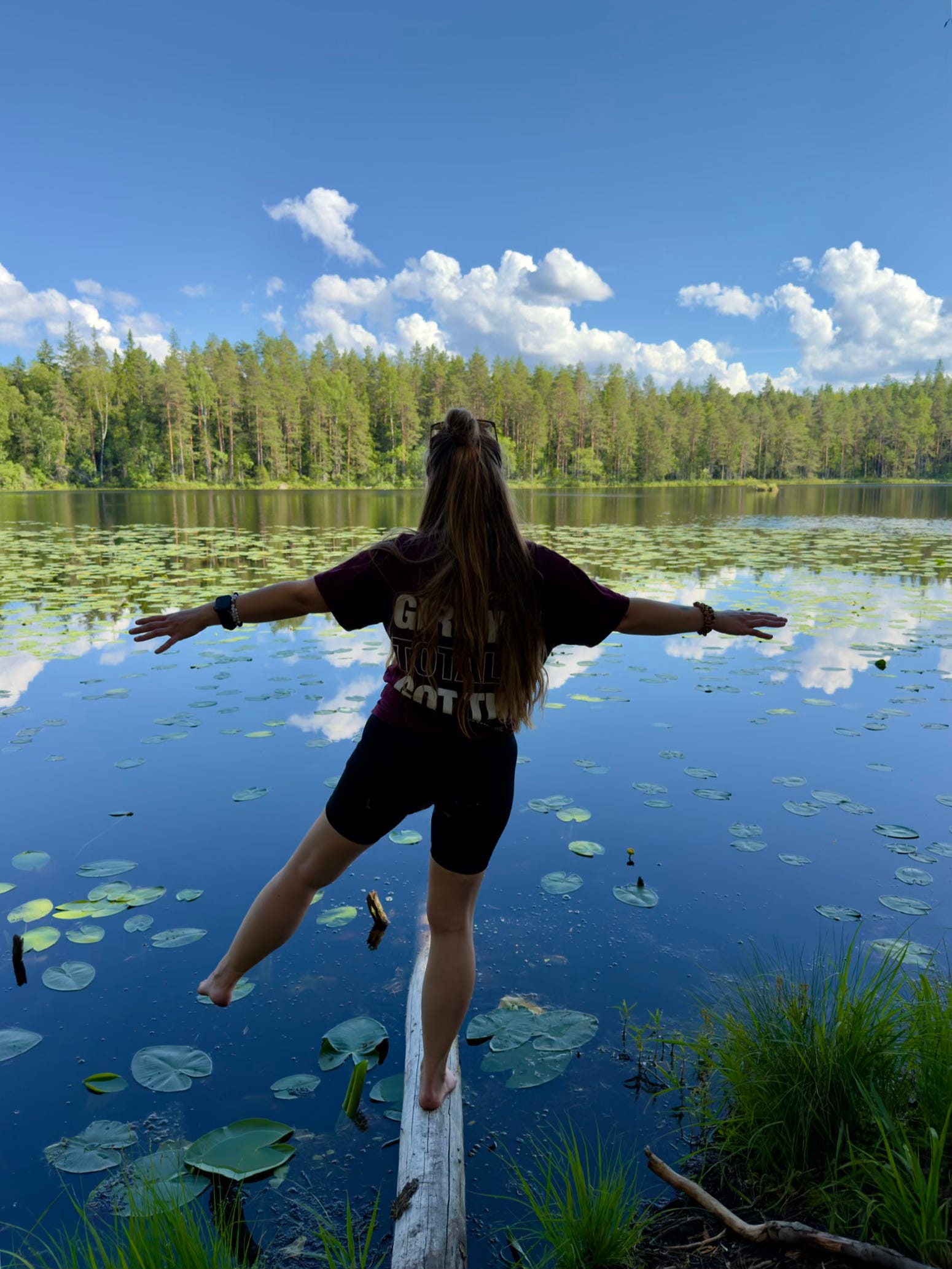
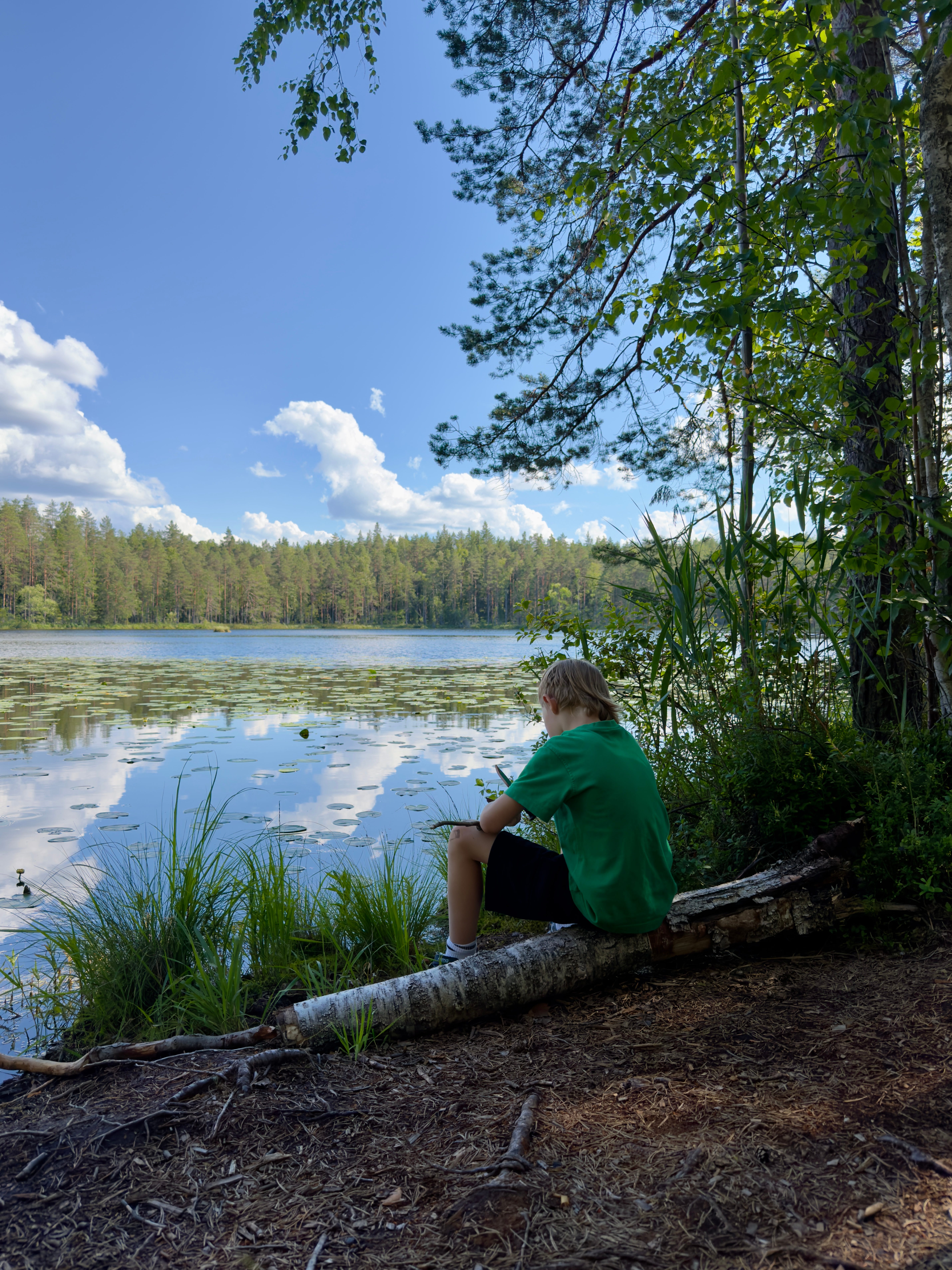
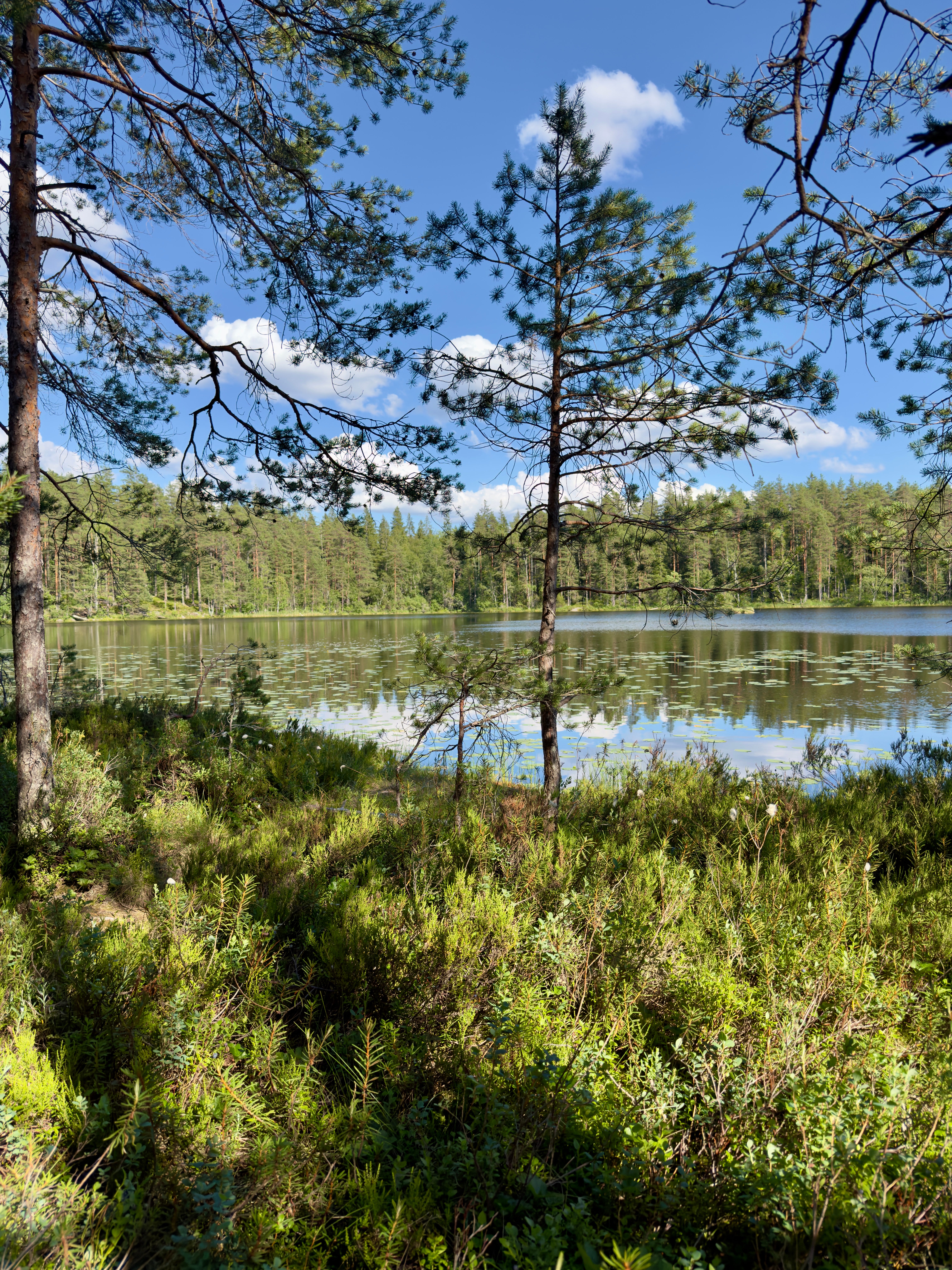
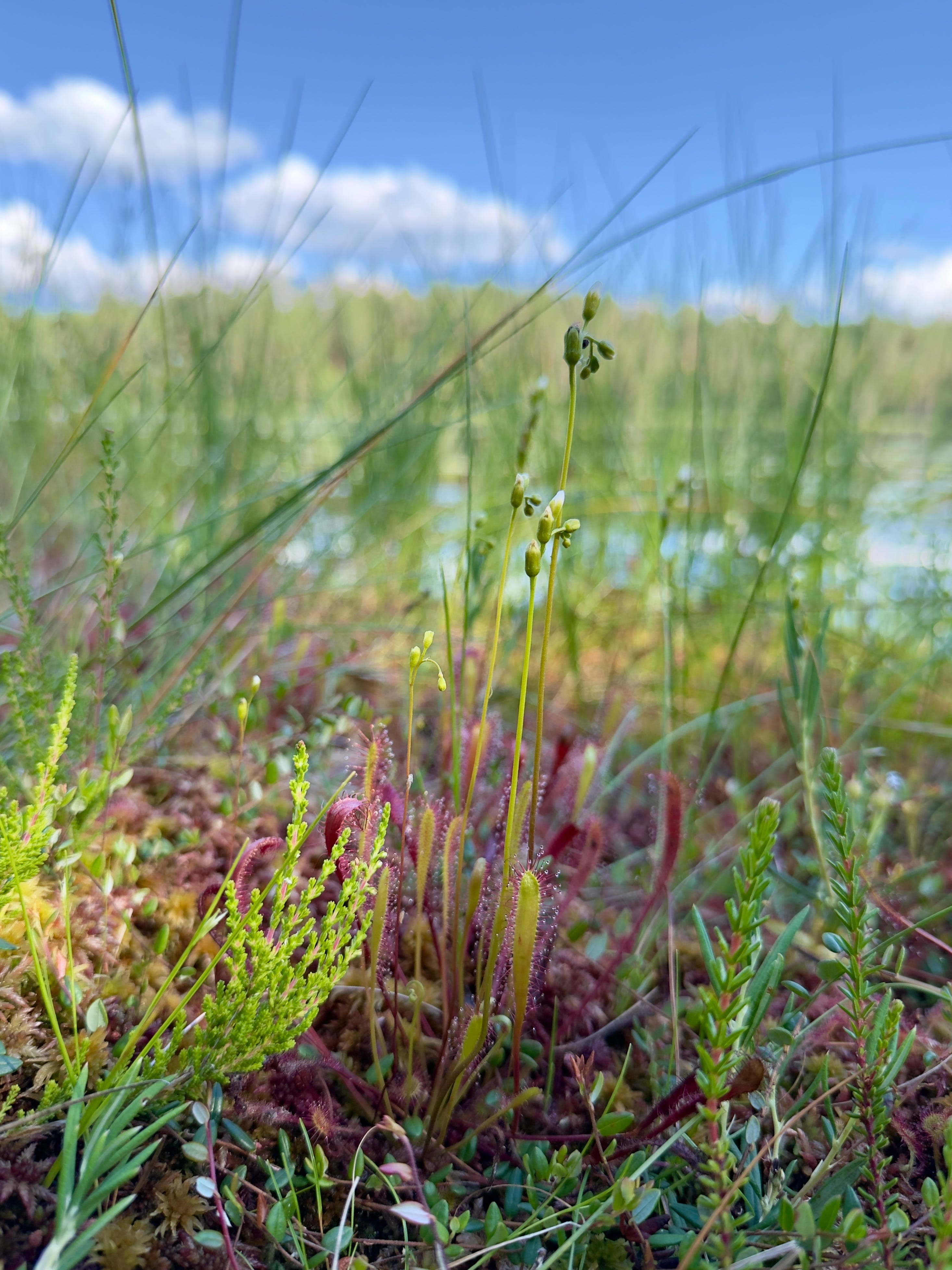
The shore of this pond had beautiful bog vegetation, and we even found long‑leaved sundew. The air smelled of Labrador tea, and we spotted a few cloudberries that were beginning to ripen. A small break was very much needed — it was hot, and so were we.

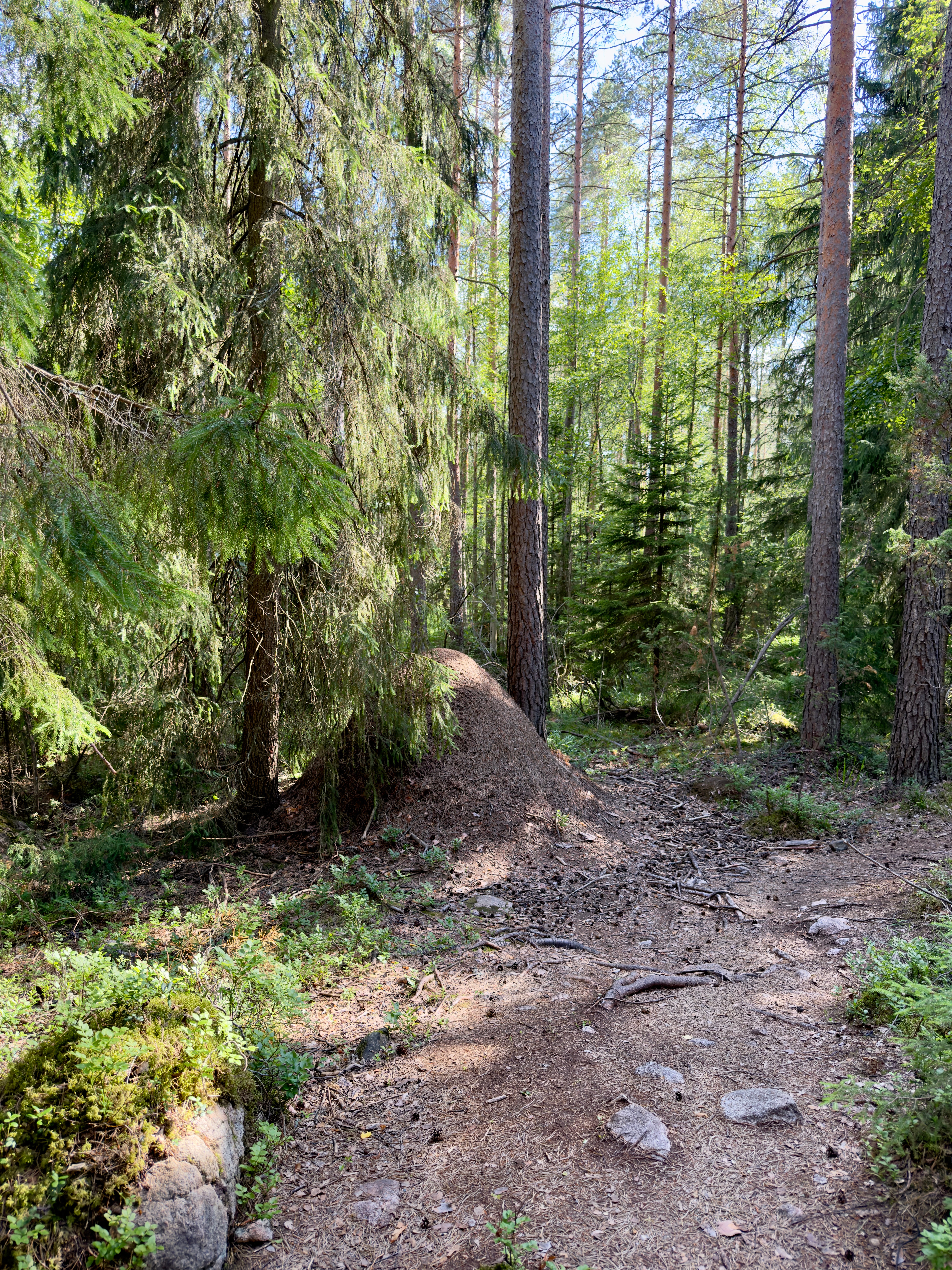
We continued through the forest, along boardwalks and root-covered paths, across dry pine heath. We crossed an ant highway and ate blueberries that have just ripened here in Finland.
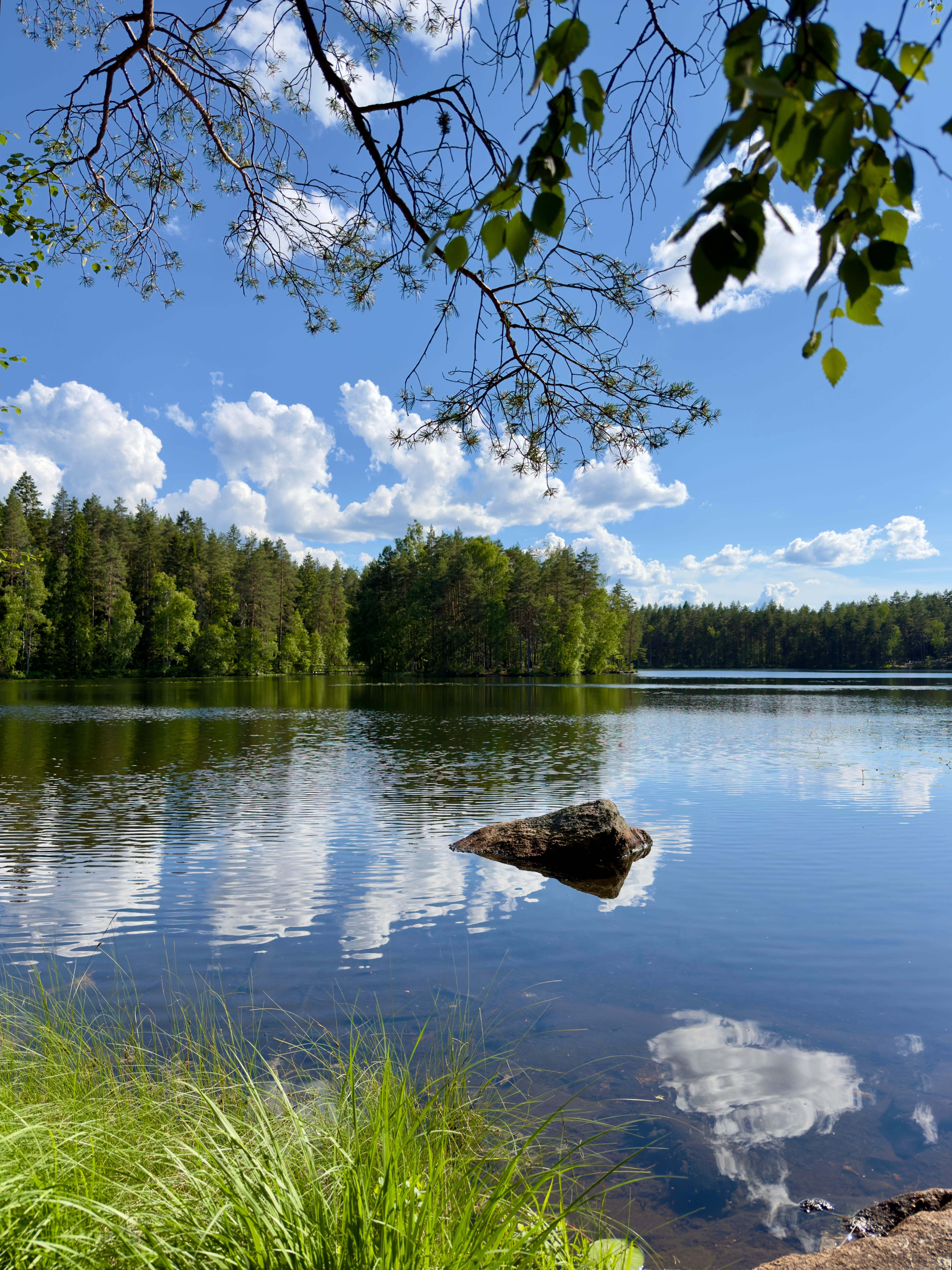
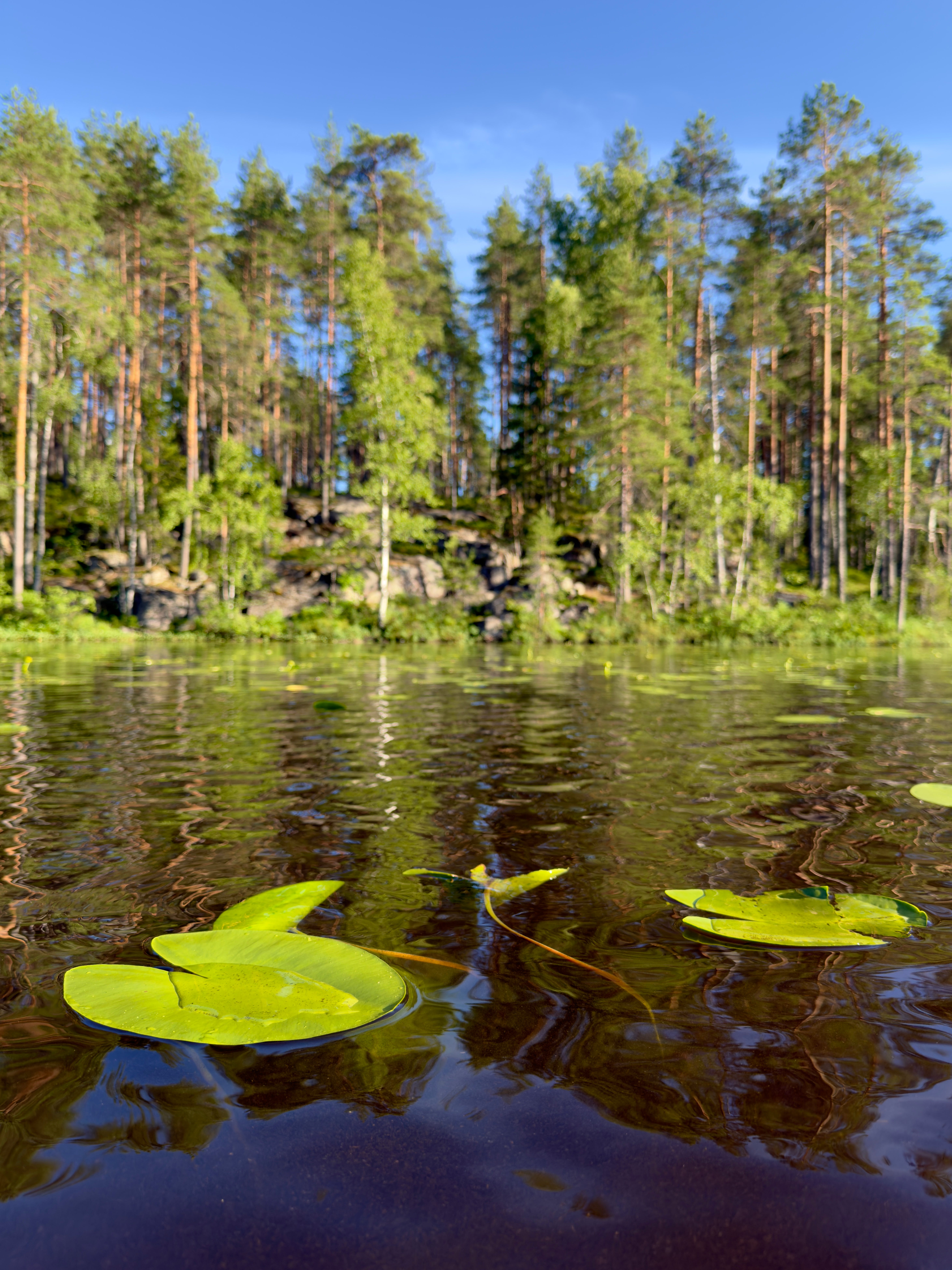
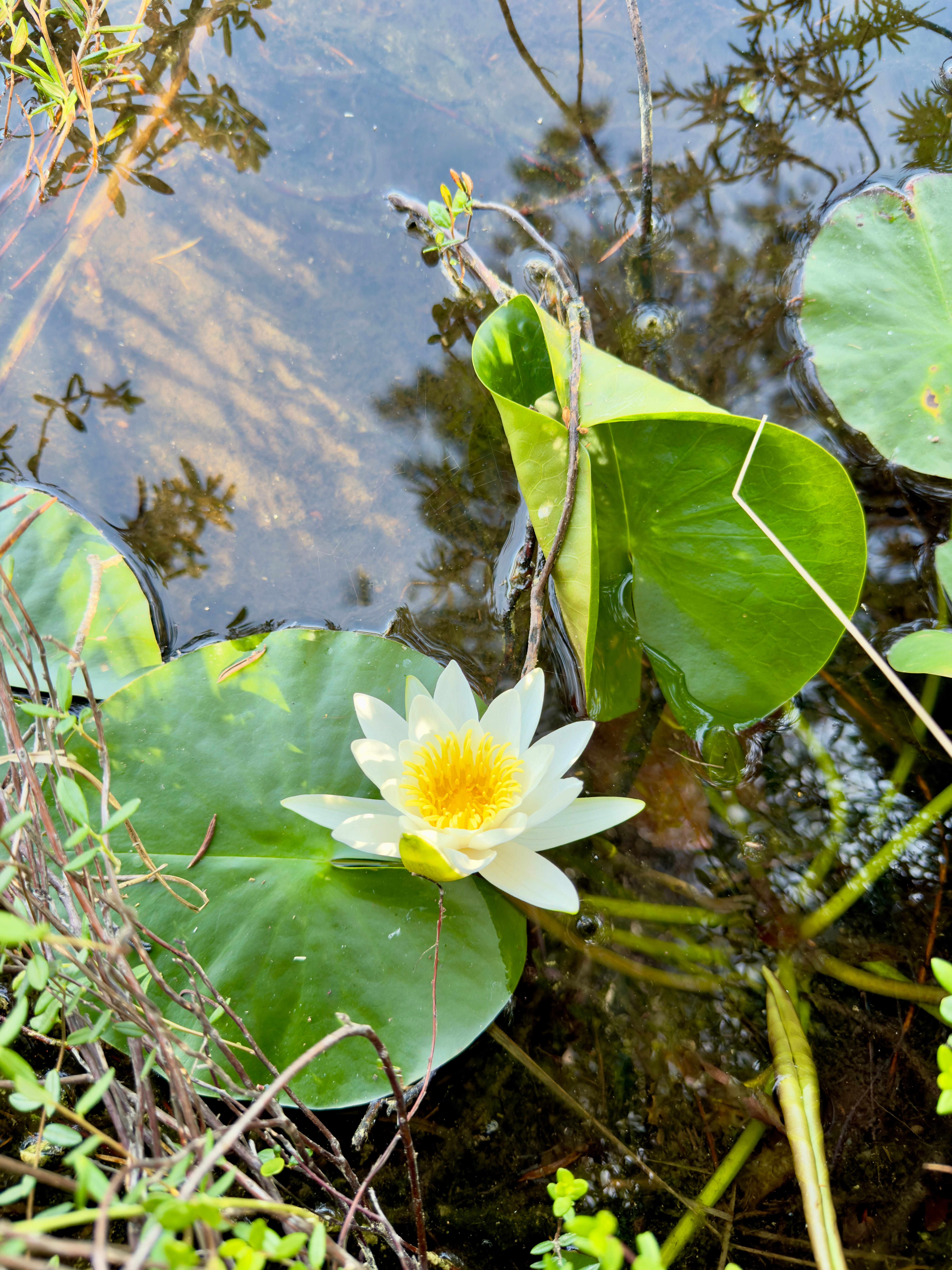
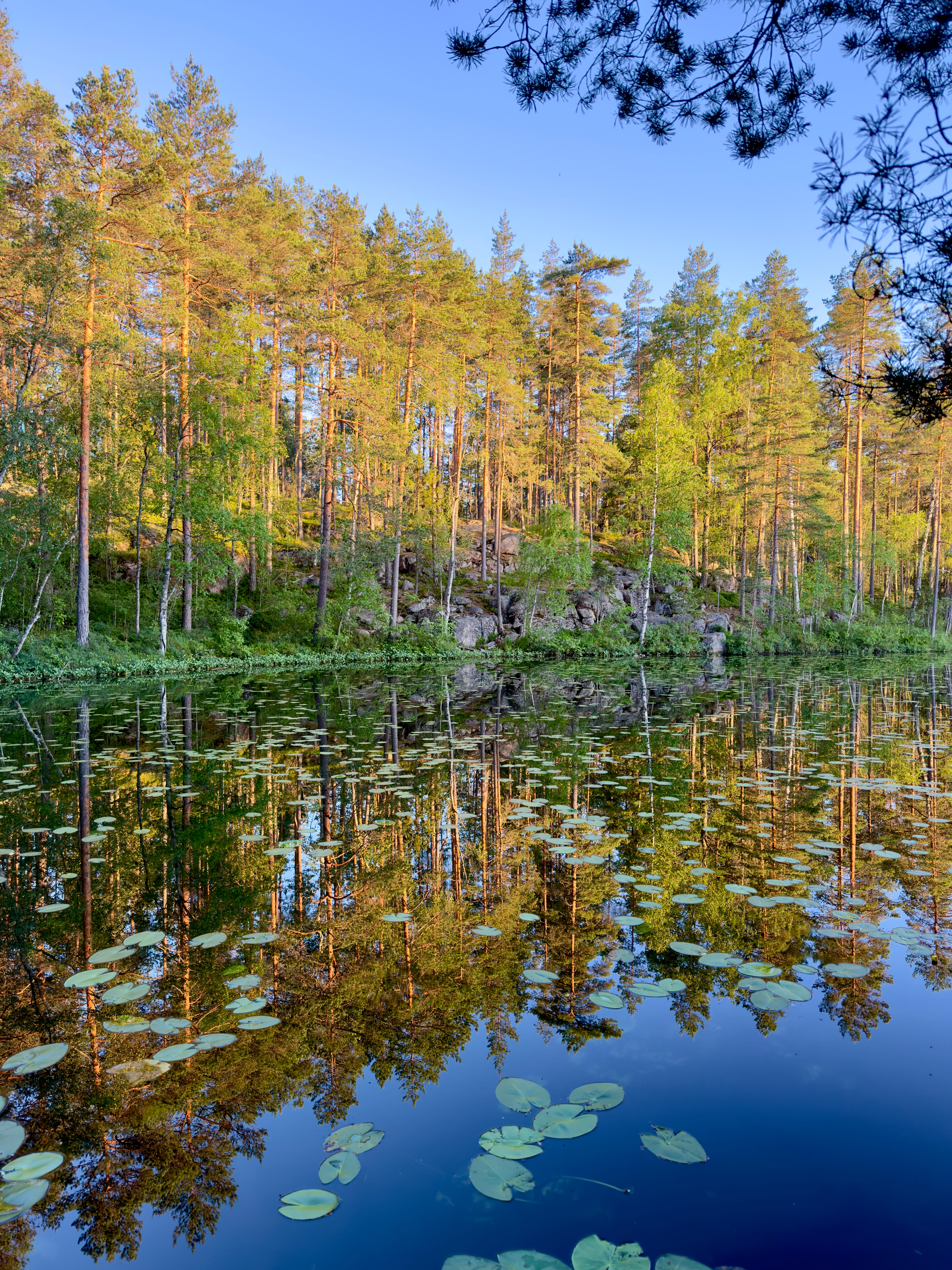
We arrived at the final body of water on our route — a lake with a small island where we would spend the night. Boardwalks circle the lake, and a narrow wooden bridge leads to the island, which sits very close to the shore. Water lilies were in bloom along the shoreline and dragonflies were darting over the surface of the water. A few other groups were there with their tents, yet the atmosphere remained calm.
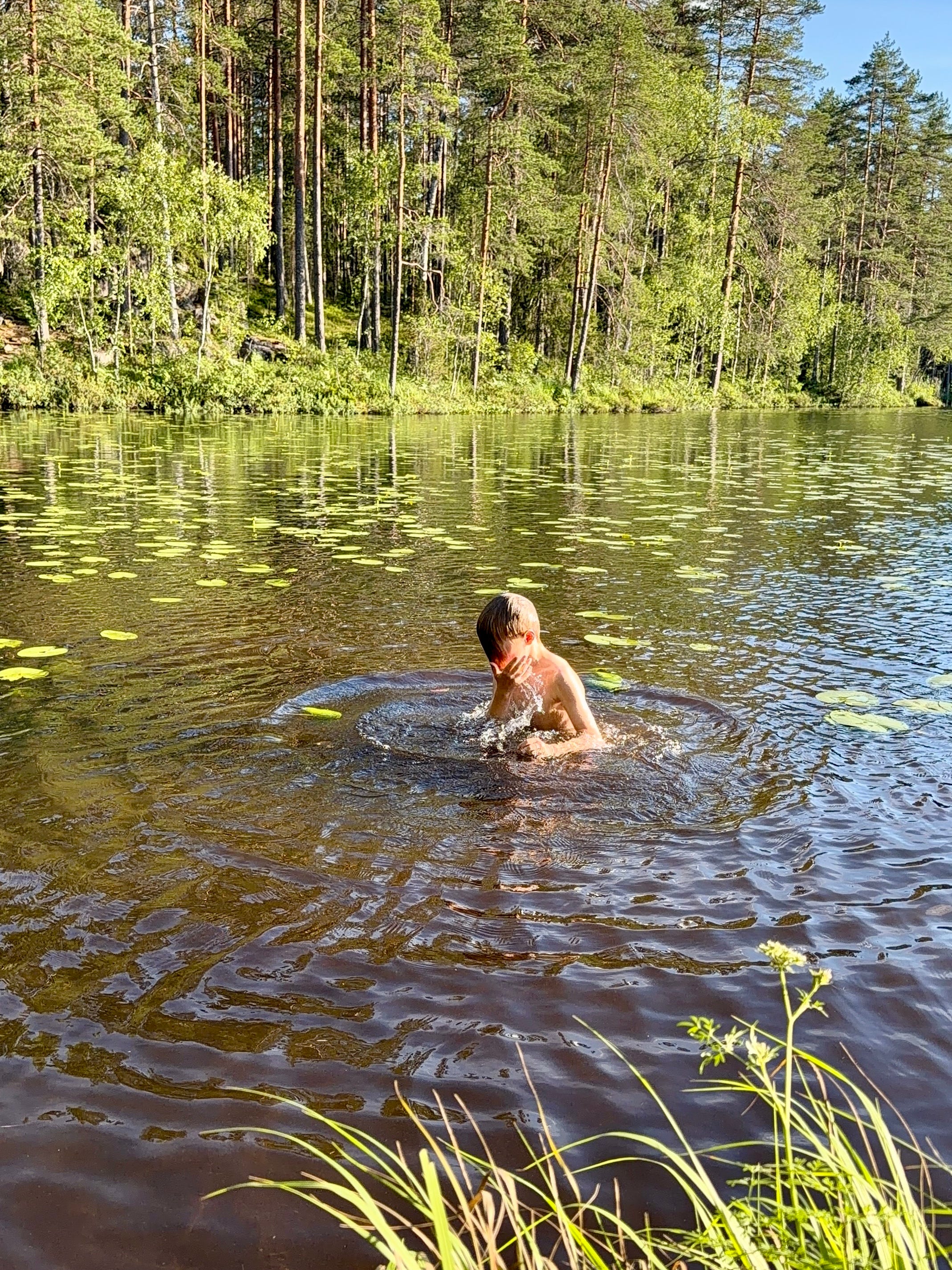
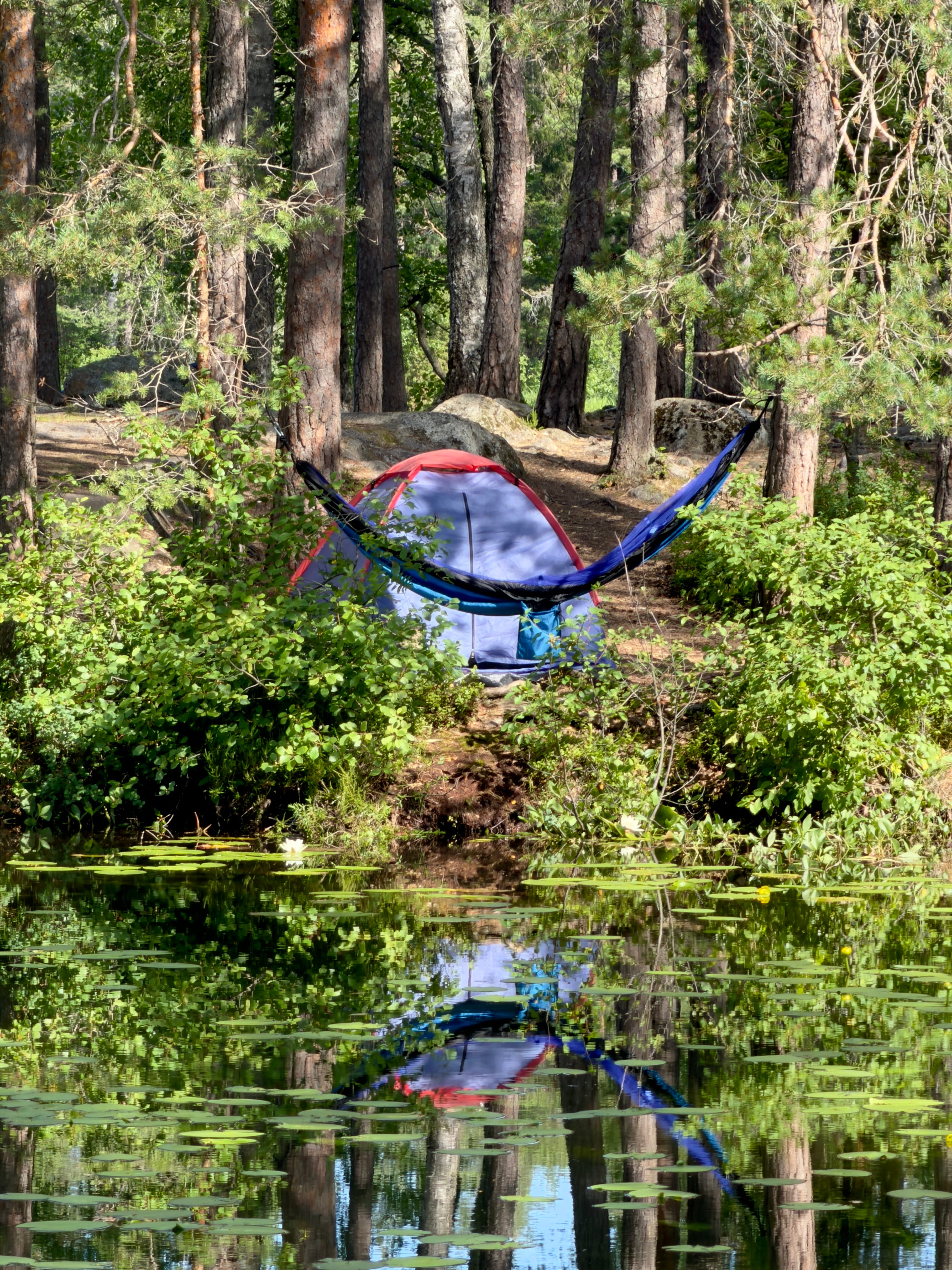
We chose a spot for our tent, set it up, and went swimming right away. And it felt so refreshing. The shore was far from ideal for swimming: the bottom was partly rock, partly soft cold mud that your foot sank into for dozens of centimetres. The stems of water lilies and yellow water lilies wrapped around our legs. But honestly, places like that are so much more atmospheric than sandy beaches.
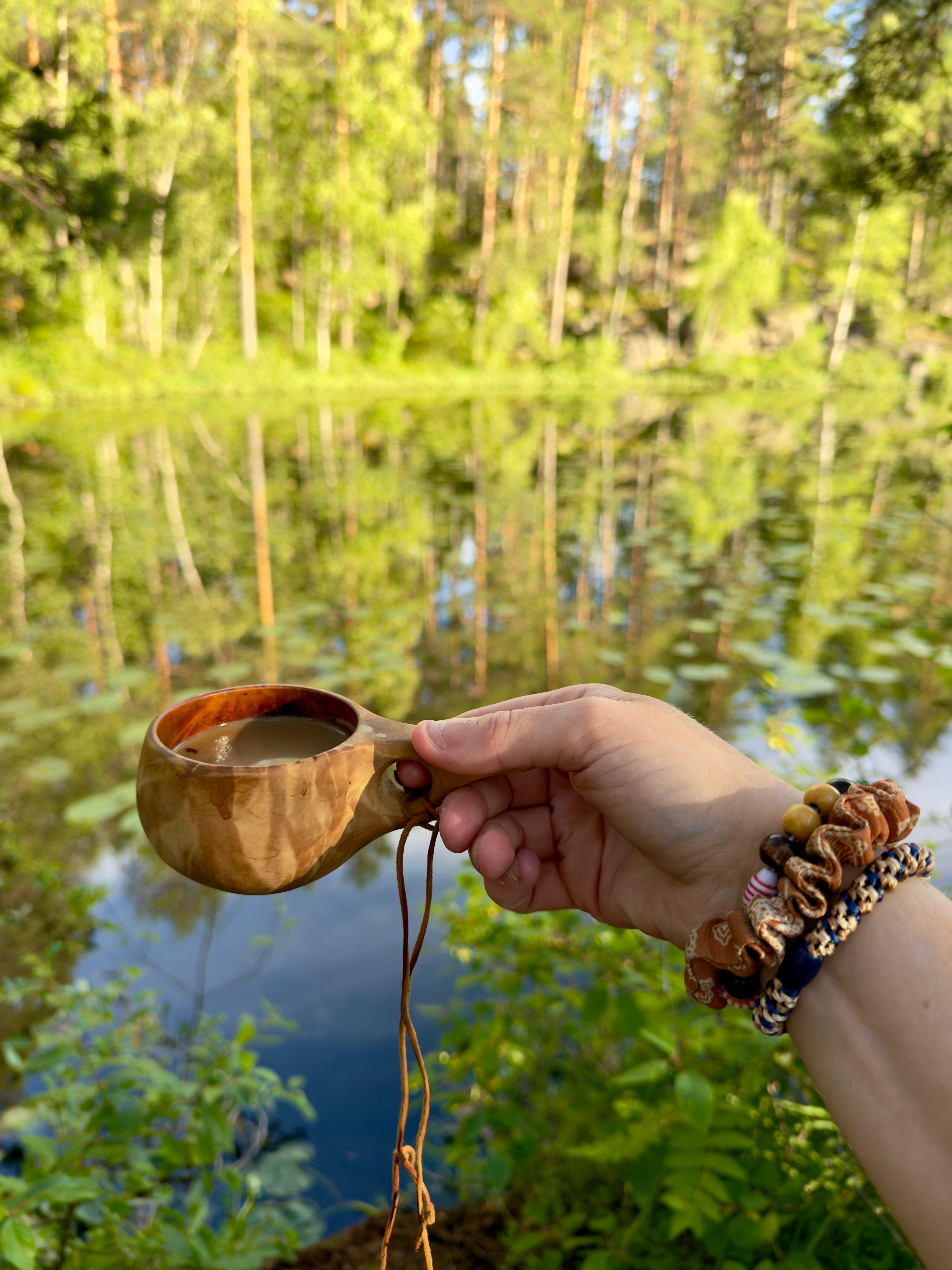
After our swim, we tossed our pizzas onto the embers to toast. We played Uno, and I made evening coffee while my son carved sticks into swords with his knife. When both swords were finished, we had a little sparring match.
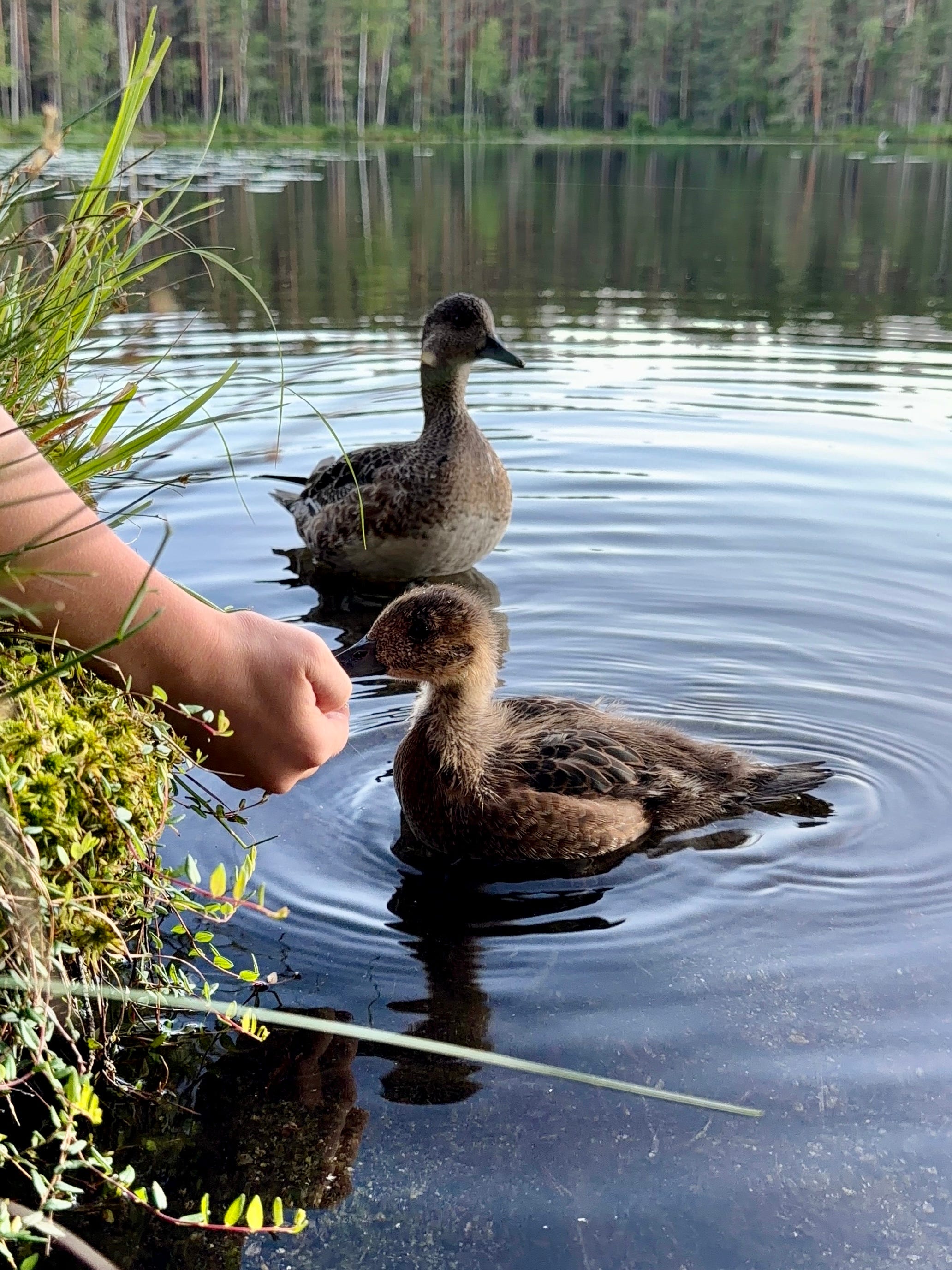
To end the evening, a wigeon (Mareca penelope) with three ducklings joined us. My son decided to feed them the blueberries he had just picked along the shoreline. They came right up to us and ate from his hand.
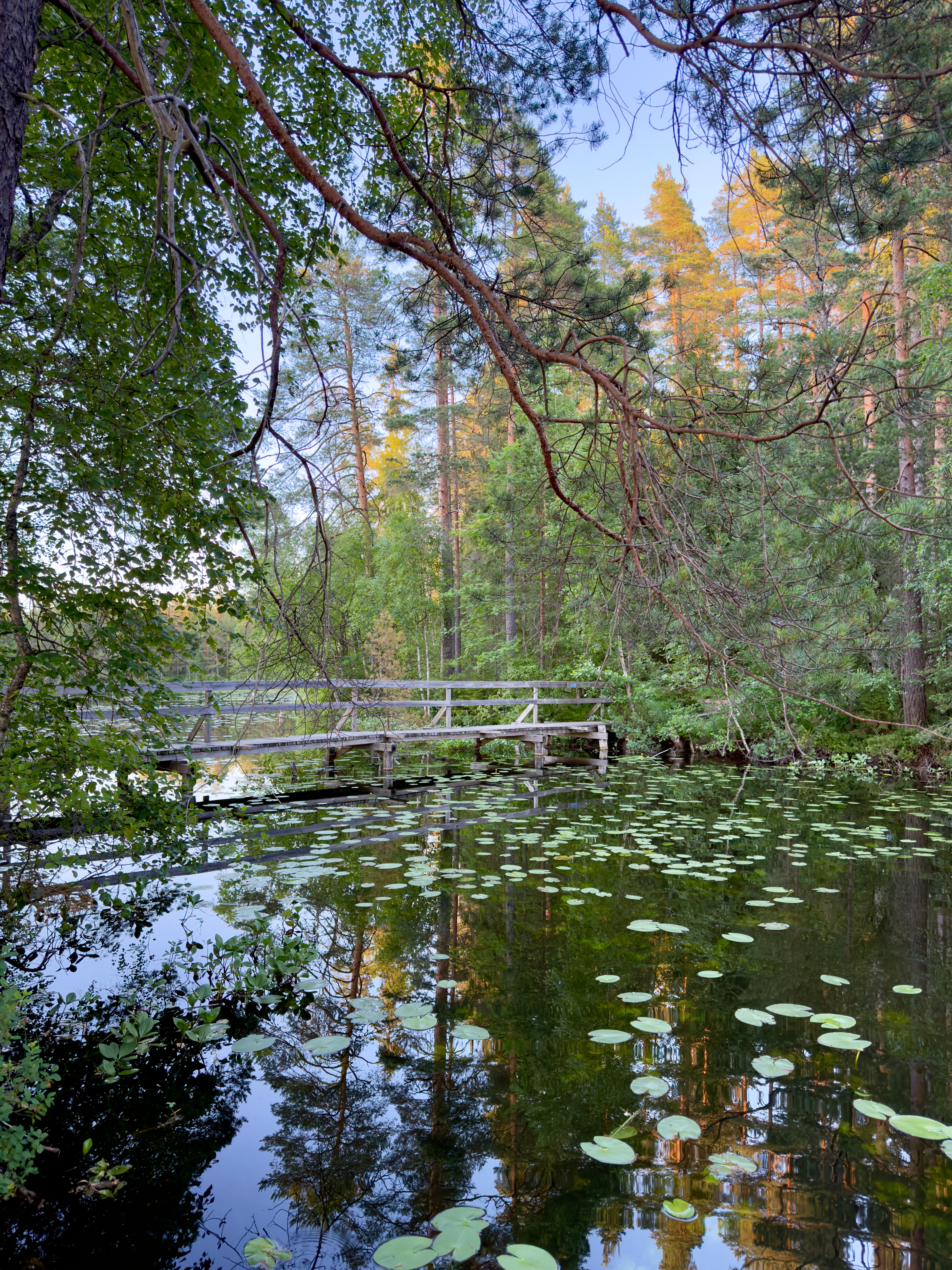
A light night breeze rocked my hammock. I watched the lake being swallowed by darkness. The evening sun had already slipped away, and it was the darkest moment of the summer night. From the tent, I heard my son’s soft breathing as he wandered through his lively dreams.
The night was warm. Every now and then I heard ducks splashing in the water. Sometimes fish broke the surface. Somewhere far away a red‑throated loon (Gavia stellata) called, and I wished I could fall asleep. But despite the warm summer night, I felt too cold — I’ve always been someone who gets chilly at night.
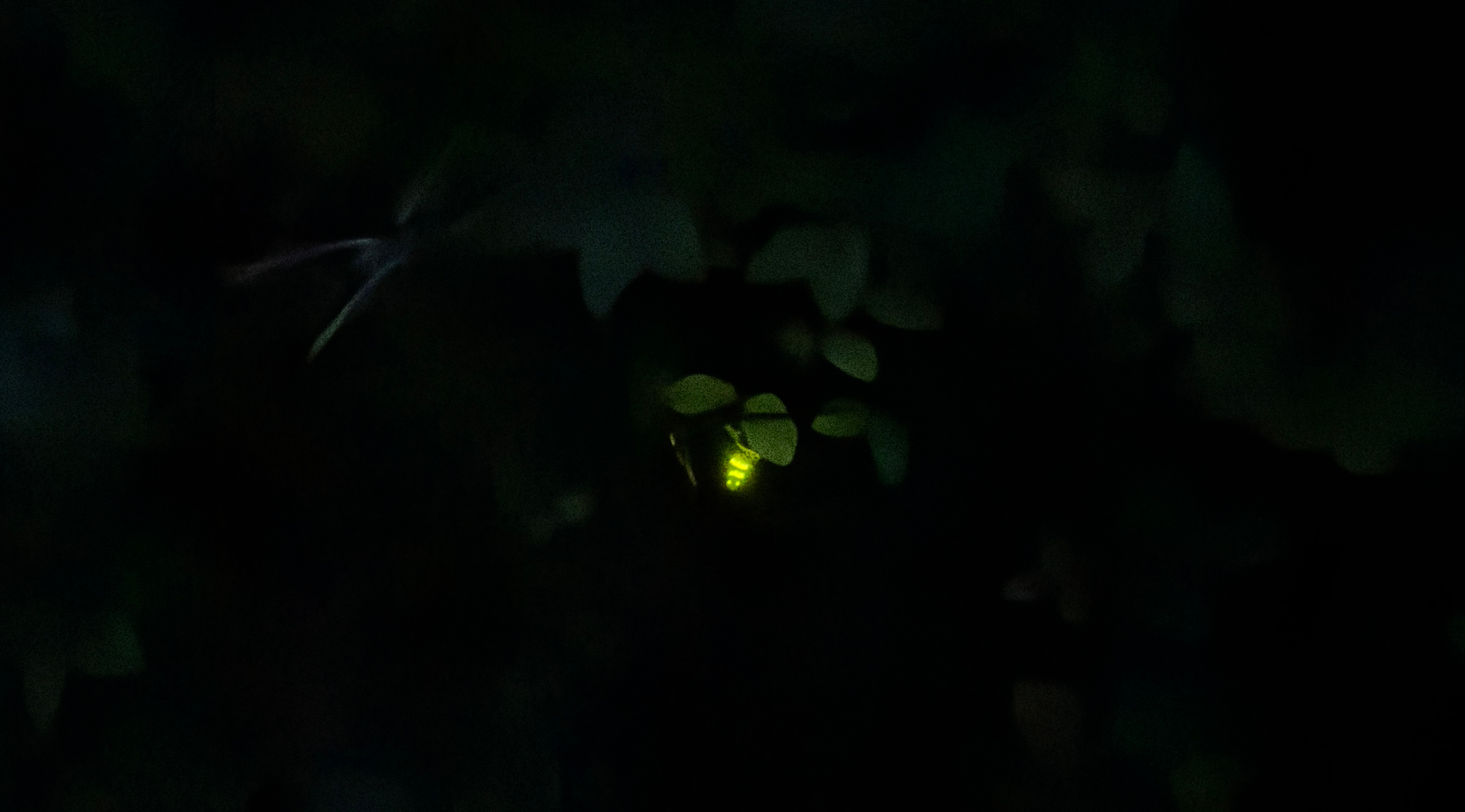
I opened my eyes and noticed something unusual beside my hammock — a glow‑worm (Lampyris noctiluca). I got up from hammock and watched its inviting light for a while before crawling into the tent to sleep beside my son.
The next day, we took our time. We swam, ate, and slowly made our way back through the forest. Nothing remarkable happened, and yet I wouldn't have changed a thing. Some of the best adventures aren't measured by dramatic moments, but by the important memories they leave behind.


I loved reading this! whittling a stick and wandering around a forest feels like a dream childhood!
How wonderful photos again and what a splendid excursion. Every time I see your photos, I do so much wish to visit your beautiful country some time 💕