


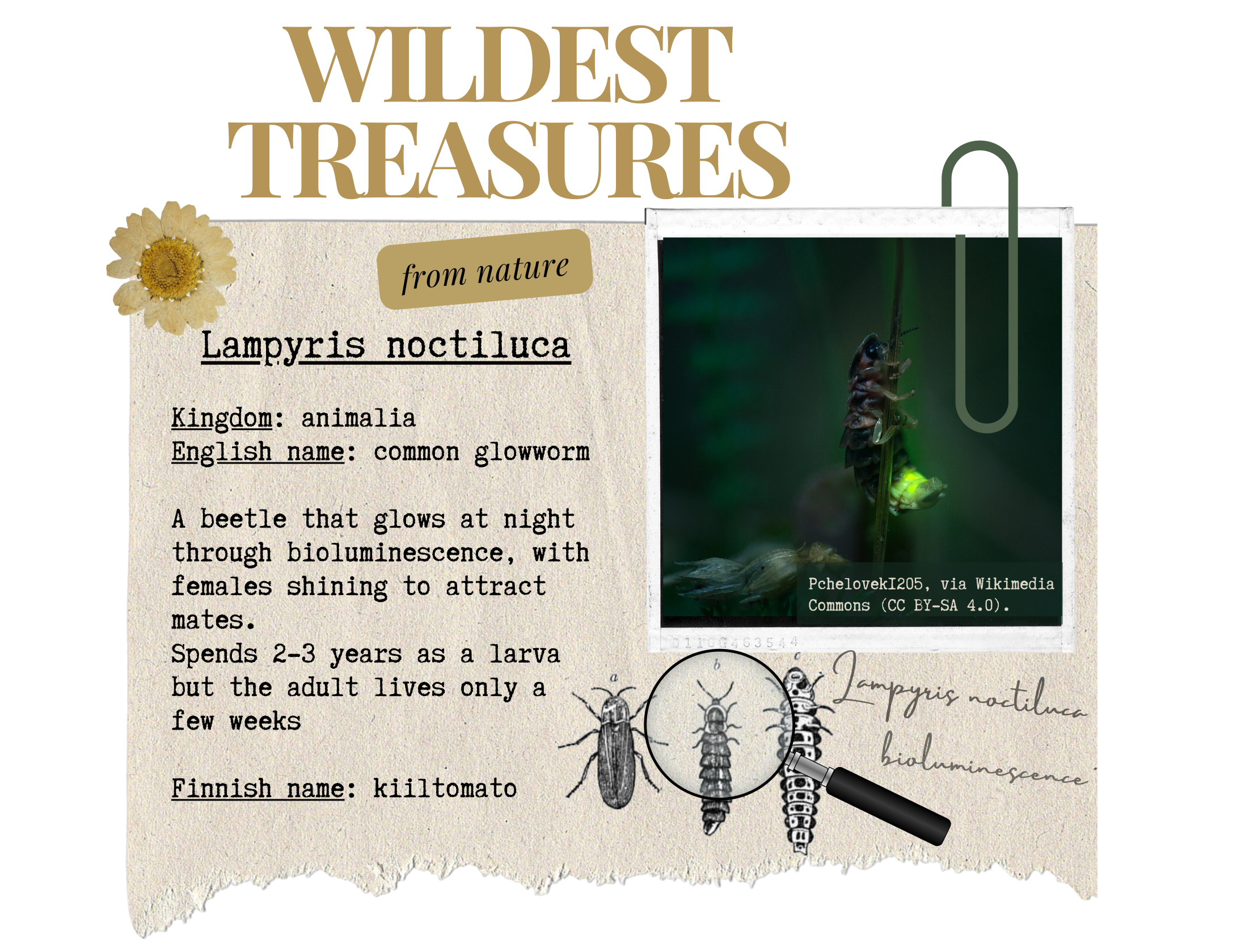
In the summer night, a tiny lamp glows and doesn't use a single watt. It belongs to a female glow-worm waiting in the grass for a mate. If the night is dark enough and conditions are right, a male is likely to find her. But if artificial light shines nearby, the male may head in the wrong direction, and mating may never occur.
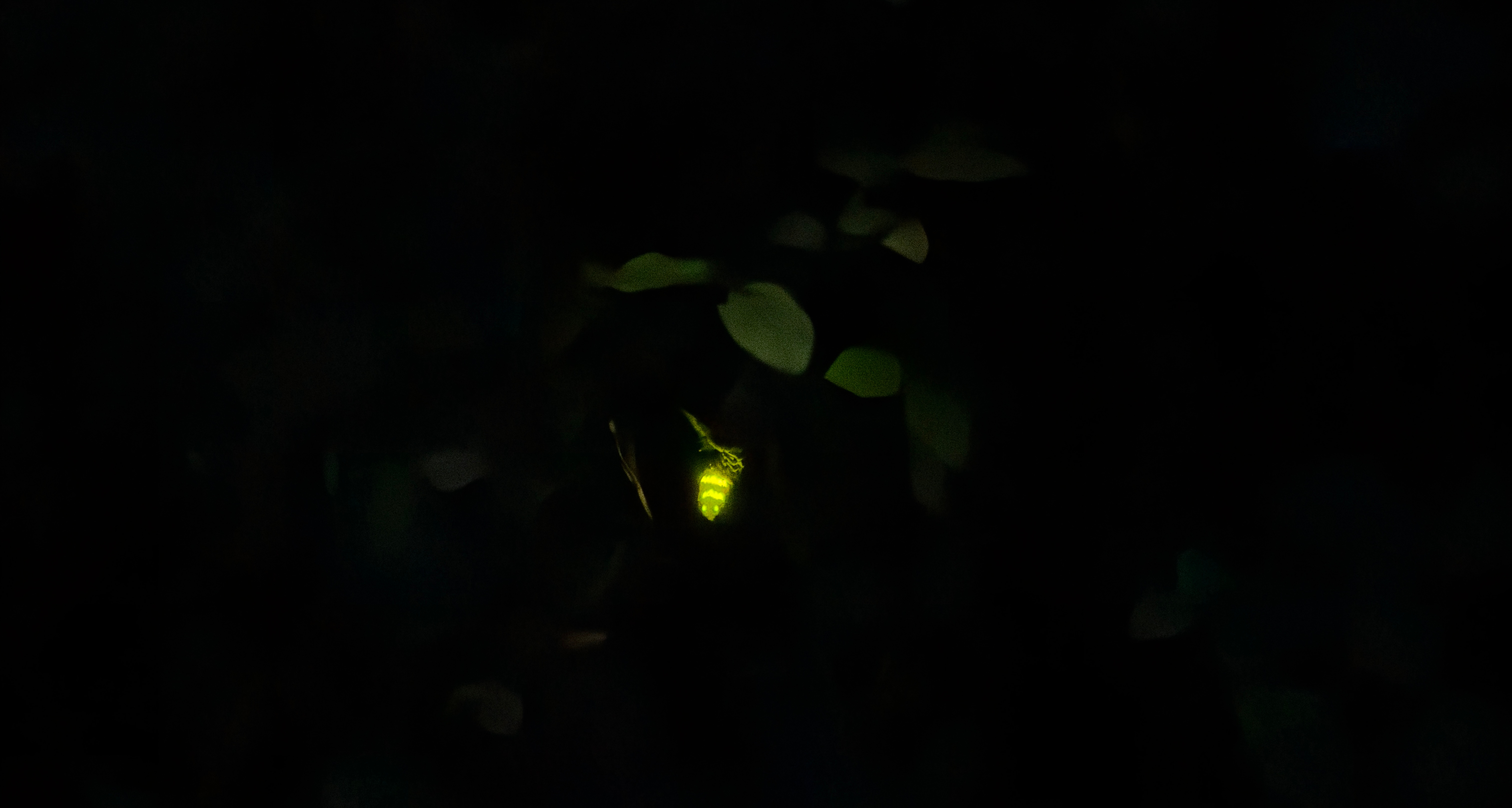
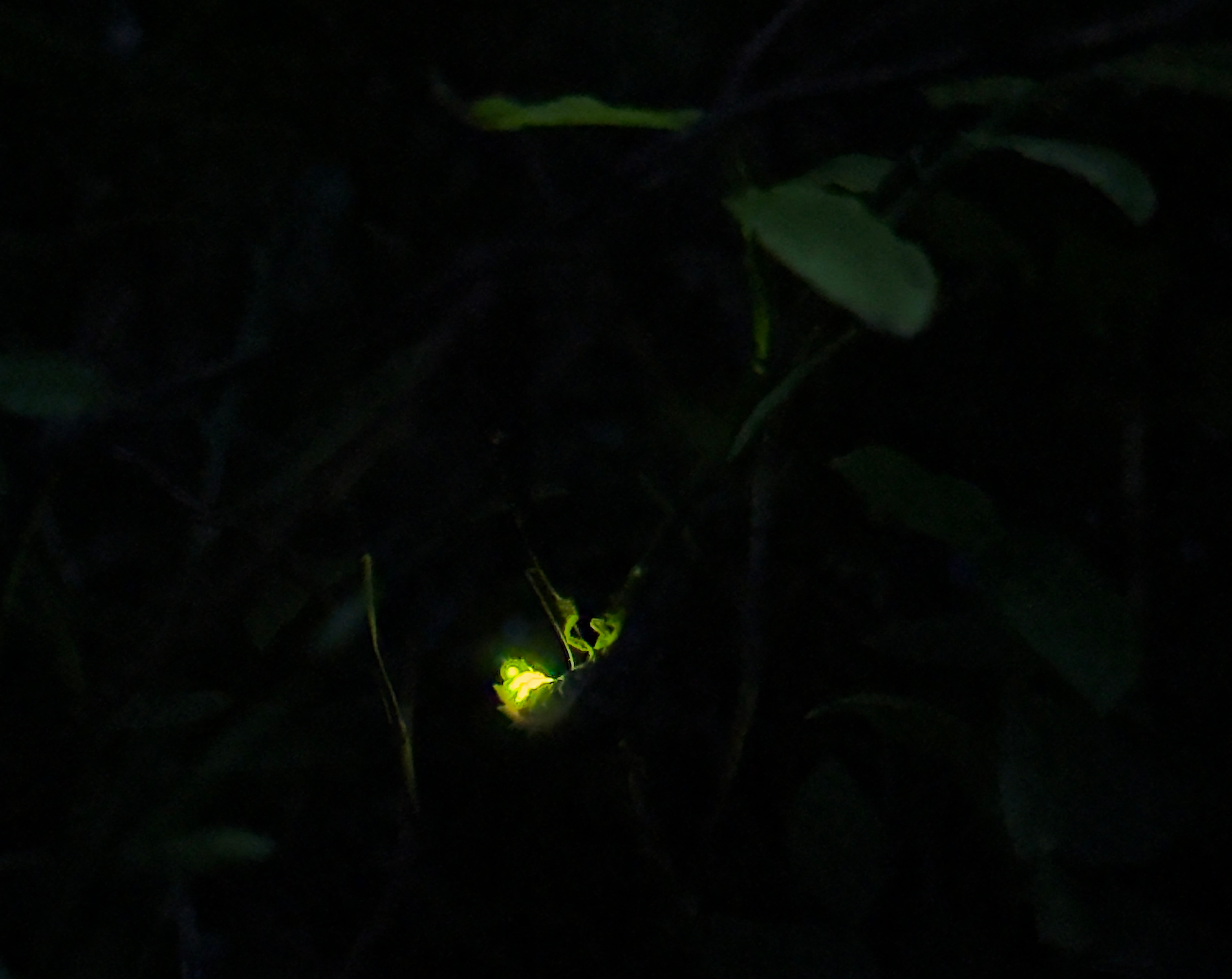
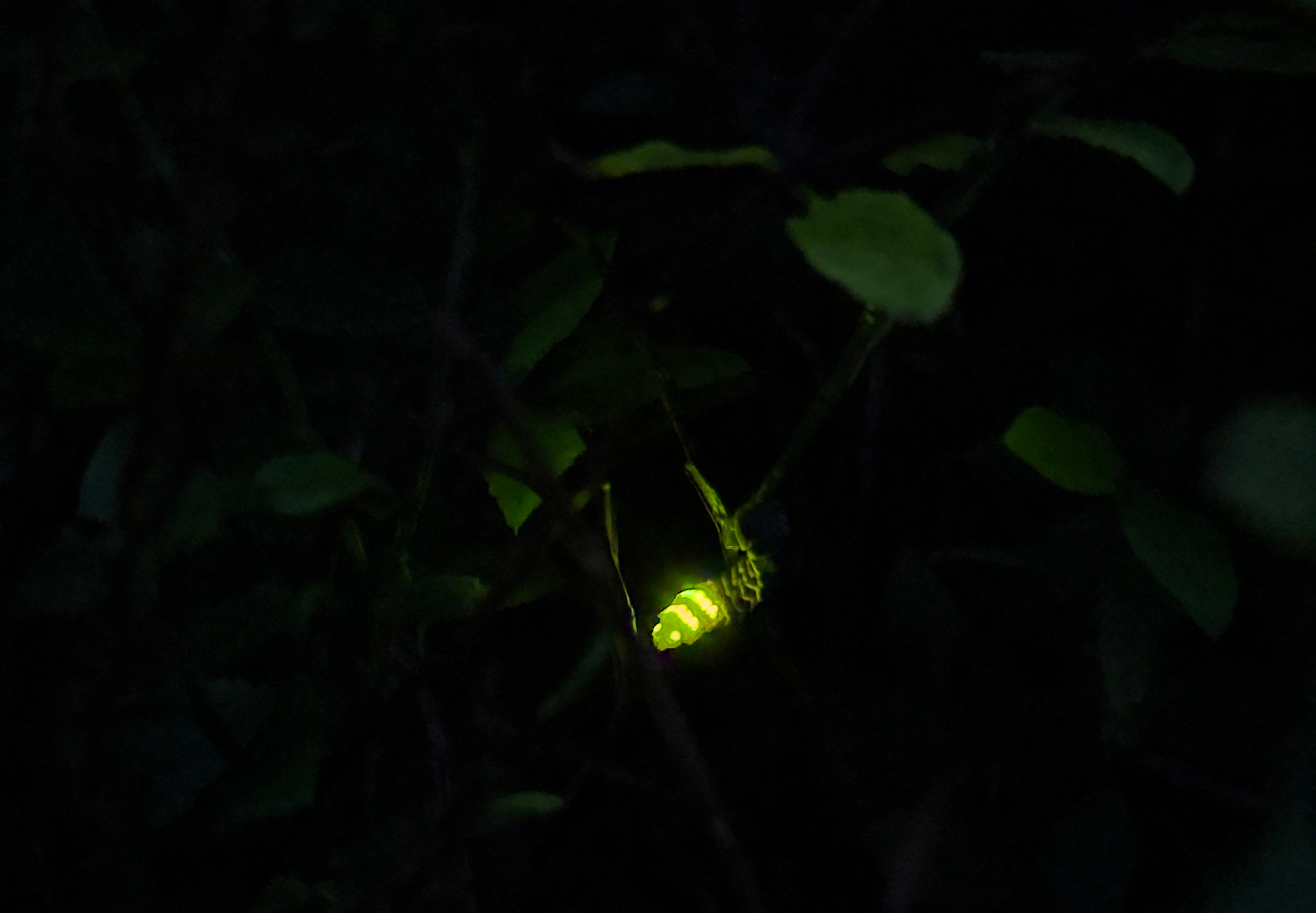
Despite its name, the glow‑worm is not a worm but a beetle. About five weeks after the eggs are laid, the larvae hatch. The larval stage lasts two to three years, after which they pupate and emerge as adults. Larvae can also produce light — a brief, faint flicker compared to the adult’s glow. They are predators and feed on snails, which may seem like large prey for such a small larva, but they use a toxin to paralyse them.
The only purpose of an adult glow-worm is to reproduce. It is rarely in danger of being eaten. Glow-worms have almost no natural predators, as their bad taste and greenish warning light make birds and other animals avoid them.
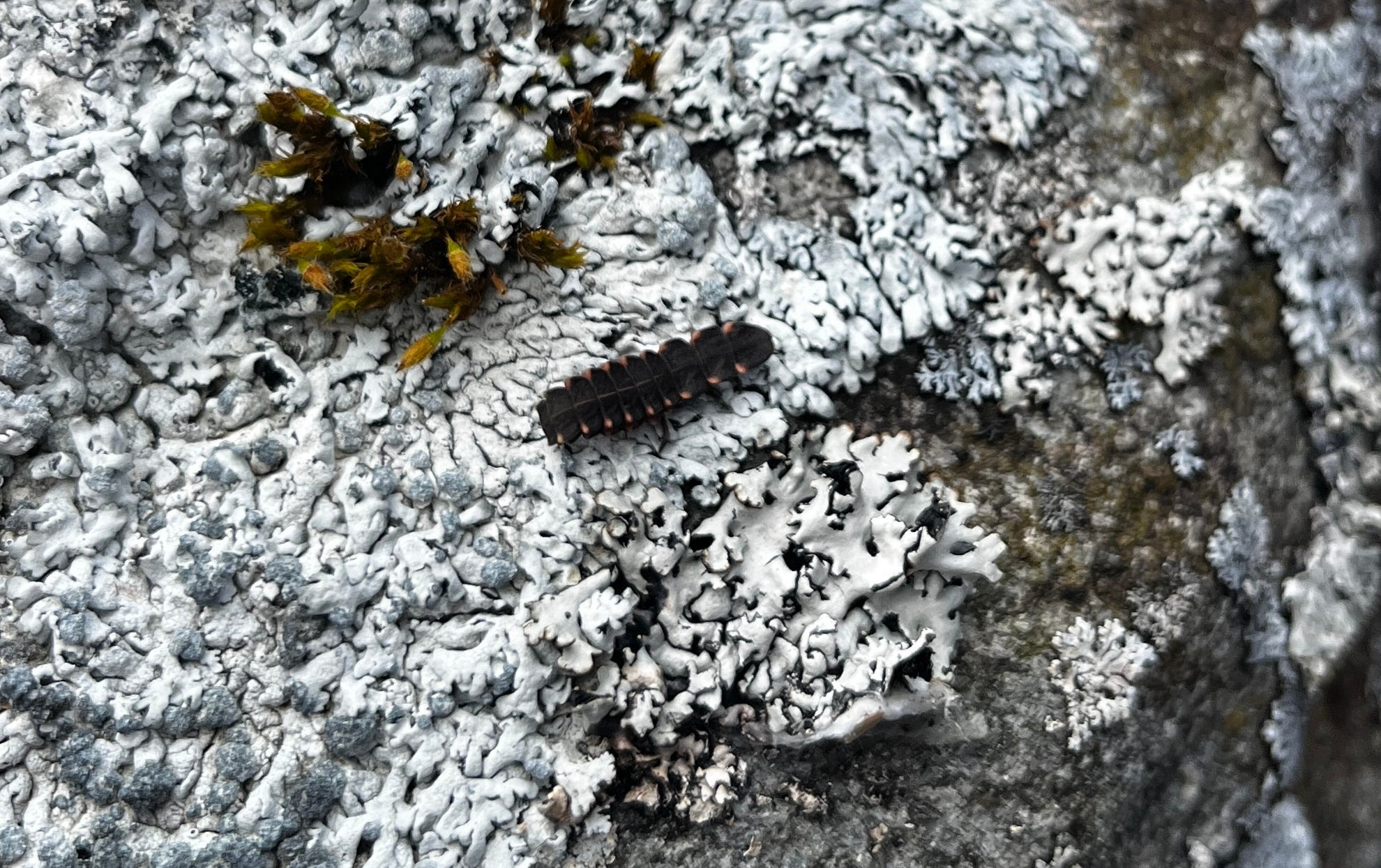
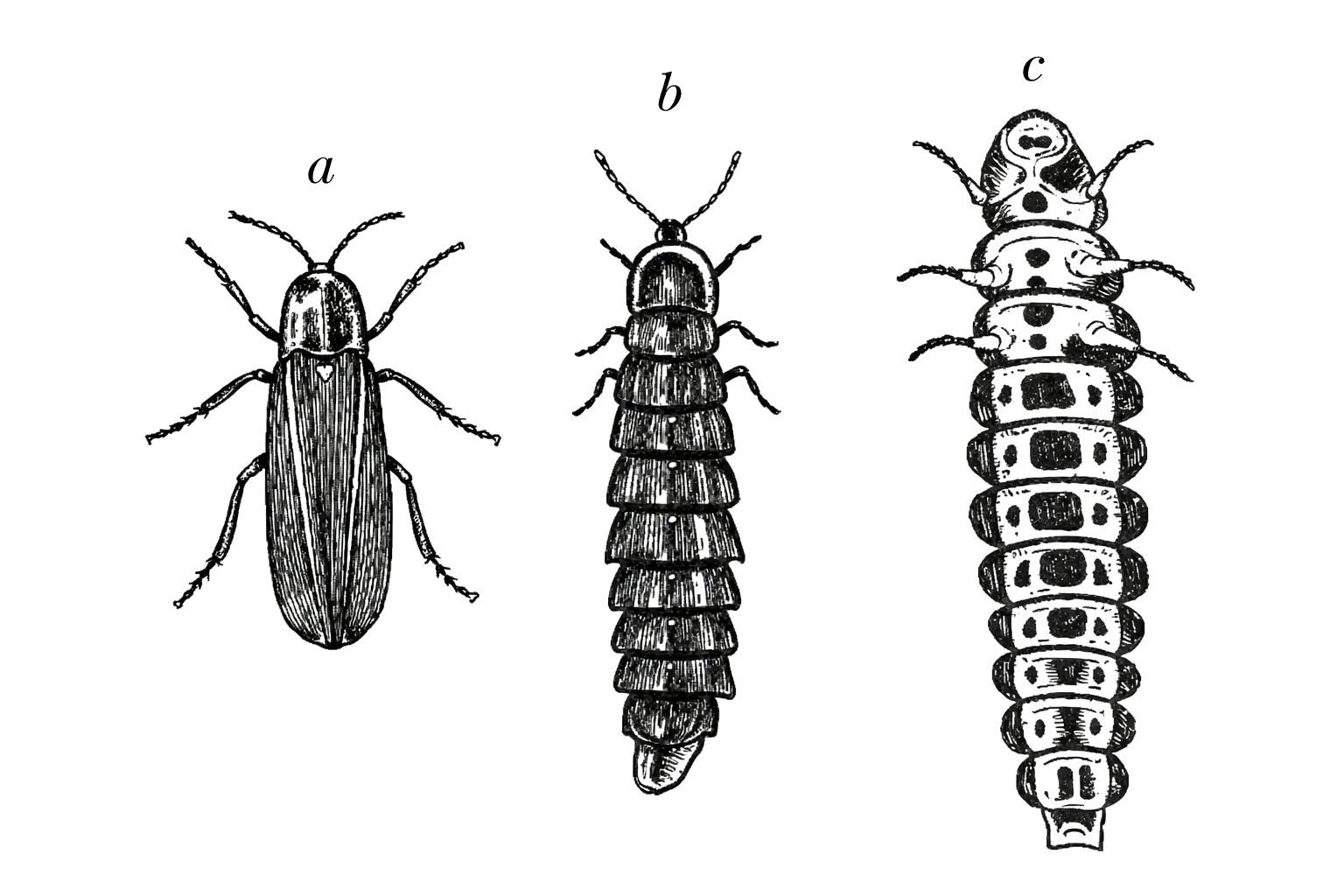
The male and female differ strikingly in appearance and behaviour. The males are winged and roam widely, flying through summer nights in search of the females’ bright green glow. The females, in contrast, are wingless and larva‑like, moving only very little from their spot on the ground.
The glow-worm's light is produced through bioluminescence — a natural chemical reaction inside the body. The same phenomenon occurs in luminous fungi and many deep-sea organisms. Glow‑worms are often seen near waters, possibly because their light carries far in open, reflective surroundings.
Glow worms have one request for us humans: turn off your yard lights at night.
You are reading the Wildest Treasures section — a quiet corner of the Grow Wild in Forest Soil.

This was really cool. Where do glow worms exist?