


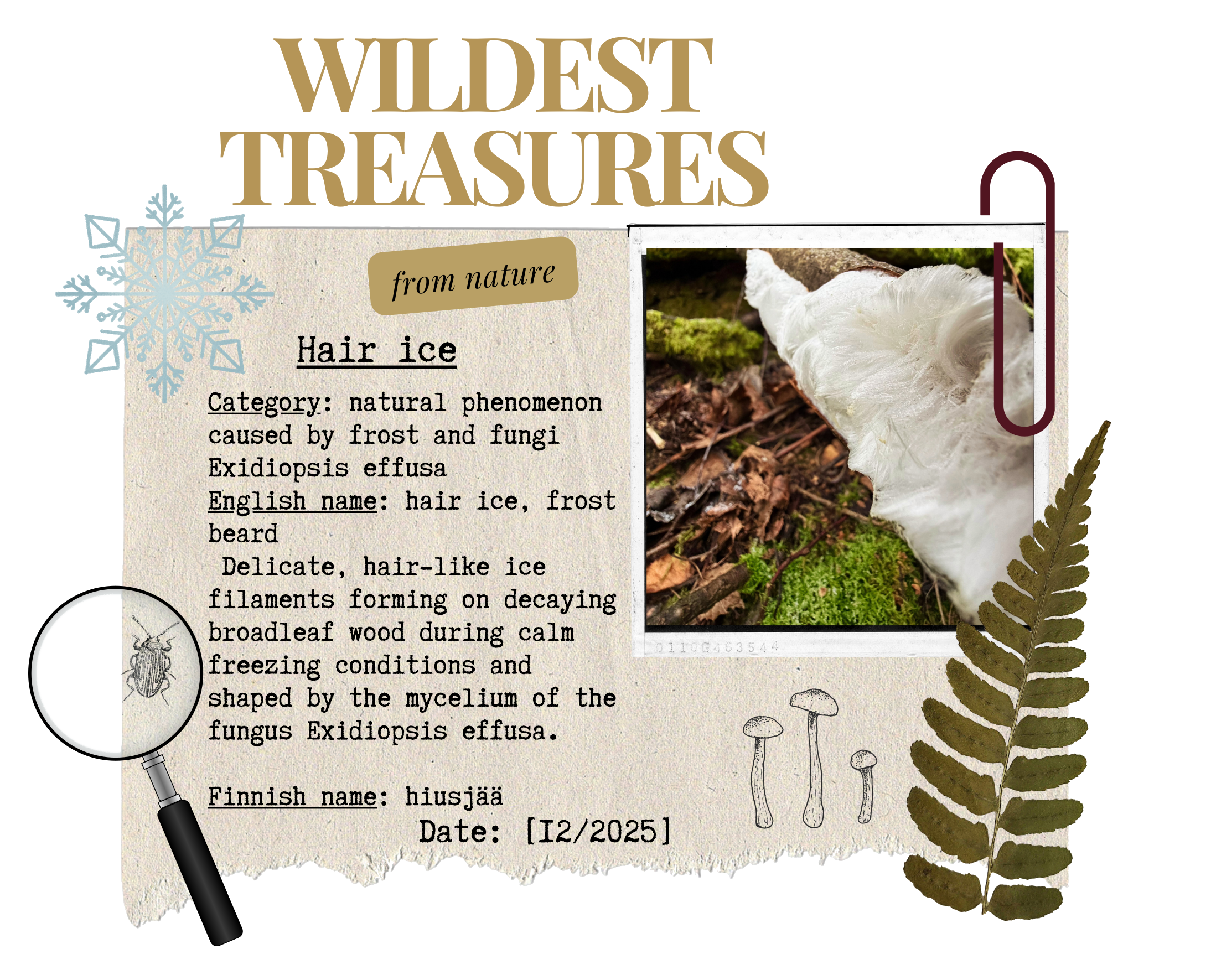
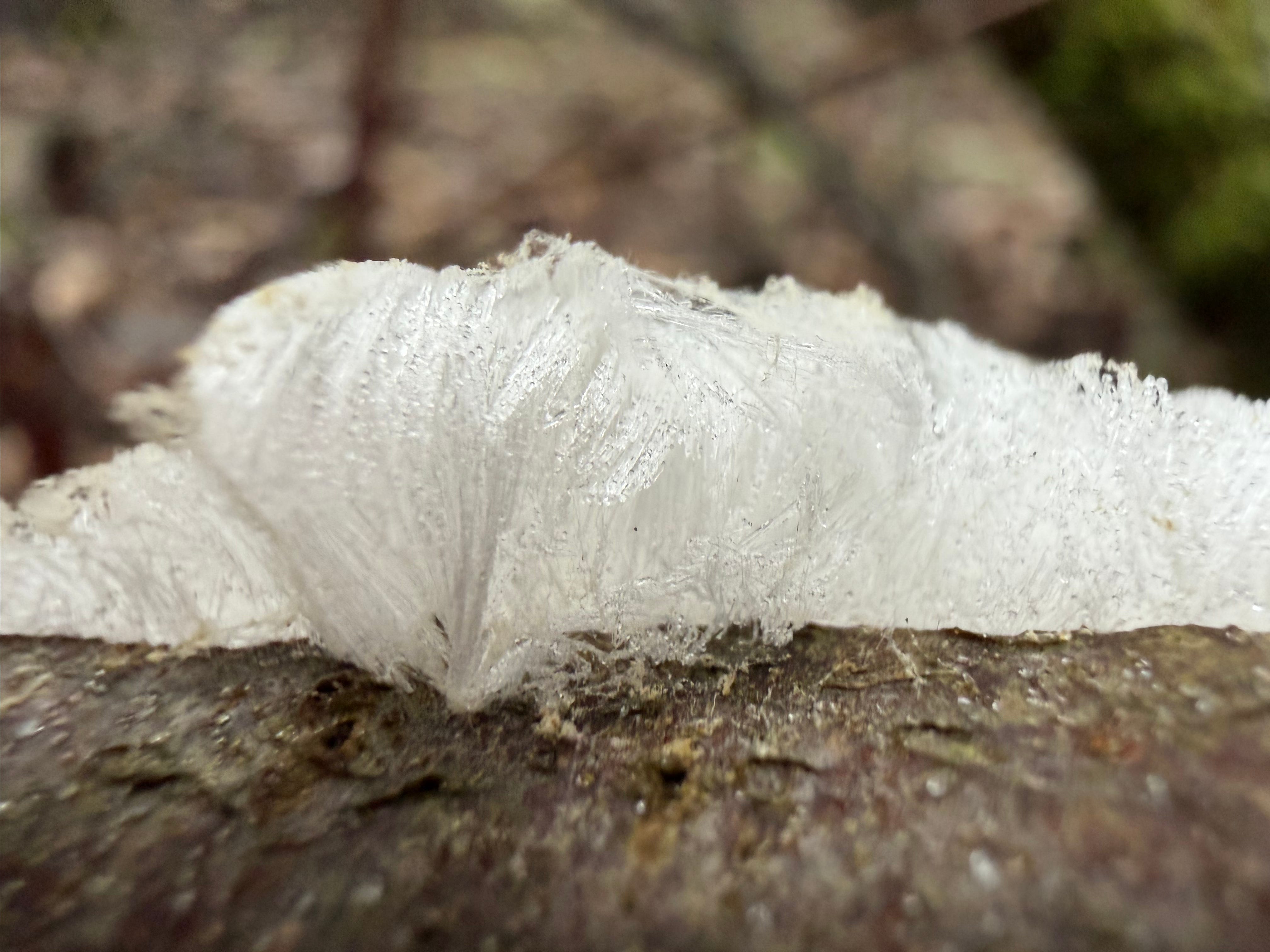
Hair frost is a very interesting phenomenon, which I came across for the first time this year in December.
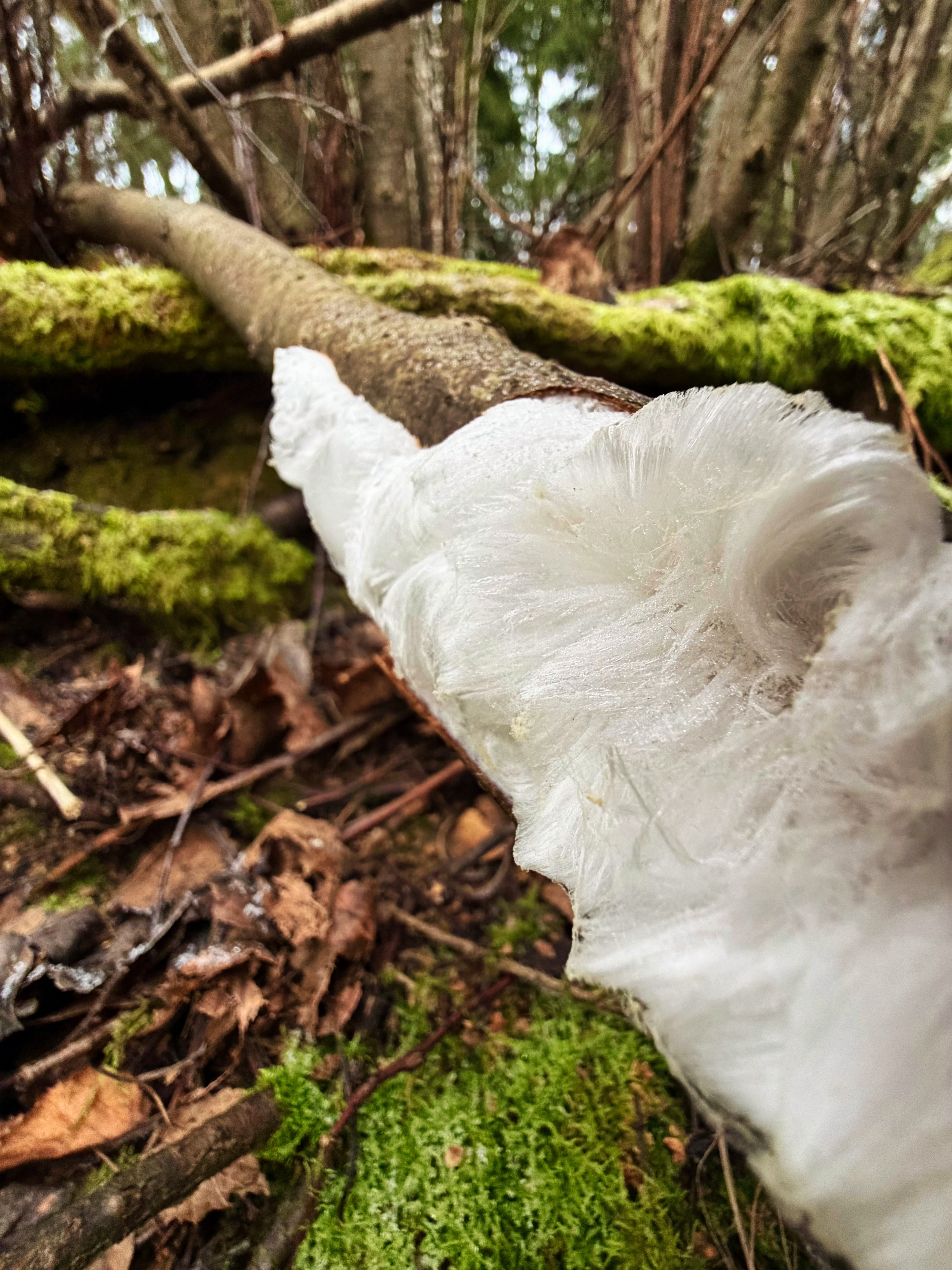
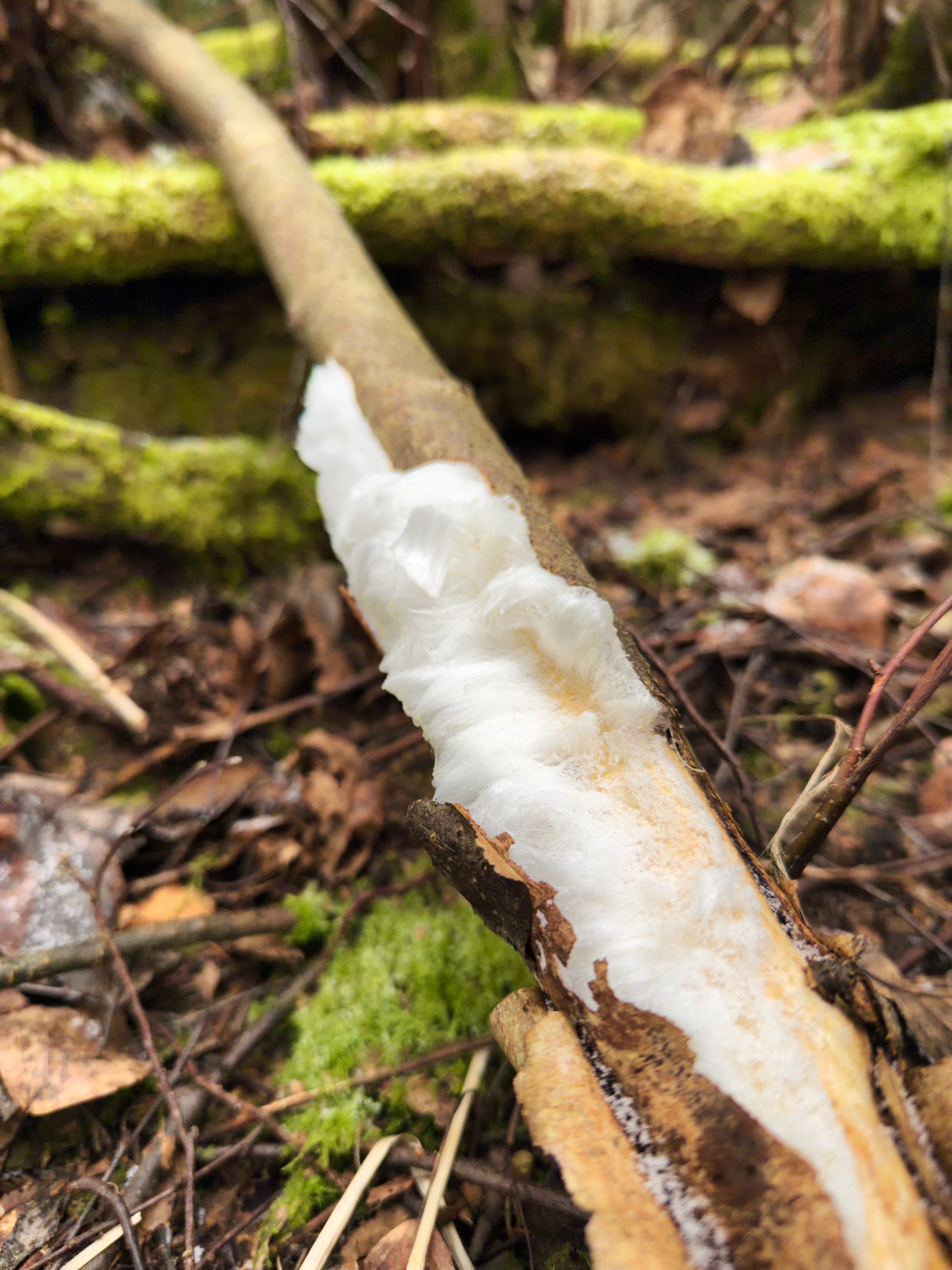
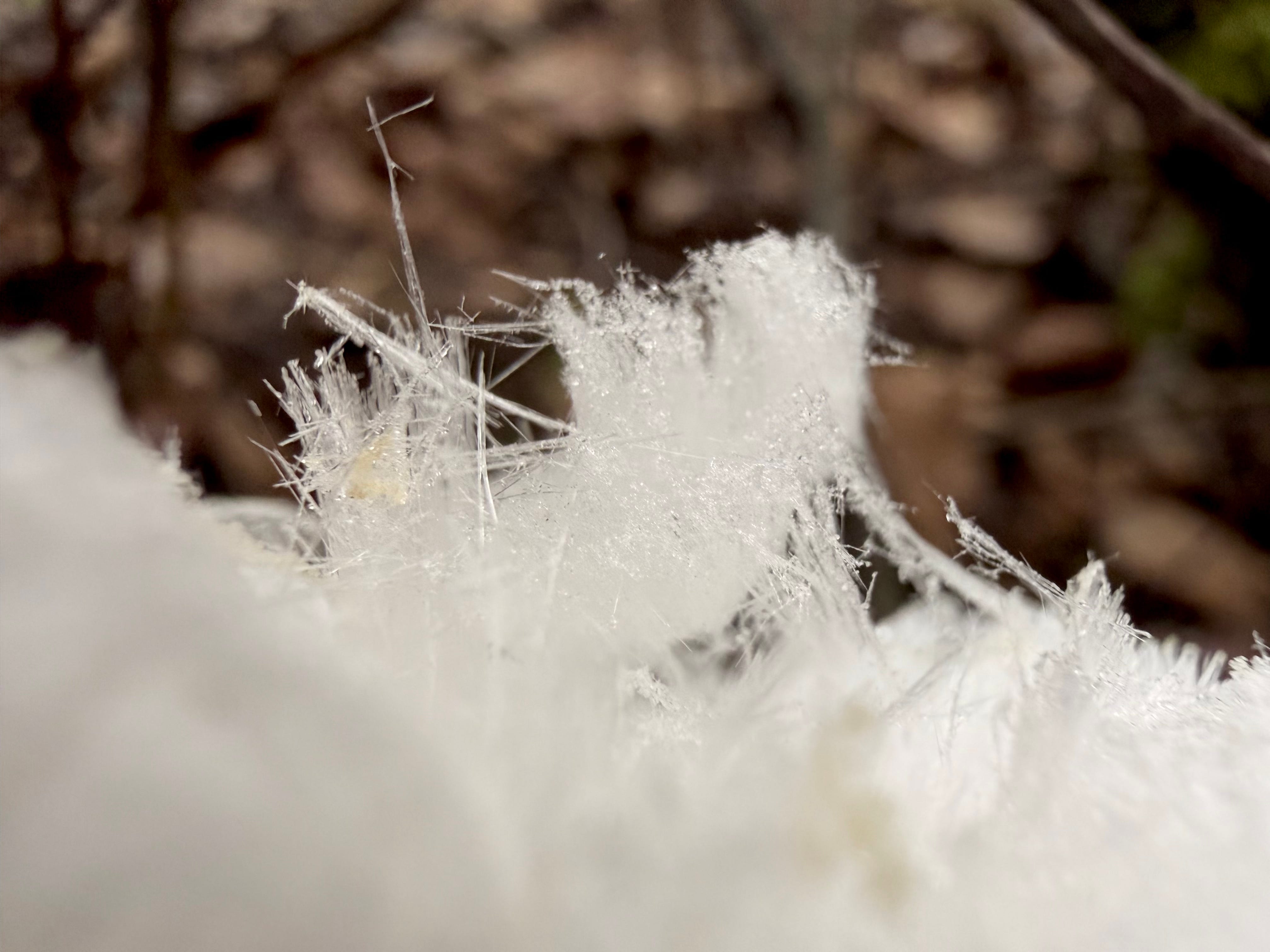
Hair ice forms on decaying broadleaf wood during calm, freezing weather. It gets its name from its hair-like structure, created by ice filaments only a hundredth of a millimetre thick. They are therefore about the same thickness as human hair. These “hairs” can grow surprisingly long if the place is sheltered. In such conditions, they even become curly, believe it or not.
Hair ice does not form due to frost alone; it also requires the help of a fungus called Exidiopsis effusa. When decaying wood freezes, internal pressure builds up, forcing excess moisture out through the fungus’s fine filaments. As this moisture is pushed to the surface of the wood, it freezes into hair-like formations.
What is particularly interesting is that only about ten years ago was the role of the fungus Exidiopsis effusa in the formation of hair ice fully understood. This makes one wonder how many things fungi influence behind the scenes, without us even realizing it yet.
You are reading the Wildest Treasures section — a quiet corner of the Grow Wild in Forest Soil.

This is fascinating. I have never heard of this phenomena before. I live at the sea’s edge in West Wales and when it snows it doesn’t ‘stick’ here very often because of the slightly warmer salty air which helps it melt quickly. Our shore is warmed by the North Atlantic Drift, an offshoot of the Gulf Stream that comes across from the Gulf of Mexico, so it doesn’t get quite as cold as inland or higher ground and though I am a year round sea swimmer, I am no walker as I have chronic pain, so the world I explore is mostly at the water’s edge, so thank you for taking me on your fascination journeys.
Fascinating. Learn something today, thank you. Does this phenomenon happen only in the northern hemisphere, and why is it only occurred in broadleaf species?