

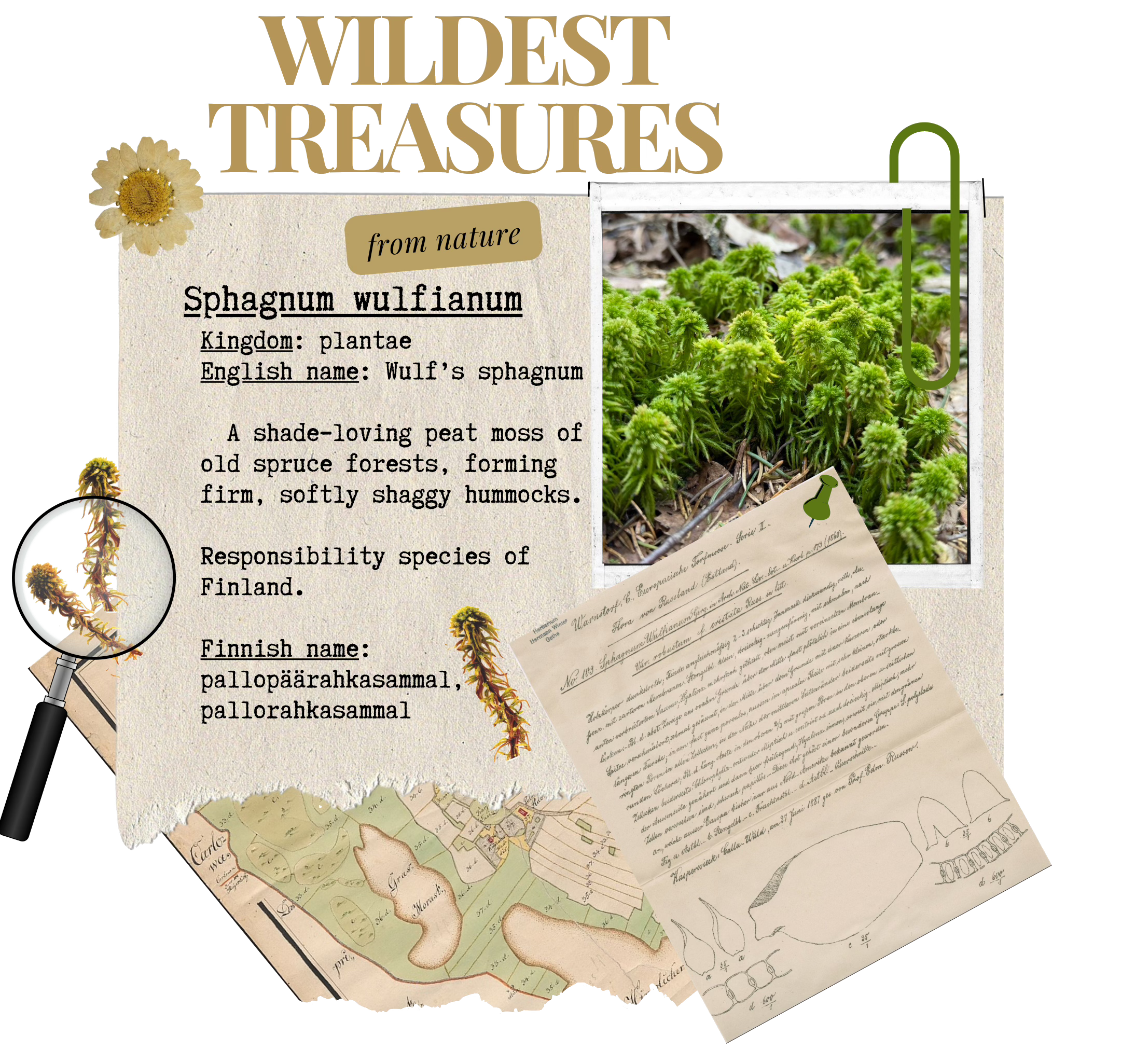
It was the year 1847. Bryologist Gustav Karl Girgensohn — a researcher of mosses — arrived at an Estonian manor estate because the forests there were old and unexplored. The landowner, von Wulf, allowed him to wander — not because he cared about mosses himself, but because the visit of a scientist sounded refined and important.
Under the spruces the ground stayed damp, even in summer. There, at the edge of shadow and water, Girgensohn leaned over a small hummock and saw a sphagnum moss with more branches than any he had seen before.
Girgensohn named the unusual moss after the landowner, von Wulf: Sphagnum wulfianum.
Sadly, the original site did not survive unchanged. The swampy forests surrounding the manor were drained, built over, and Sphagnum wulfianum no longer grows there at all. I’ve been studying the old maps and scattered notes, trying to understand what the landscape once looked like.

I took a small peatland course some time ago, and that’s where I became fond of this moss. I’d been hoping to come across it ever since. And when I saw it one spring day in the dim spruce forest, I recognised it immediately.
The ground was just as wet, the light just as dim — and there, on the wet ground I found the same species Girgensohn once leaned over.
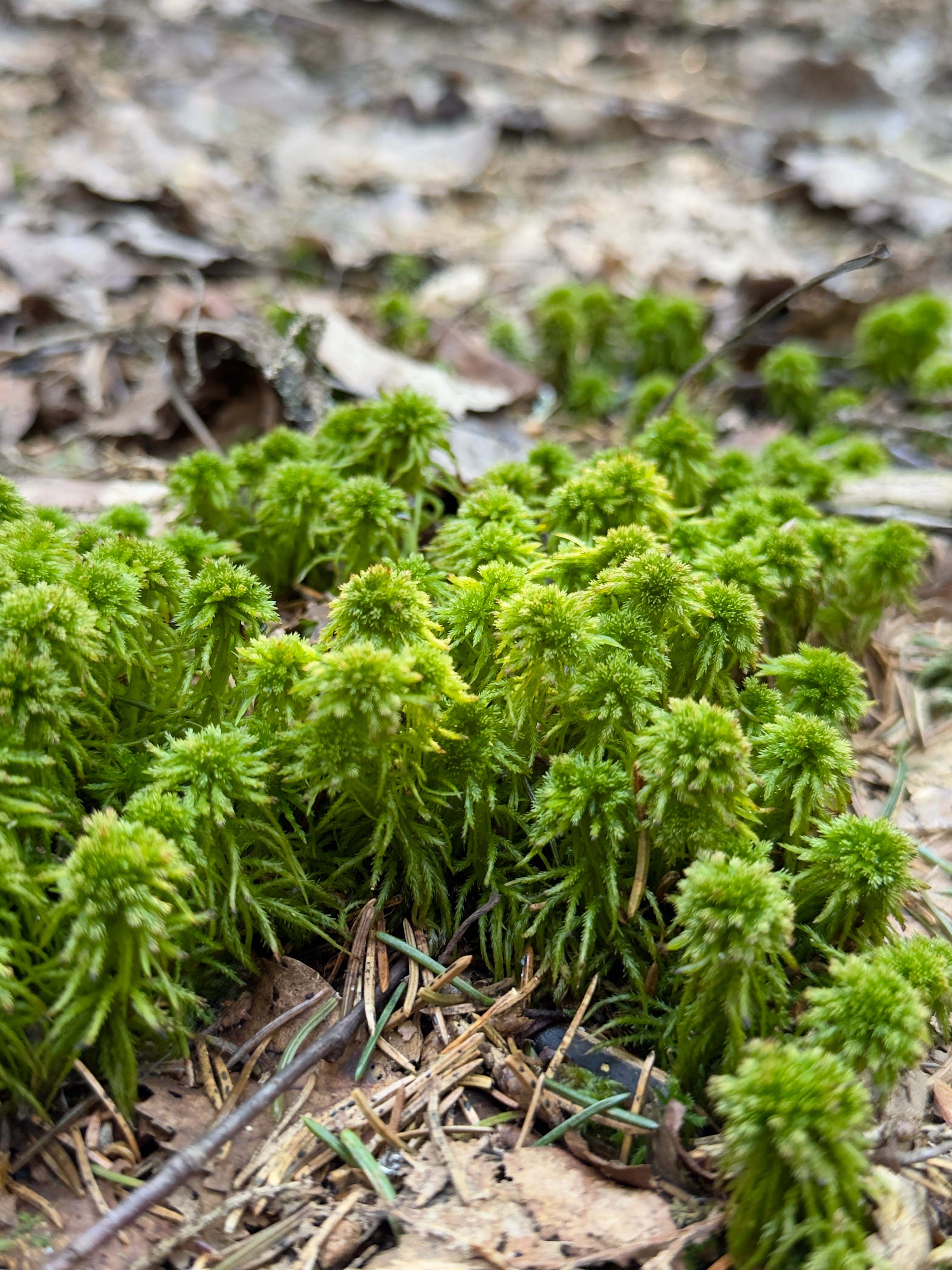
So lush and green, so firm and softly shaggy. In Finnish it’s called pallopäärahkasammal, literally “round‑headed bogmoss”.
It’s not a very common species here. Sphagnum wulfianum prefers deep shade, steady moisture and old, undisturbed spruce forests — the kind that feel almost closed to the outside world. It doesn’t shout for attention, but once you know what to look for, it’s unmistakable.
There was something grounding about it — the idea that this same moss had caught someone’s eye almost two centuries ago, and here it was again, unchanged, doing exactly what it has always done.
This moss is one of Finland’s responsibility species, one of the species for which Finland carries a special responsibility. It feels fitting that this moss grows here, hidden deep in Finland’s northern forests.
You are reading the Wildest Treasures section — a quiet corner of the Grow Wild in Forest Soil.

Thank you for sharing this amazing species and its background story. What I found especially interesting was your mention of it being one of Finland’s “responsibility species.” Is this an official conservation designation in Finland?
And if so, what makes a species a responsibility species?
Wouldn’t it be wonderful if all countries had responsibility species, if that means taking especially good care of them?
In Germany, I’ve often heard the Red Kite described as a species for which we carry a particular responsibility, since Germany is considered the global stronghold of the species and holds around half of the world’s breeding population.
Oh how cool! I’d love to see this moss for real someday…